Series Contemporary Taiwan through a Window
Issue 16: Red Bricks and Bullet Holes : The Kinmen Islands (Part 1)
18 Dec 2025
- Keywords
- Architecture
- Columns
- Taiwan
When I previously went to Taiwan’s outlying Matsu Islands, I learned that it made sense to visit these kinds of islands around the New Year. Few people visit them when it’s not high season (as these islands get quite cold in the winter), making for a relaxed experience. Local New Year’s Eve events are plain yet enjoyable. This time around, I boarded an airplane from Taipei’s Songshan Airport and headed to the Kinmen Islands. The islands looked lively from the plane, not lonely as the Matsu Islands were. In addition to the kinds of reinforced concrete structures often seen on the main island of Taiwan, you can also see a significant number of communities packed with Minnan architecture and their reddish-brown tiled roofs.
-
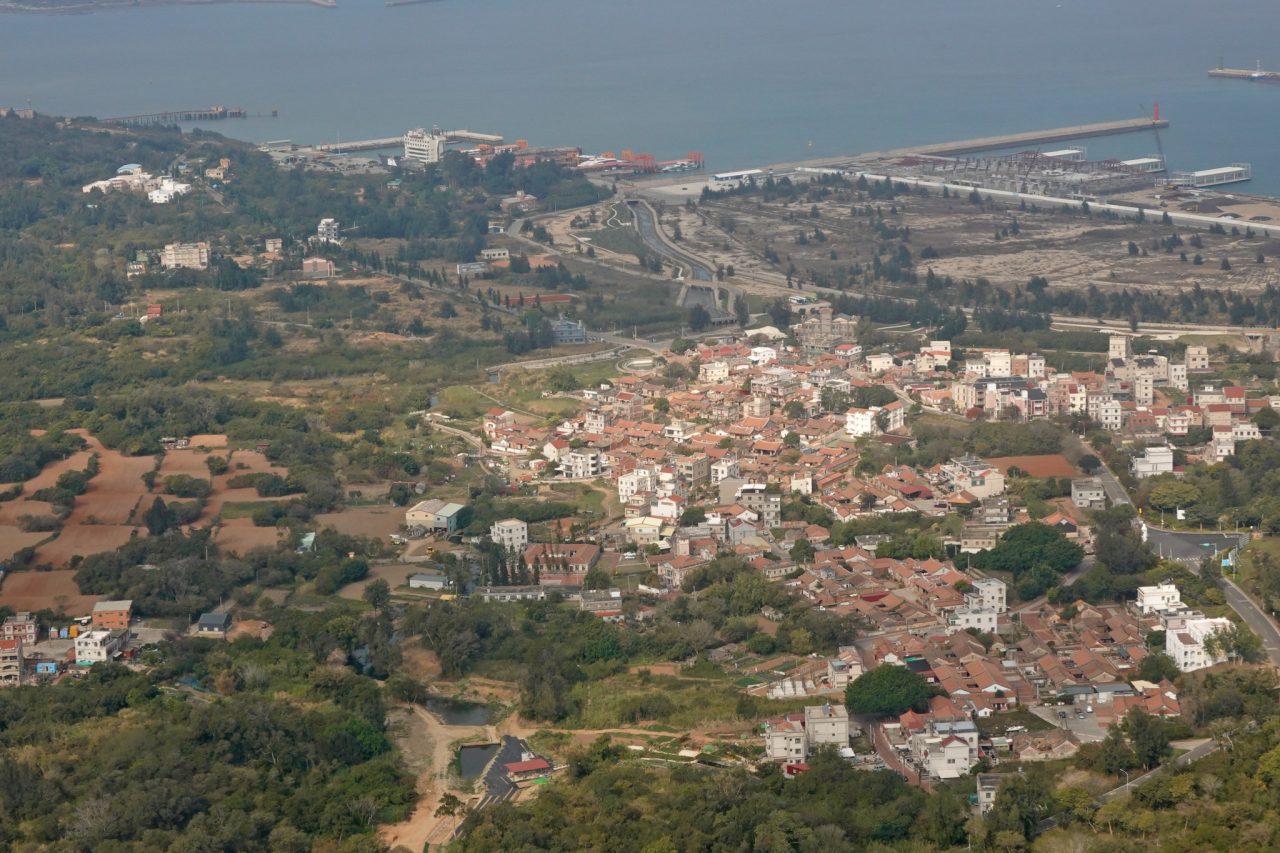
Reddish-brown traditional villages seen from the plane
Like the Matsu Islands, the Kinmen Islands are extremely close to the Chinese mainland. Only about 3 kilometers away from Amoy (now known as Xiamen), mainland skyscrapers are clearly visible from them, especially by the shore. They were the scene of battles around the 1950s, when the Chinese Civil War was particularly fierce, and like the Matsu Islands, some of the many remaining military facilities have now turned into sightseeing destinations.
While this can be said about Taiwan in general, many of the older remaining homes here have recently become available online for easy reservation. We’re now living in a wonderful time when traditional architecture is widely turning into guest houses. We ought to be more strongly moved by the fact that structures that could once only be built by the wealthy are now available to stay in for a few thousand yen a night. Even on the Kinmen Islands, I found a number of old homes available for reservation online in whatever village I visited. While there seems to be a wide range of accommodations, I chose two different places to stay with friends in different villages.
When we arrived at our lodgings in the island’s oldest community of Kinmen Cheng, there since the time of the Ming, its current owner showed us around. According to him, it was a siheyuan residence (a form commonly seen in Chinese traditional architecture where structures on four sides surround a central interior garden) built by his great-grandfather. He pointed at its curved roof tiles and the pointed swallowtail-like ornamentation at the edges to brag to us, “That’s what we call a swallowtail, a roof that only important individuals and officials were allowed to have.” The decoration of its latticed door seemed to have been repainted in recent years and did lack just a bit of charm.
-
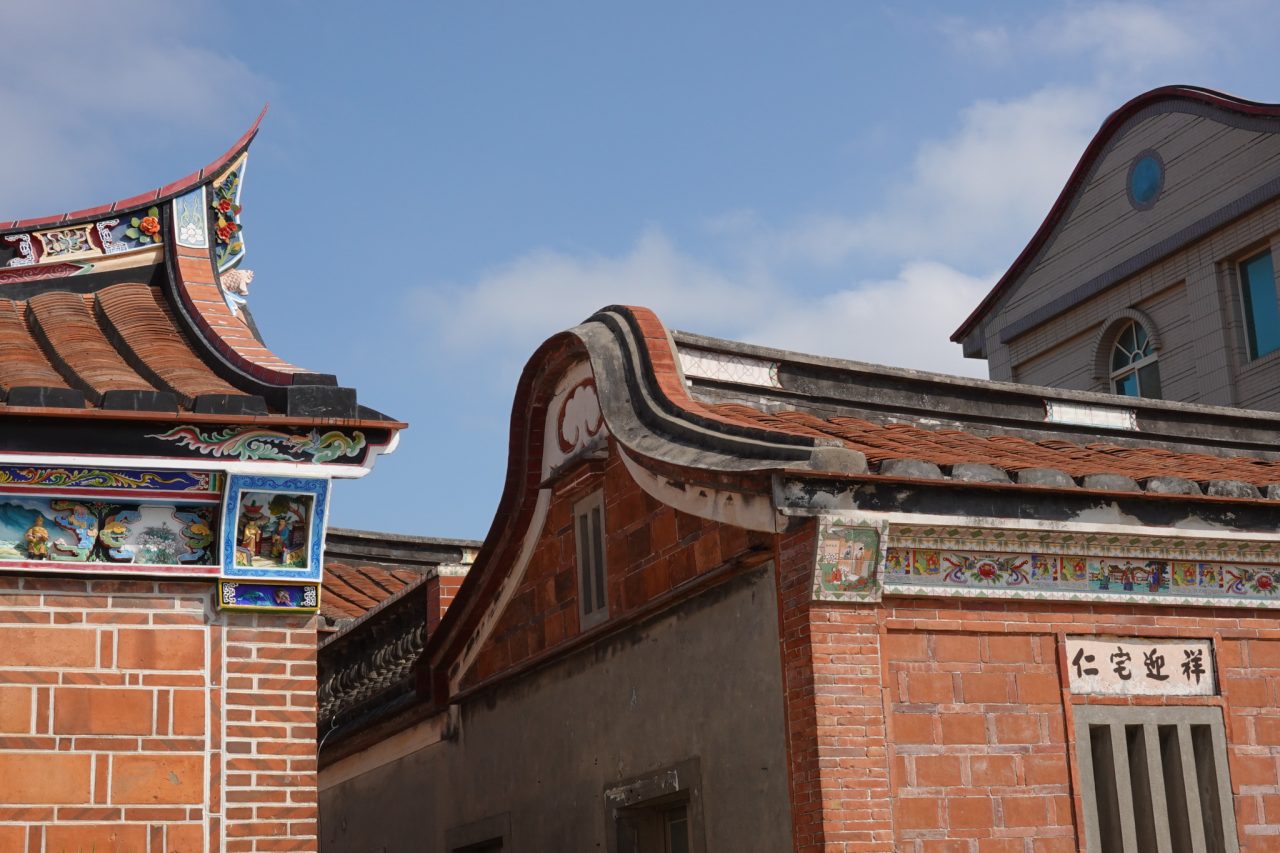
The swallowtail (left) and horseback (right) edges of Minnan architecture roofs
While U-shaped sanheyuan residences that surround a courtyard are frequently seen in Taiwan’s main island, there are many boxed-in siheyuan homes on the Kinmen Islands, showing the long-standing importance placed on crime prevention. As people grow wealthier, these siheyuans become connected in lines, turning into aggregations of homes with multiple courtyards.
As I walked through villages, I began to see the underlying way their structures were made. At their base is stacked yellow granite. Stones like these were used to make entire homes on the Matsu Islands, but the architecture here involves placing red bricks on top of them. Old windows have granite frames and inset vertical lattices, making them difficult to destroy. The relationship between their entrances and walls is unusual as well. The height of their walls changes depending on the door’s height, making it appear as though these walls were built according to that opening, rather than an opening being made on the walls. Structures with internal level changes show such shifts in their window positioning and roof height, making it easy to imagine from the outside what it might look like inside. I found Minnan architecture enjoyable to look at thanks to these uneven rooflines created by the influence of all these elements as well as because of the practical ways in which everything is brought together.
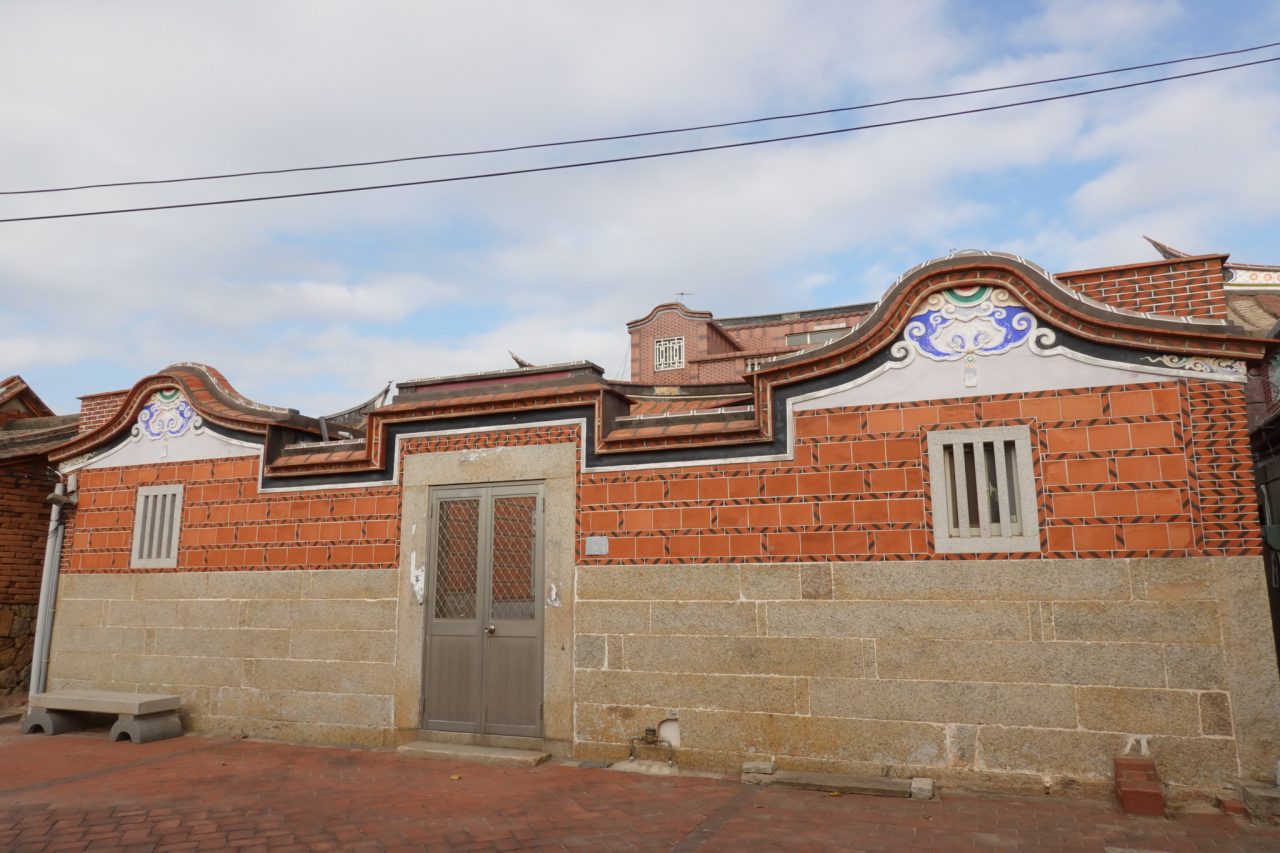
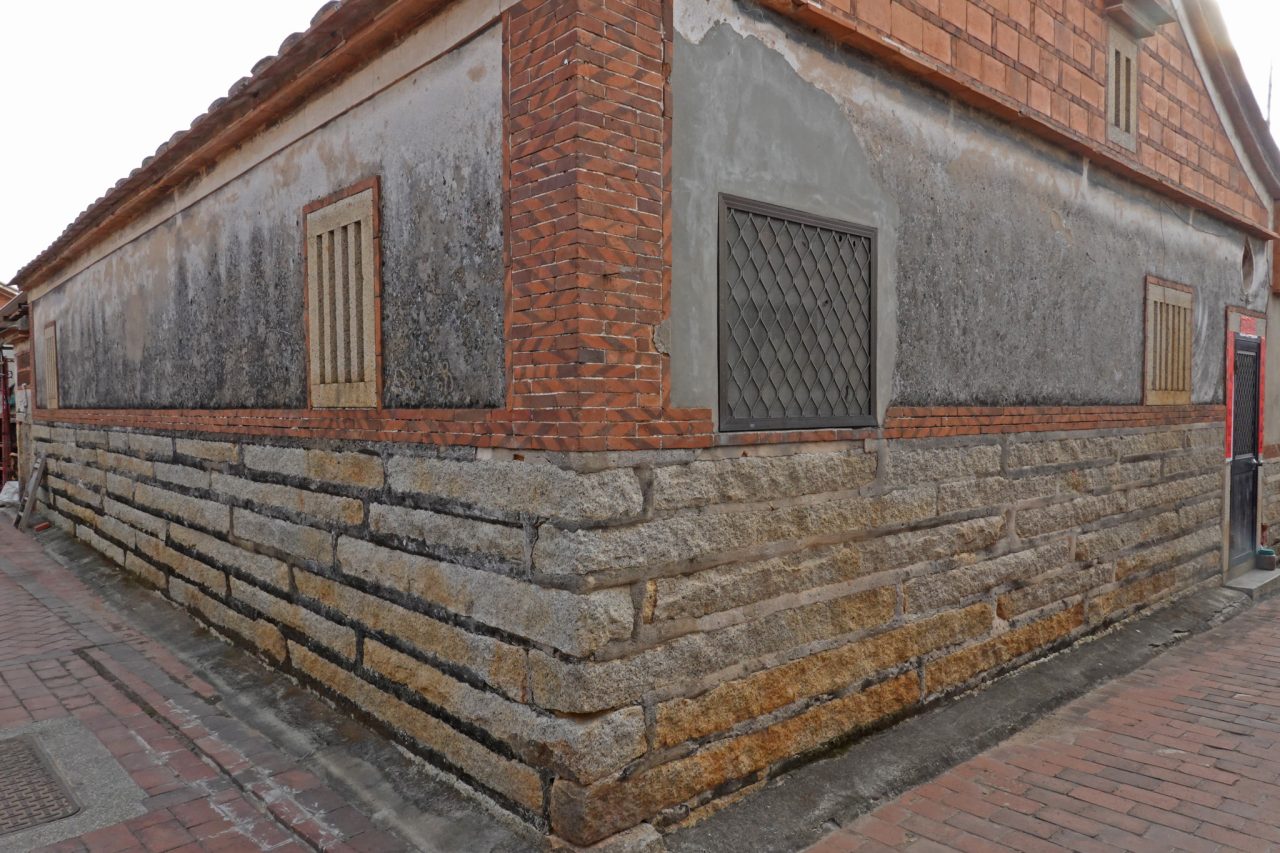

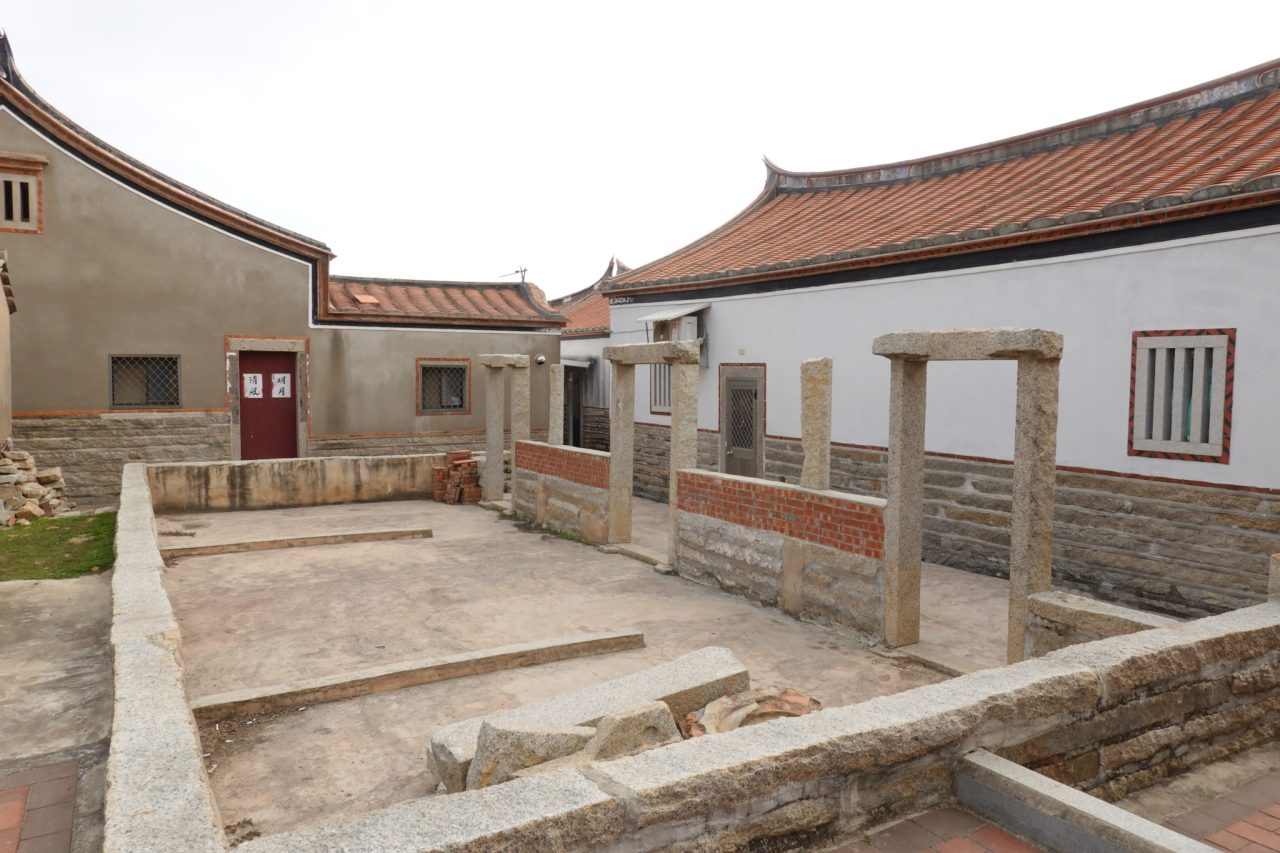
Another major characteristic is the fact that their gable walls (called “mountain walls”) frequently exceed the height of their roof. As roofs generally cover everything in Japanese architecture, this was a rather different way of building them to me. This is due to the fact that these mountain walls directly support ridge beams, purlins, and cross beams. In other words, Minnan architecture is a combination of woodwork and masonry.
Ornamentation naturally becomes focused on the upper portion of these attention-getting mountain walls. I saw many apexes with wave-like plasterwork designs, likely a charm to ward away fire much like the water patterns drawn on gegyo (decorations on roof gableboards) in Japanese architecture. No matter what country you go to, people will think in similar ways.
-
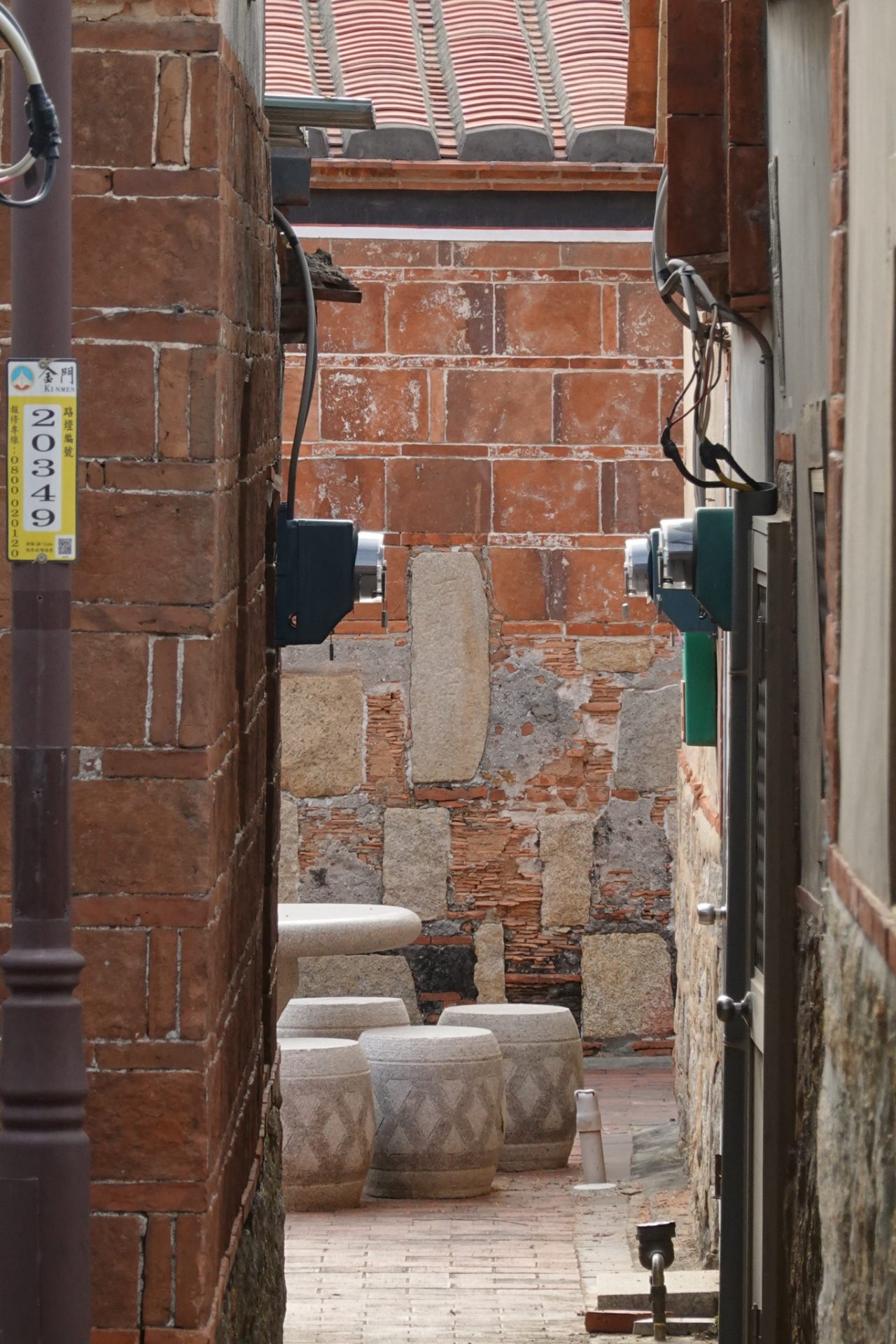
A wall built from stones and thin bricks
-

The curvature of these roofs presents a unique landscape
While the islands are small enough to easily cover by motorcycle, there’s no end to the sights to see in their villages. We arrived in a village to the northwest known as Beishan, where barely anyone seemed to live. Something felt different about it compared to the other places we had visited so far. In fact, the village had been the site of the Battle of Kuningtou in 1949.
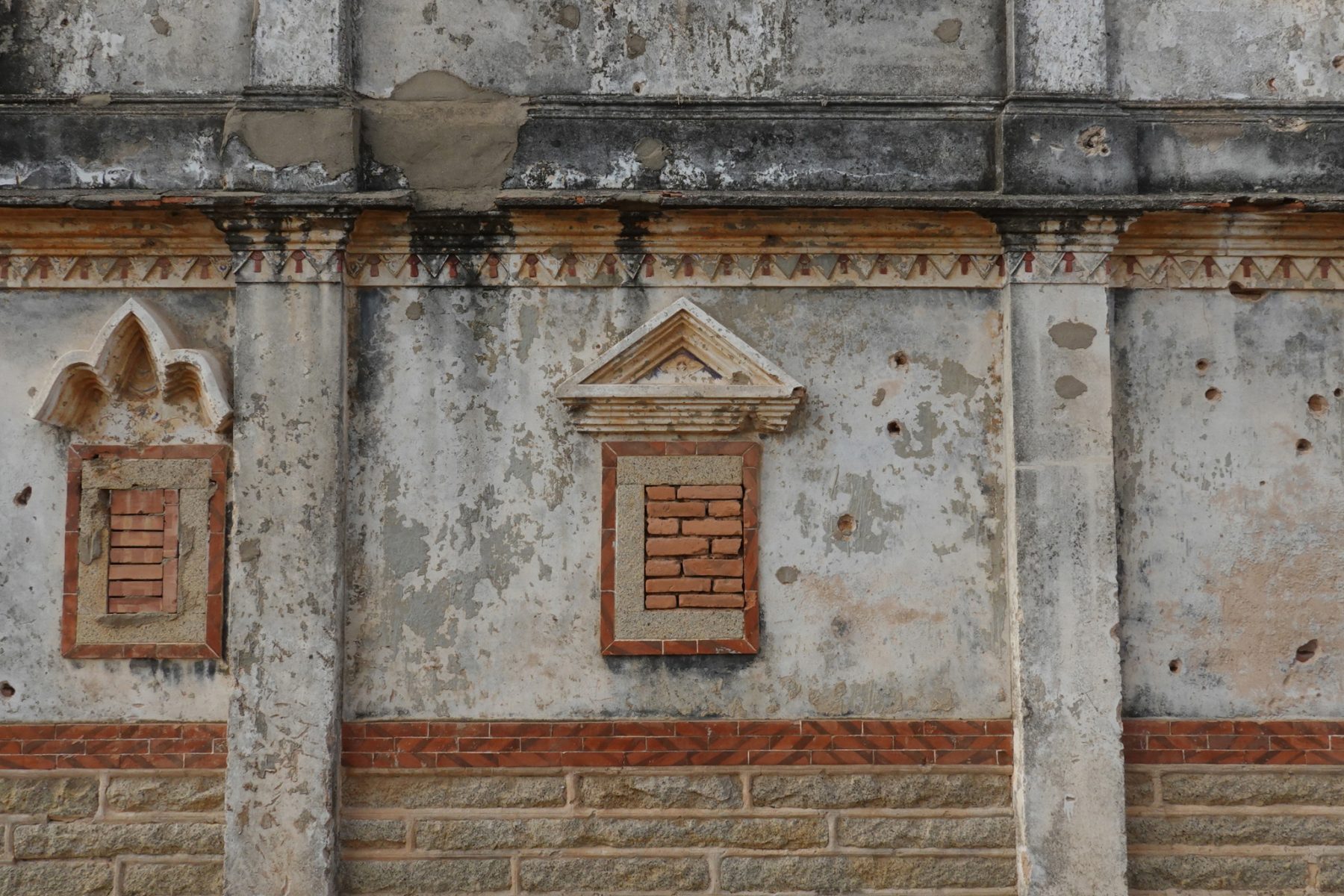
Brick buildings in the village continue to be riddled with countless bullet holes, speaking to the incredible devastation that took place over those three days and nights. As most of its residents left, the structures from that time are still preserved. It does seem that there are some movements now to start new lodgings and restaurants in the village. While the landscape linked to this outlying island and war is of course a saddening one, it is also a show of contemporary Taiwanese resolve.
Looking at a building that seemed particularly old here, I found that its windows were filled in with bricks and stones for defensive purposes. Windows, openings made as a way to provide ventilation and lighting, may also become openings that expose one’s life to danger during a battle. Gunfire had rained down upon these windows as well.
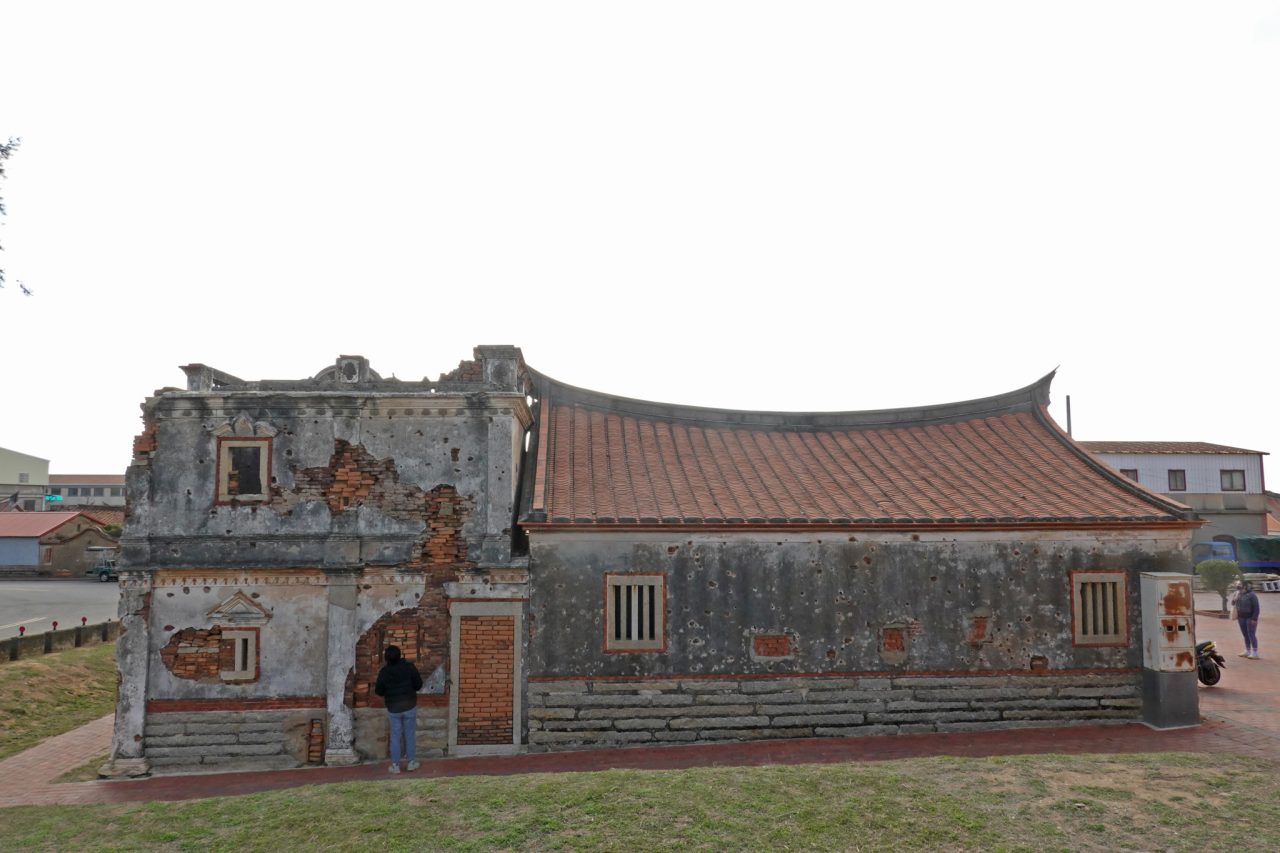

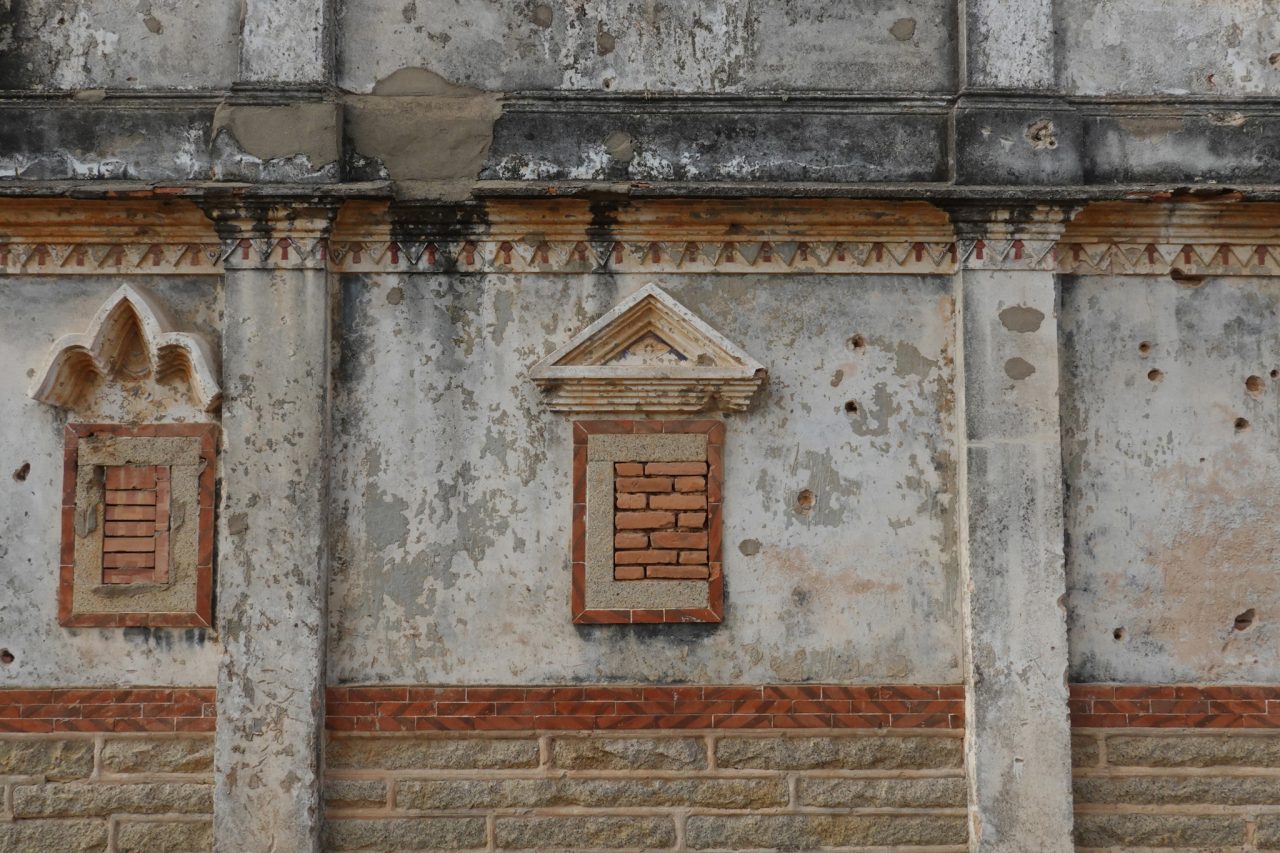
A careful look at this structure did make me realize something odd, though: a flat-roofed Western-style structure stuck to this piece of traditional Minnan architecture. Its pillars and pediments featured Western-style ornamentation, and the small eaves above its windows weren’t those of Minnan architecture. Why was this here, in an outlying Taiwanese island? Who could have built it? Though the traces of war on the surrounding buildings were hard to ignore, I couldn’t stop looking at this strange and eclectic piece of blended architecture, something I never saw on the Matsu Islands.
(Continued in part 2)
Ryuki Taguma
Taguma was born in Tokyo in 1992. In 2017 he graduated from Waseda Universityʼs Nakatani Norihito Lab with his masterʼs in architectural history. During his time off from graduate school, he traveled around villages and folk houses in 11 Asian and Middle Eastern countries (his essays about this trip are serialized on the Window Research Institute website as “Travelling Asia through a Window”). In 2017, he began working under Huang Sheng-Yuan at Fieldoffice Architects in Yilan County, Taiwan. In 2018 he was accepted to the UNION Foundation for Ergodesign Cultureʼs overseas training program, and in 2019 he was accepted to the artist overseas training program promoted by the Agency for Cultural Affairs. He is based in Yilan, where it rains for the majority of the year, from which he designs various public buildings such as parks, cultural facilities, parking structures, bus terminals, and more.

MORE FROM THE SERIES
-
Contemporary Taiwan through a Window
Issue 17: The Angel Wings of the Overseas Chinese in Southeast Asia : The Kinmen Islands (Part 2)
17 Mar 2026
Contemporary Taiwan through a Window
Issue 15: The Folk Spirit Dwelling Within Decorative Window Grilles
22 Jul 2025
Contemporary Taiwan through a Window
Issue 14: A Window for Standing Still—Fieldoffice Architects, Paomagudao Park
22 Jan 2025
Contemporary Taiwan through a Window
Issue 13: Democracy Under Canopies (Fieldoffice Architects)
18 Nov 2024
RELATED ARTICLES
-

Contemporary Taiwan through a Window
Issue 10: The Billowing School—Chen Ren-He, Wave Building, San Sin High School of Commerce and Home Economics (Kaohsiung)
10 Jan 2024
Contemporary Taiwan through a Window
Issue 9: The Windy County Office—Yilan County Hall (Atelier Zo)
31 Oct 2023
Contemporary Taiwan through a Window
Issue 8: The Town of Floating Pigeon Lofts
17 Aug 2023
Window Behaviorology on Nordic Architecture
Alvar Aalto
Dining room of Aalto House12 Mar 2026
NEW ARTICLES
-
Window Behaviorology on Nordic Architecture
Alvar Aalto
Atelier of Studio Aalto17 Feb 2026
Window Behaviorology on Nordic Architecture
Alvar Aalto
Living room of Kantola House08 Jan 2026
Window Behaviorology on Nordic Architecture
Alvar Aalto
Reading room of Paimio Sanatorium23 Dec 2025
Window Behaviorology on Nordic Architecture
Alvar Aalto
Patient’s room of Paimio Sanatorium25 Nov 2025