Series Contemporary Taiwan through a Window
Issue 17: The Angel Wings of the Overseas Chinese in Southeast Asia : The Kinmen Islands (Part 2)
17 Mar 2026
- Keywords
- Architecture
- Columns
- Taiwan
Traditional Taiwanese architecture with Western architecture seemingly attached to it by force. As I visited the Kinmen Islands, I found these strange and eclectic buildings here and there in villages still pocked with bullet holes. It seemed there was an especially large number of them where I stayed this night, the village of Shuitou.
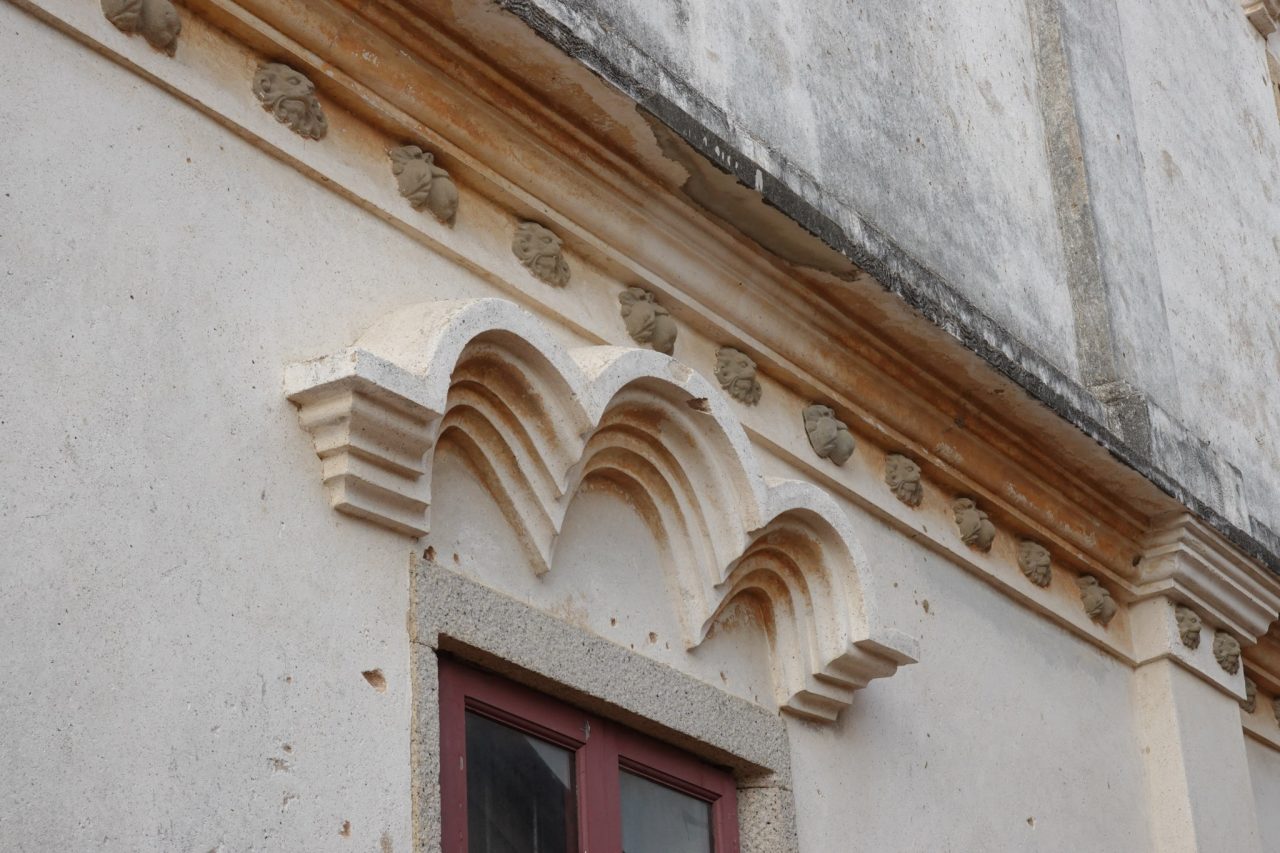
After arriving in the village, I started walking the paths that snake their way between tall Western-style buildings. It felt like I might be in some European town, to the point that I could see myself forgetting I was in Taiwan. Why did an island on the fringes of the country look this way? The feeling of the buildings that stood there seemed different overall from Hokkien architecture, noted for its curved red-brick roofs, but the very first thing that I noticed were the small eaves sitting there above the windows. These windows are of a local style, framed with granite from the island. Eaves made of stepped plaster shaped like angel wings dance above them. Each one is different, some with pointed arches and others that are round. I was left wondering if they even function as eaves due to their distance from the windows, but shapes different from traditional Taiwanese architecture have undoubtedly developed around the windows of these structures.
-
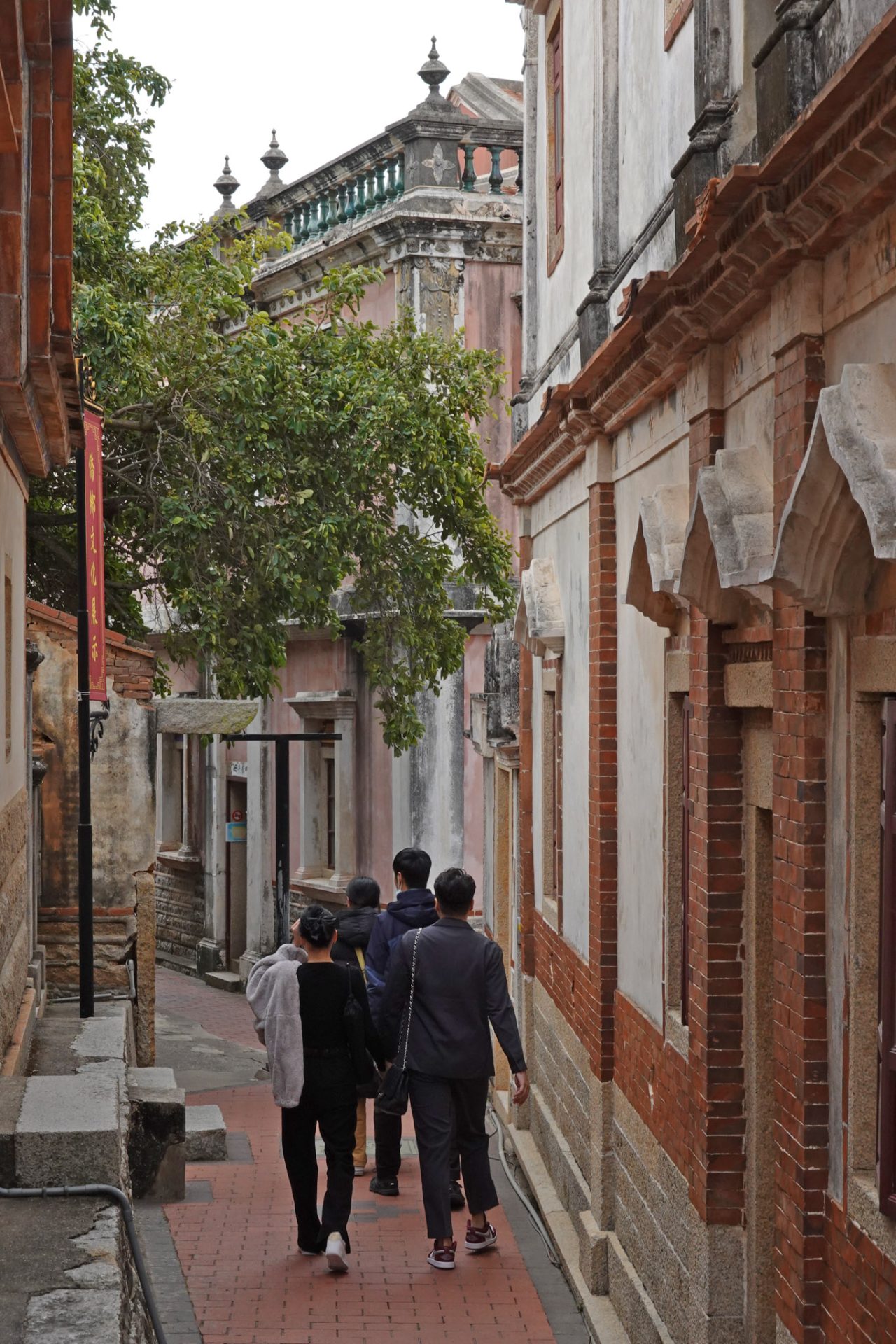
A narrow street reminiscent of Europe
I entered into a café in the village to take a break and found that they sold “Mao Zedong milk tea” and “Chiang Kai-shek milk tea.” I ordered the Mao Zedong while thinking about the unique café situation here on this island so close to the Chinese mainland.
When I approached the village’s most famous landmark, the Deyue Gun Tower, I was shocked. Inside the traditional U-shaped sanheyuan-style walls surrounding the courtyard soared a strange and Western-style tower. Its smooth, featureless walls had small openings with those familiar small eaves above them. They looked cute, making a face alongside the windows. Further beyond that I could see a baroque-like Western structure.
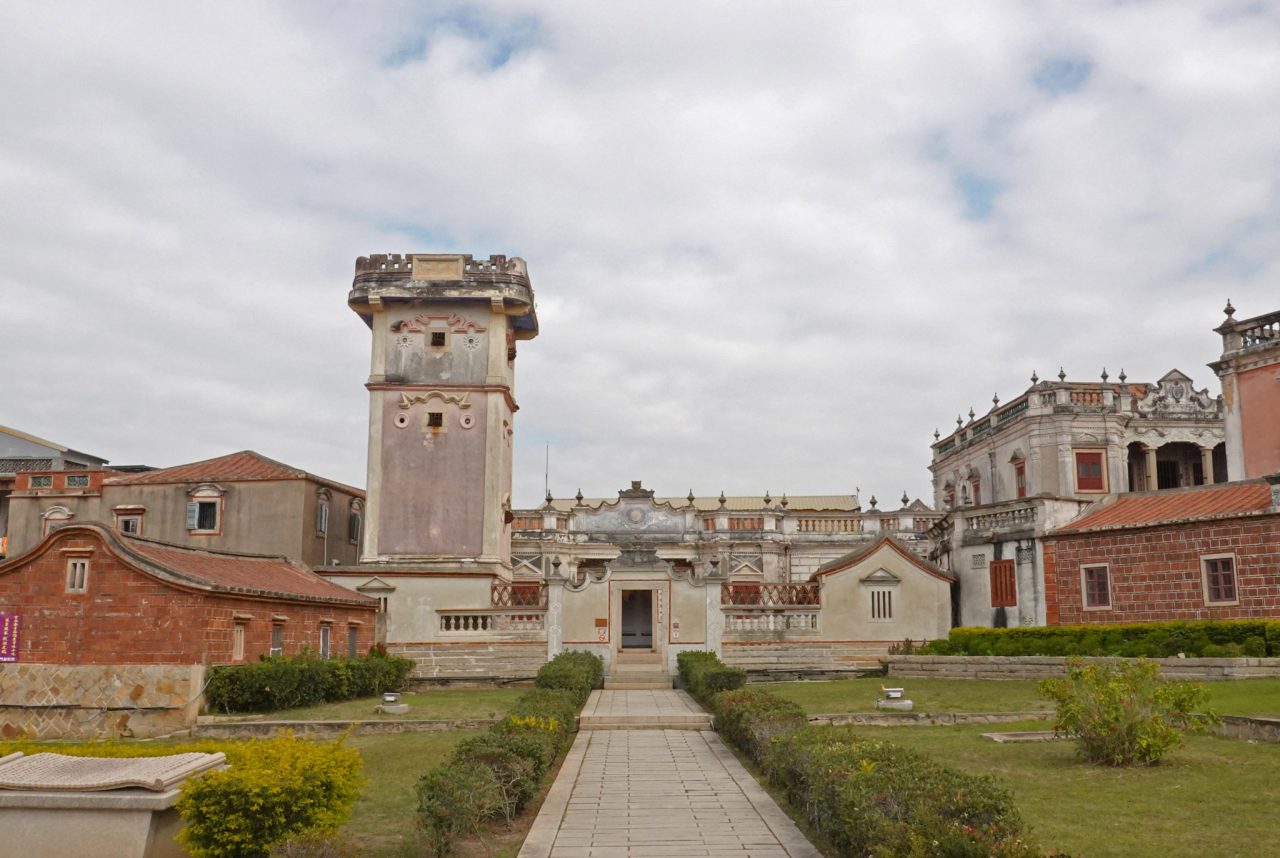
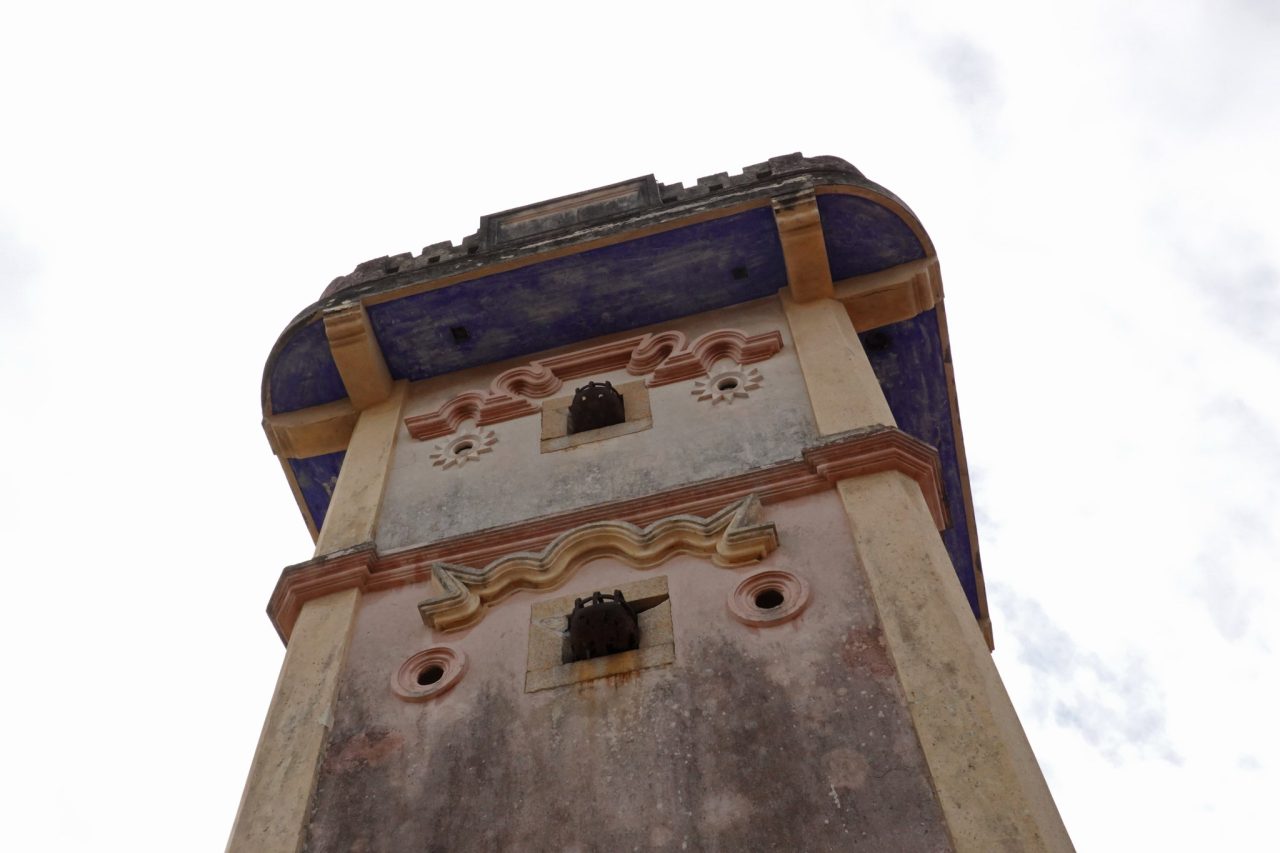
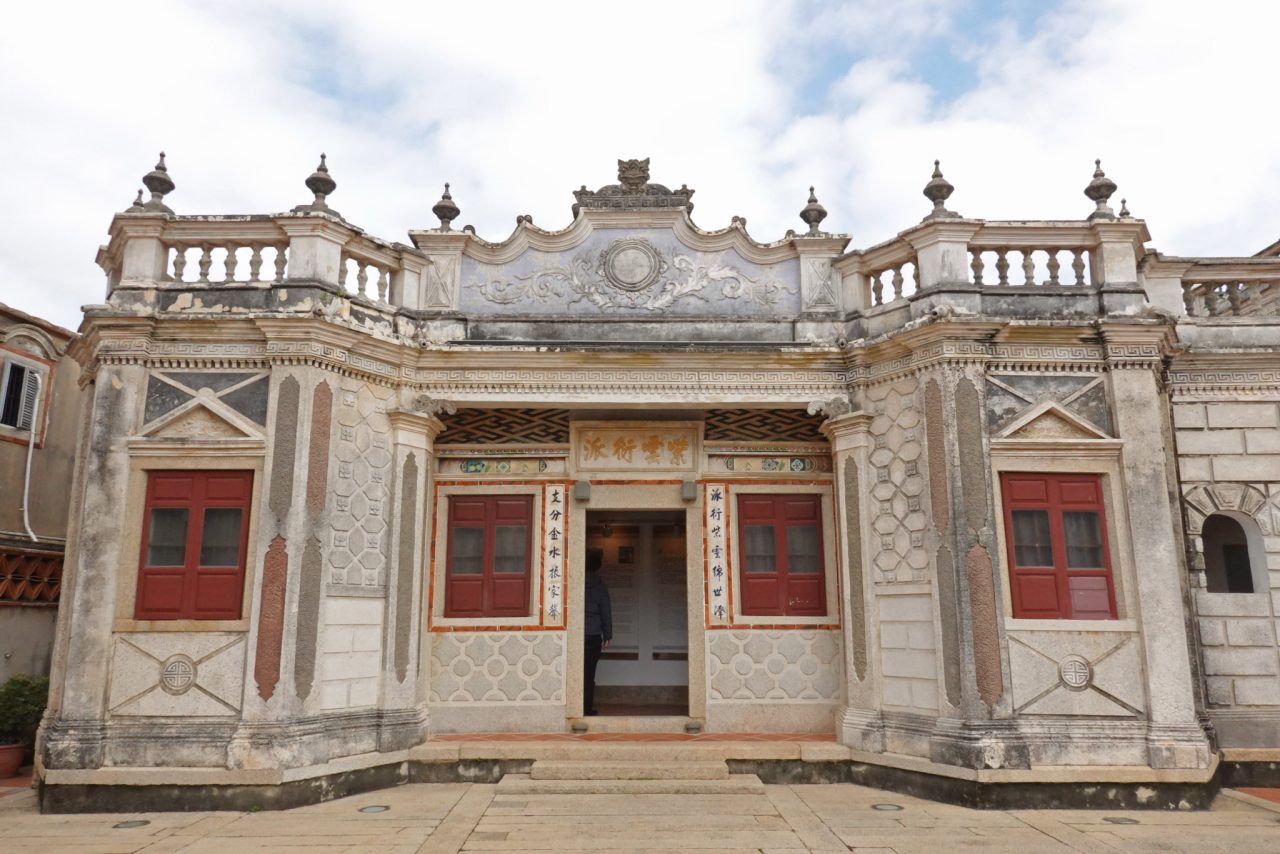
This sort of Western-style architecture (including traditional buildings it has been added to) is known as “yang lou,” said to have been built here in their hometown by ” overseas Chinese in Southeast Asia,” or those from southeast China or the Kinmen Islands who built fortunes by going to Southeast Asia to work. Not found on the Matsu islands, these yang lou are vital when thinking about the geopolitical meaning of Kinmen.
While the Kinmen Islands are now famous for tourism and Kaoliang liquor (a distilled spirit made from sorghum), they were fundamentally resource-poor. They were struck by famine in the 1860s, and leaving the islands to go elsewhere and work was a very normal decision for their people to make. During the Age of Discovery, great Western powers formed footholds on coastal Chinese cities like Quanzhou and Xiamen (Amoy) from which they began to trade with Southeast Asia, leading the people of Kinmen to also leave for distant work. As they earned money as laborers that they sent back to their home, some here and there began to succeed as landlords or merchants. The yang lou that still stand today were the symbols of the success they brought back to their home islands. They decided to build their homes in the colonial style they saw in Southeast Asia, and even improved local infrastructure, constructing elementary schools in a modern Western architectural style and more. A total of 133 yang lou structures now stand in 51 villages, with modernity coming to these islands in the form of a souvenir brought back from abroad by workers.
Returning to the Deyue Gun Tower, the main structure rising at its front is in fact a fake, apparently meant to simply intimidate enemies (as this island often faced piracy). Go further in and you’ll find that it’s incredibly thin. The Western design of the residence’s façade nearly acts like a bug whose wings threaten predators by creating the appearance of a large face. The actual living space is beyond it, and it seems they lived in a proper Hokkien structure. It reminded me of Japanese billboard architecture, Showa-era (1926-1989) residences where only the guest room was Western-style, and a variety of other architecture. No matter where you go, people really are alike.
It also reminded me of the giyoufu architecture (Western-like architecture) from the early Meiji era (1868-1912) built by Japanese carpenters who imitated the appearance of Western buildings. What’s interesting about giyoufu architecture is that these carpenters, plasterers, and more brought together their own traditional techniques to figure out a way to realize this new Western architecture. Similarly, here in Kinmen, there is an inerasable scent of Hokkien architecture found upon closer inspection. Even the construction of the small eaves discussed earlier does strongly evoke the roof designs developed within Hokkien architecture.
I stayed the night in a residence that once belonged to an overseas Chinese in Southeast Asia owner, one of the oldest buildings in Shuitou. Its current owner, an old man who must be two generations removed from that time, began to explain its external appearance as soon as I arrived, almost as if he had been waiting for me.
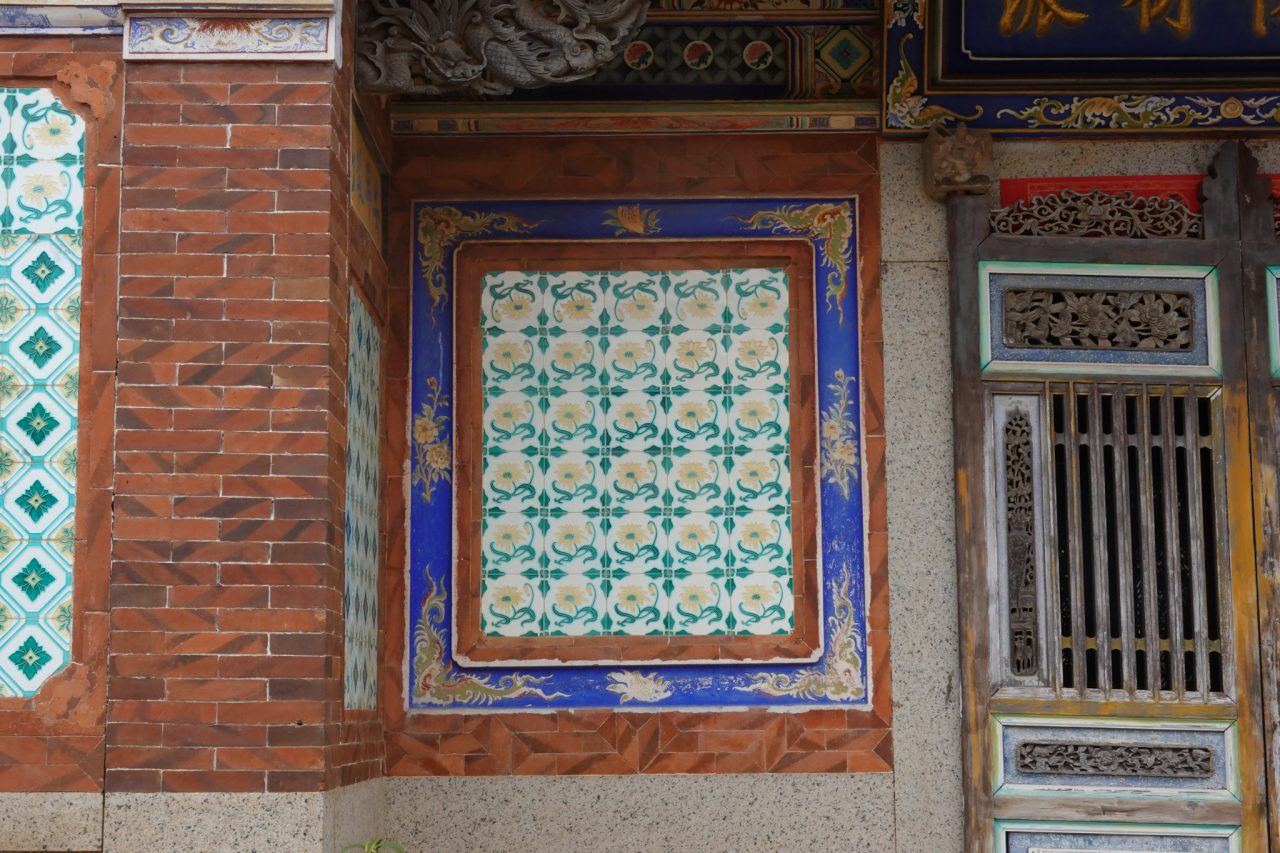
“Just one of these tiles was worth one ping (approximately 35 square feet) of land. Can you believe it?”
“These were made in Japan and bought via Southeast Asia.”
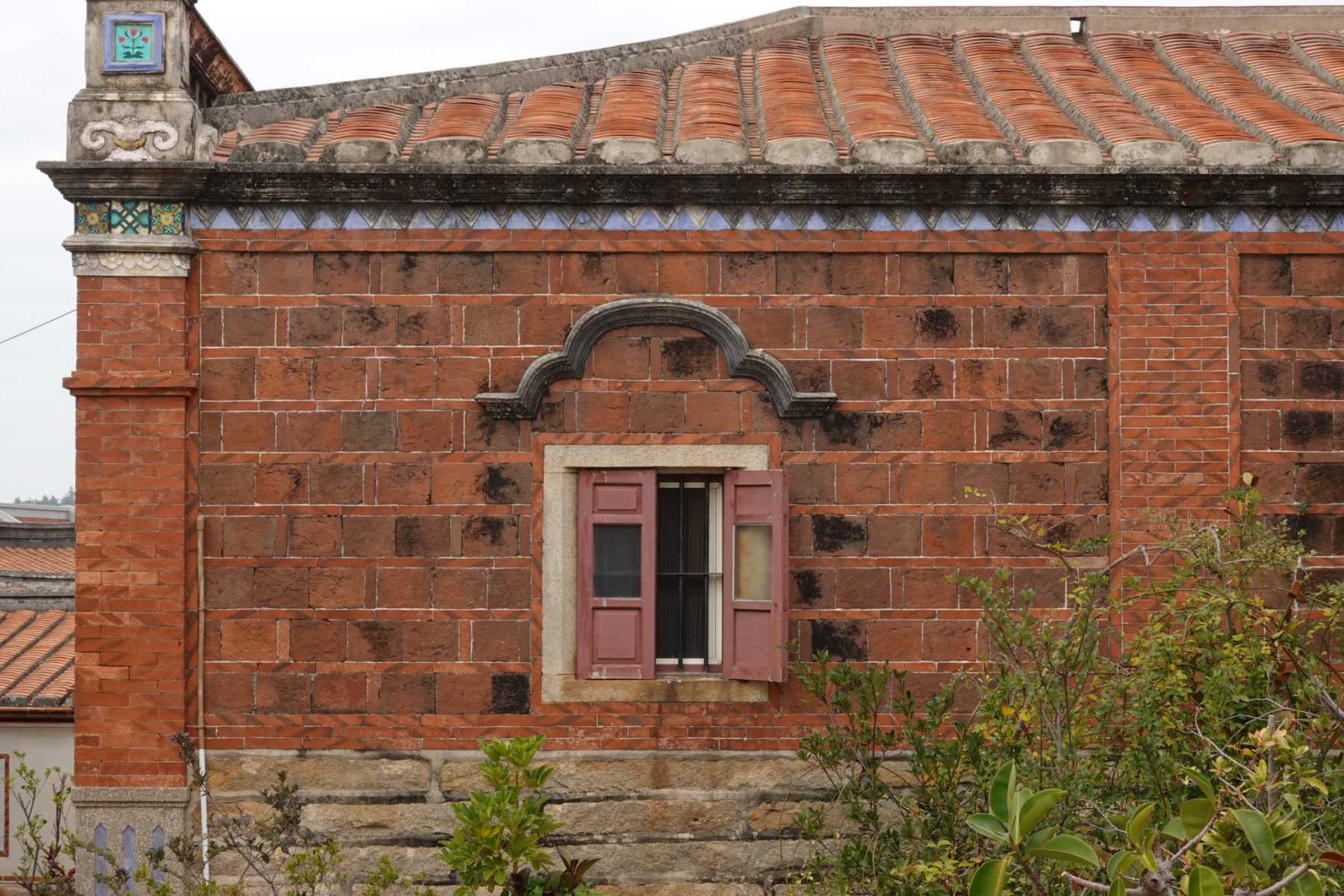
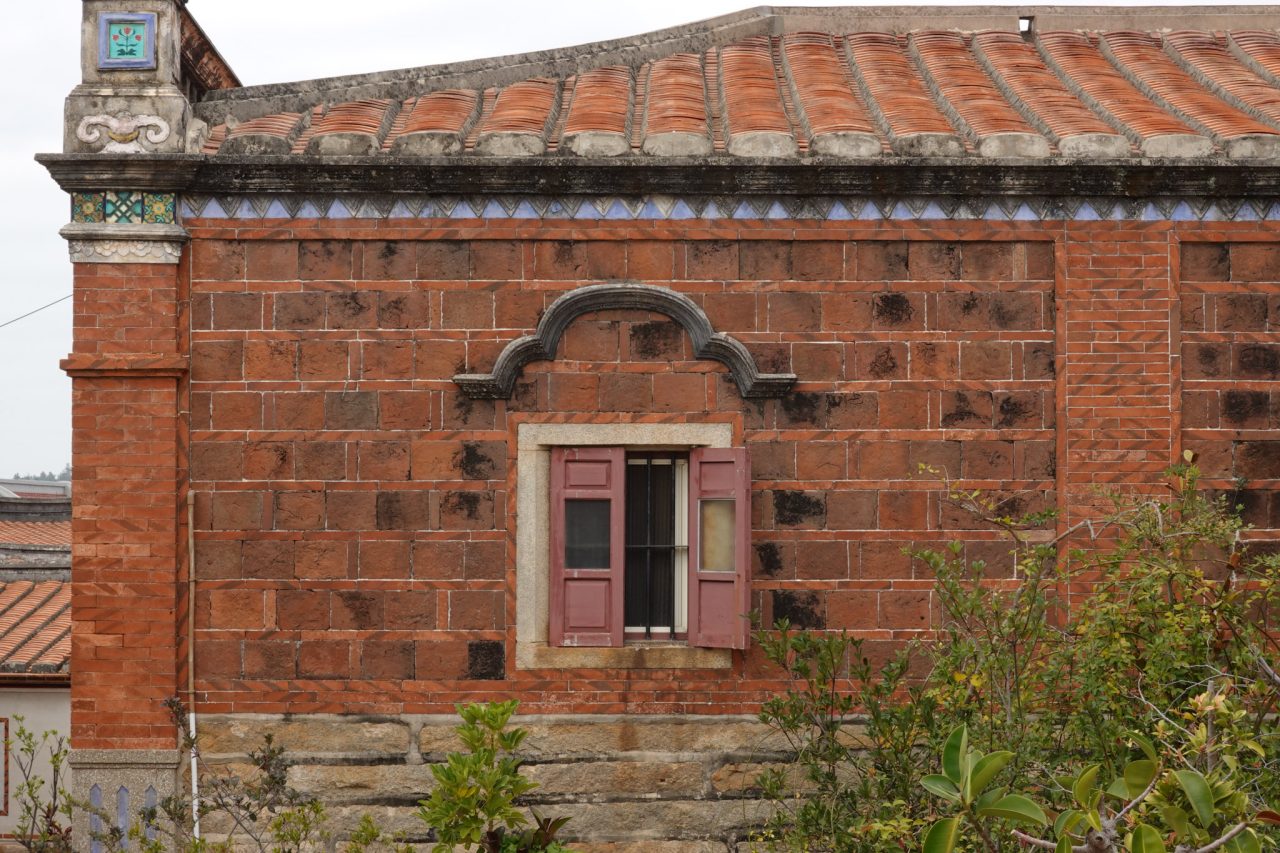
He spoke as he pointed at the vividly colored tiles. It seems that Japanese-made majolica tiles, popular in Southeast Asian in the early 1900s, had been imported from there into Kinmen. The construction of the main building still looked fundamentally Hokkien in style, but its outer walls were largely decorated by these tiles. Looking at these carpets of tiles framed like windows, I could surmise that they must have once been treasured as replacements for the latticed windows once used as decorations in Taiwanese architecture.
You can even climb to the roof of this building, and it’s been made into a veranda of sorts. Seeing the bannisters created there as if to connect the twisting traditional roofs makes it clear that Western elements had been added on to gradually transform this building into a yang lou.
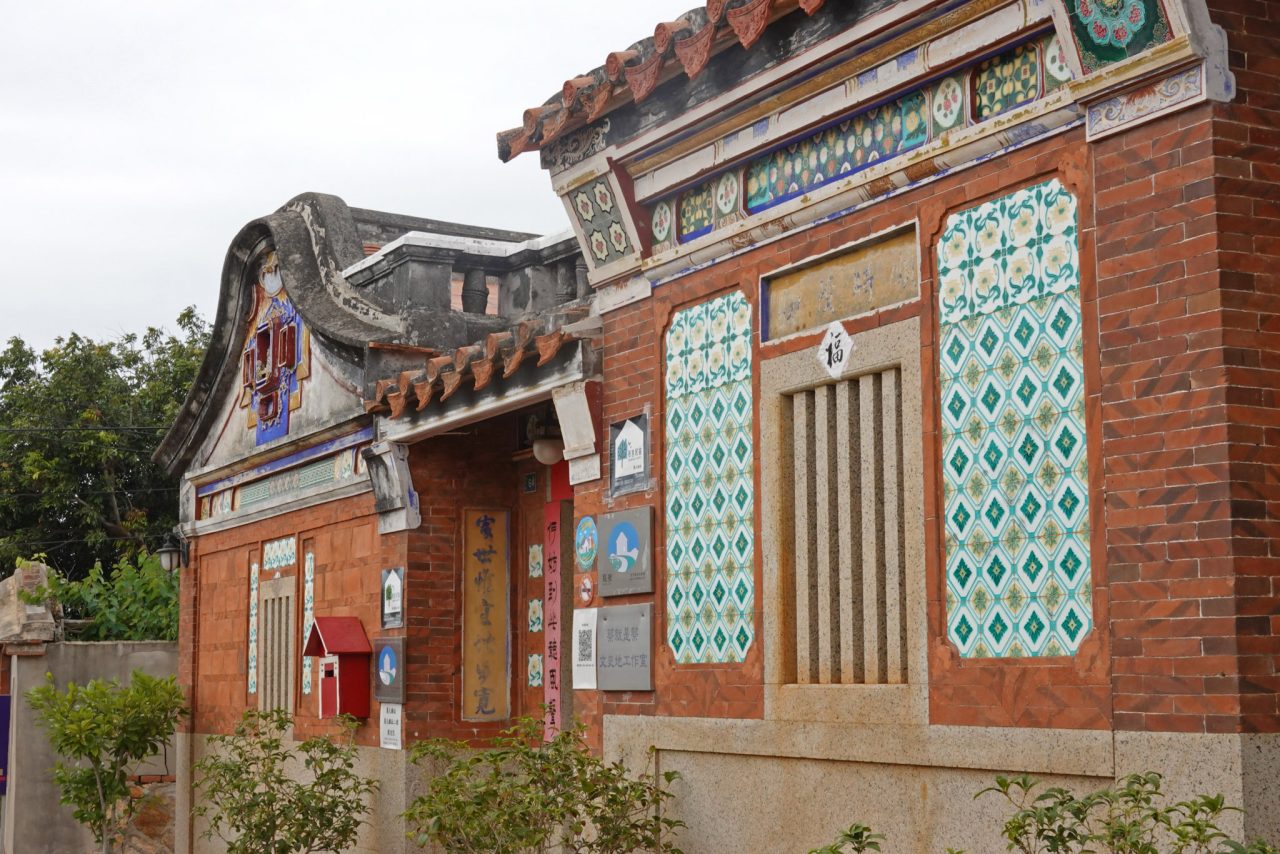
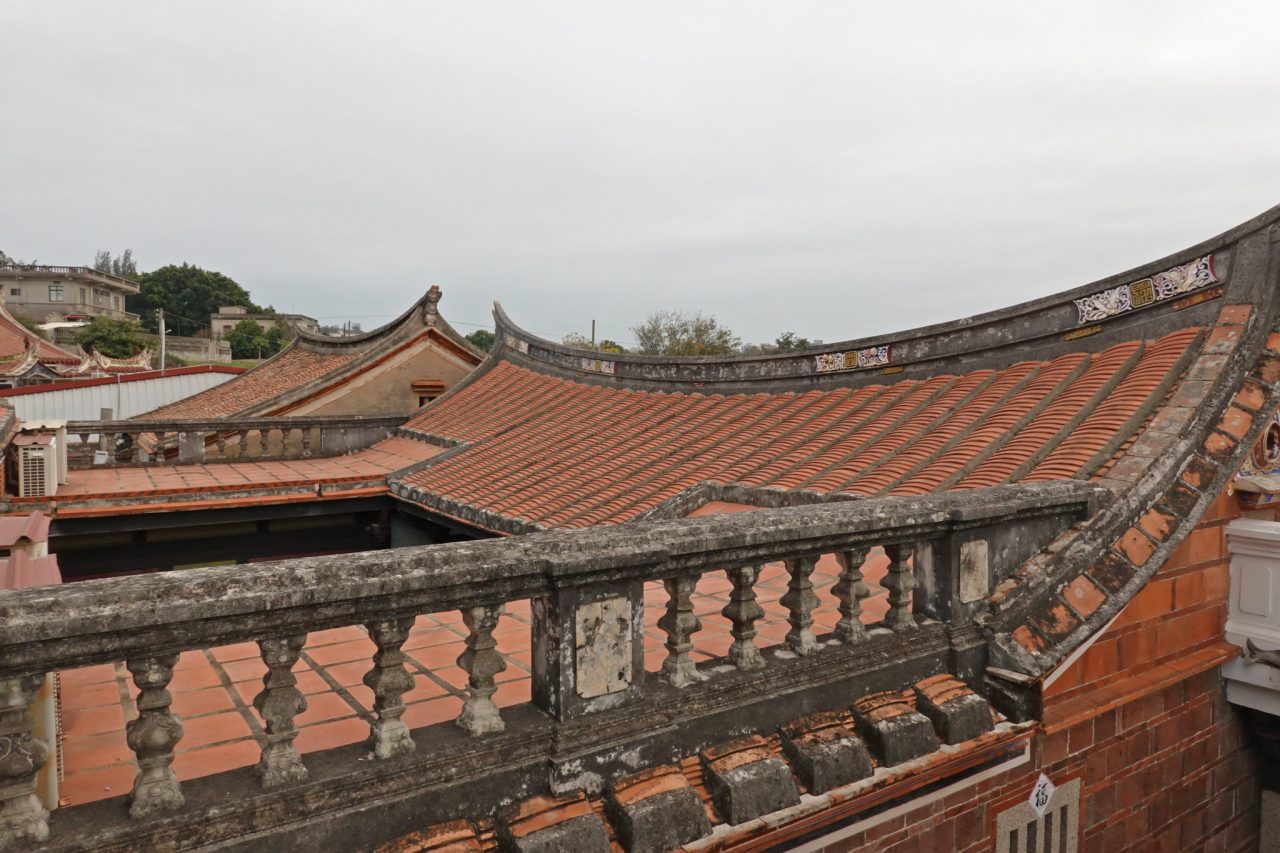
An even more Western yang lou had been built next to the main structure, with a square yang lou featuring a traditional curved roof and arched opening sitting about thirty centimeters away.
“This is where the old men would smoke opium,” the owner informed me as he looked at the yang lou section. The overseas Chinese had returned with souvenirs of all kinds.
-
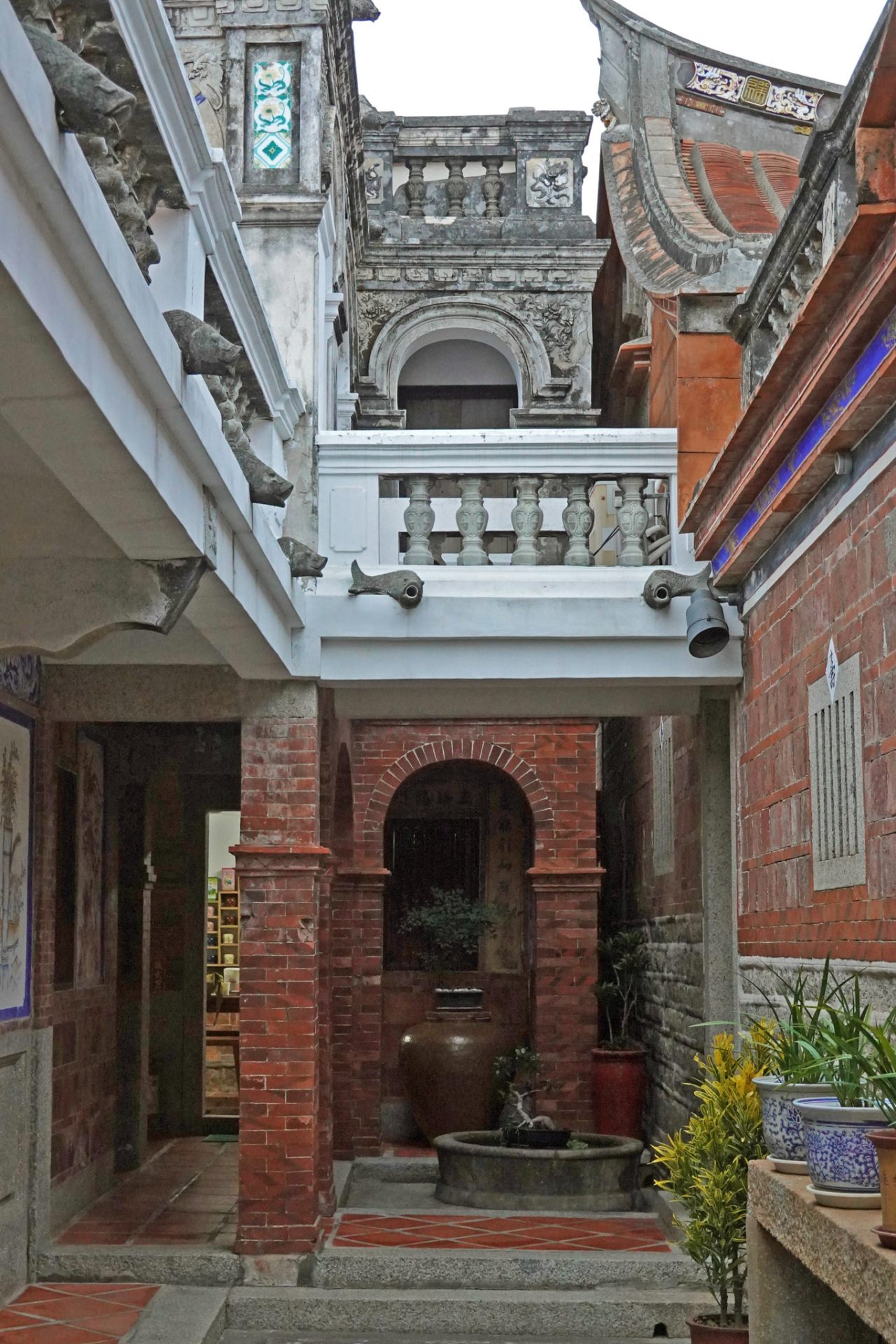
A yang lou structure sitting to the side of a main traditional building -
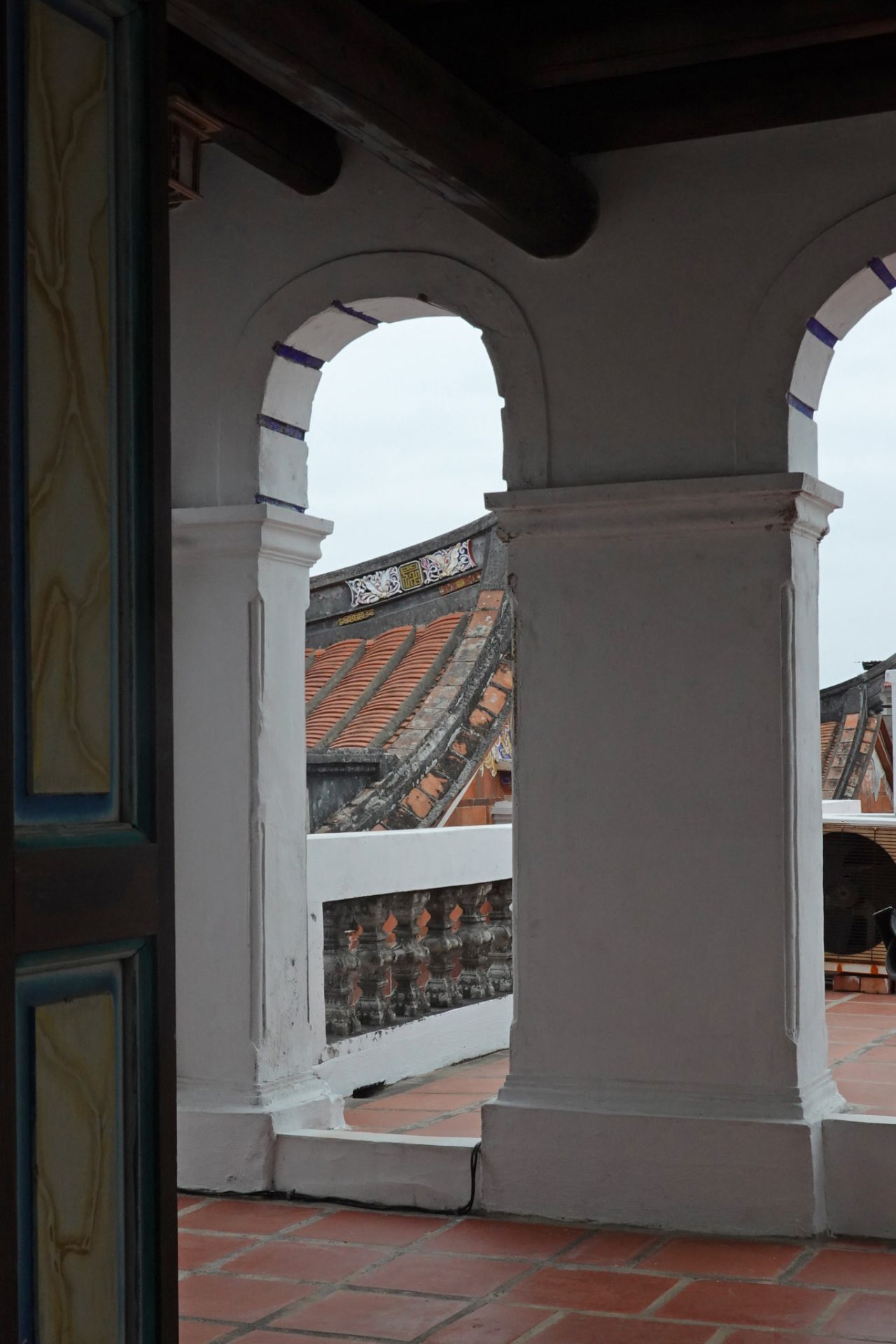
Looking at the main building’s roof from the yang lou’s second-floor “opium room”
Modern Taiwanese architecture is usually considered to have started with the Western architecture brought over during the period of Japanese rule (such as the Government-General of Taiwan), but there must have in fact been another route it took to arrive here in the Kinmen Islands, which was not under Japanese control. This unique form of “modernization by way of the overseas Chinese in Southeast Asia” gives one a true sense of the depths of Taiwan as a nation.
Shortly after the war, these islands militarized once more for a war against the mainland. With no civilian development, time stopped here for a significant amount of time. Many of the yang lou that marked the start of modernity were left standing, yet the island also bears the scars left by a war that indiscriminately destroyed both those yang lou as well as traditional houses. Only about thirty years have passed since martial law was lifted and the islands began turning into a tourist destination in the 1990s. Since then, the number of concrete residences with stores attached has increased, similar to what you would see on the main island of Taiwan.
When I happened to look up amidst the town’s buildings, there I found the wings of an angel flapping there above a concrete window, as if searching for the identity of these islands.
-
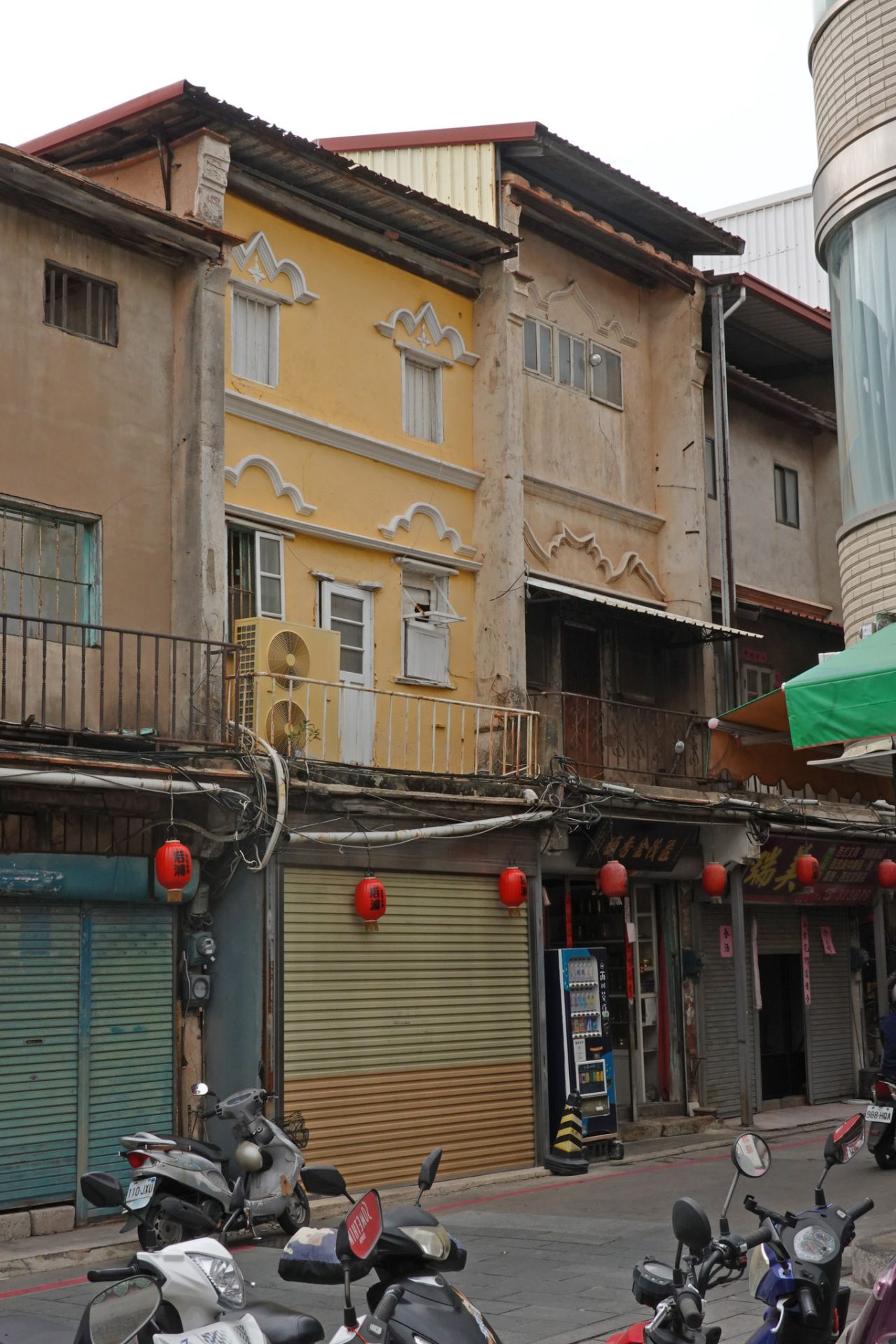
Concrete residences that have been given small eaves
Ryuki Taguma
Taguma was born in Tokyo in 1992. In 2017 he graduated from Waseda Universityʼs Nakatani Norihito Lab with his masterʼs in architectural history. During his time off from graduate school, he traveled around villages and folk houses in 11 Asian and Middle Eastern countries (his essays about this trip are serialized on the Window Research Institute website as “Travelling Asia through a Window”). In 2017, he began working under Huang Sheng-Yuan at Fieldoffice Architects in Yilan County, Taiwan. In 2018 he was accepted to the UNION Foundation for Ergodesign Cultureʼs overseas training program, and in 2019 he was accepted to the artist overseas training program promoted by the Agency for Cultural Affairs. He is based in Yilan, where it rains for the majority of the year, from which he designs various public buildings such as parks, cultural facilities, parking structures, bus terminals, and more.

MORE FROM THE SERIES
-
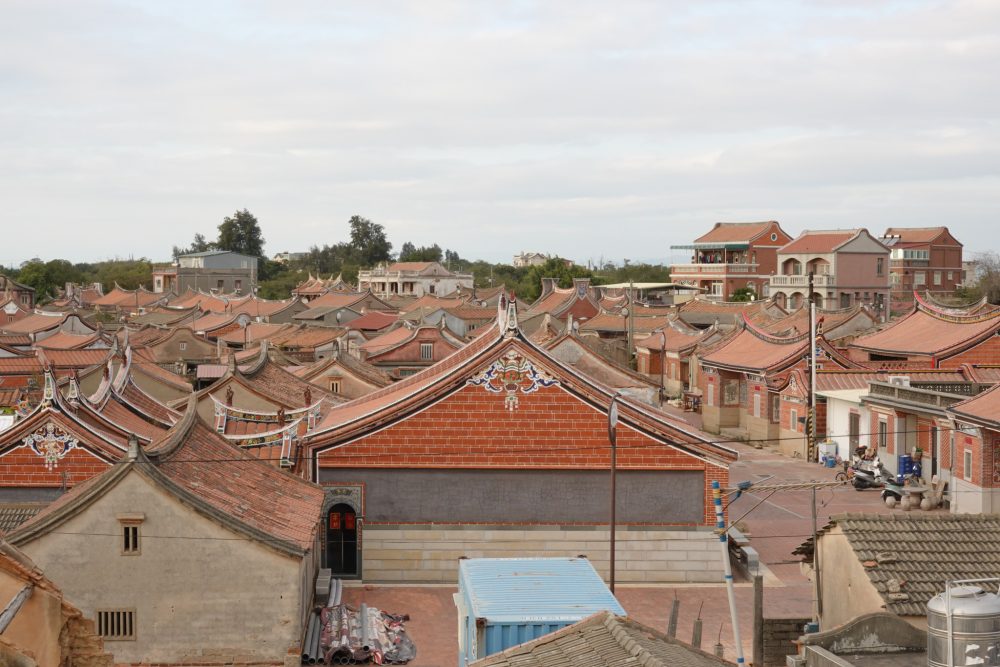
Contemporary Taiwan through a Window
Issue 16: Red Bricks and Bullet Holes : The Kinmen Islands (Part 1)
18 Dec 2025
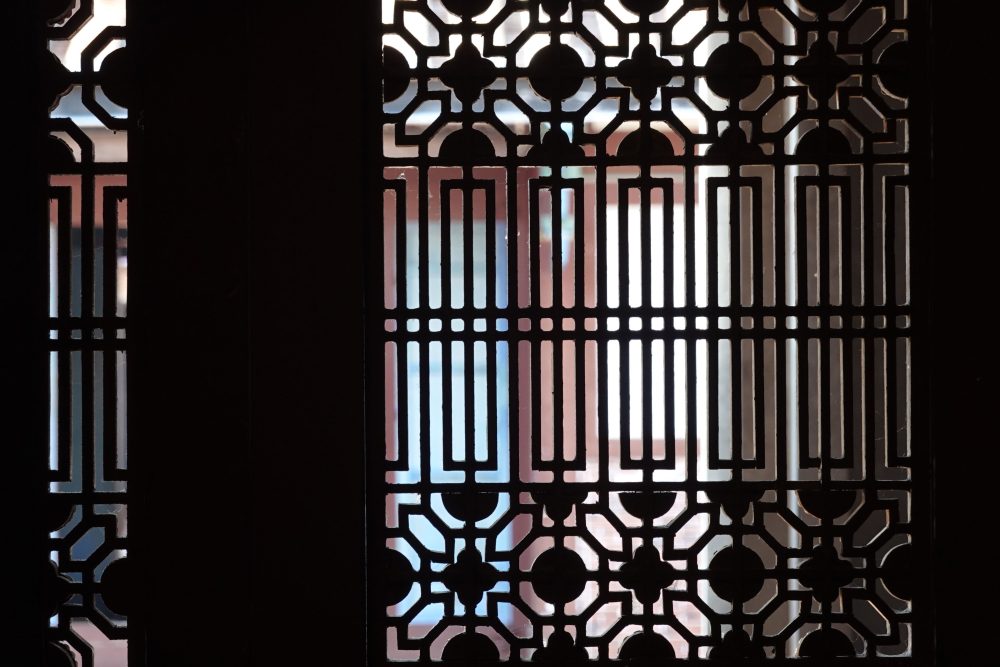
Contemporary Taiwan through a Window
Issue 15: The Folk Spirit Dwelling Within Decorative Window Grilles
22 Jul 2025
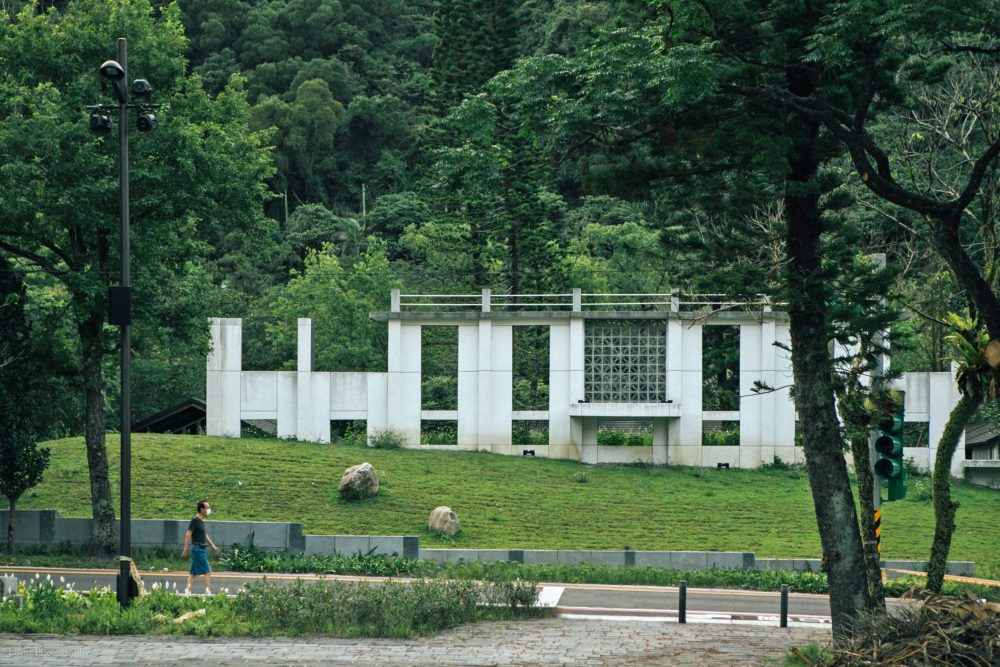
Contemporary Taiwan through a Window
Issue 14: A Window for Standing Still—Fieldoffice Architects, Paomagudao Park
22 Jan 2025
Contemporary Taiwan through a Window
Issue 13: Democracy Under Canopies (Fieldoffice Architects)
18 Nov 2024
RELATED ARTICLES
-
Contemporary Taiwan through a Window
Issue 12: A Small Church for the Indigenous (Taitung)
20 Jun 2024
Contemporary Taiwan through a Window
Issue 11: Joined Somewhere, Connected Throughout—Chen Chi-Kwan, Tunghai University Methodist Hall
04 Mar 2024

Contemporary Taiwan through a Window
Issue 10: The Billowing School—Chen Ren-He, Wave Building, San Sin High School of Commerce and Home Economics (Kaohsiung)
10 Jan 2024
Window Behaviorology on Nordic Architecture
Alvar Aalto
Dining room of Aalto House12 Mar 2026
NEW ARTICLES
-
Window Behaviorology on Nordic Architecture
Alvar Aalto
Atelier of Studio Aalto17 Feb 2026
Window Behaviorology on Nordic Architecture
Alvar Aalto
Living room of Kantola House08 Jan 2026
Window Behaviorology on Nordic Architecture
Alvar Aalto
Reading room of Paimio Sanatorium23 Dec 2025
Window Behaviorology on Nordic Architecture
Alvar Aalto
Patient’s room of Paimio Sanatorium25 Nov 2025