Series Windows of Japanese Modernist Architecture
The Tatebayashi City Hall: Windows as Instruments for Municipal Communication
23 Jun 2026
- Keywords
- Architecture
- Columns
- Essays
- Japan
Built in 1963, the former Tatebayashi City Hall (now the Tatebayashi Civic Center) represents a work informed by the design theory of ka, kata, katachi presented in Kiyonori Kikutake’s book Taisha kenchikuron (Theory of metabolic architecture). Listed by DOCOMOMO Japan in 2022, the building features a variety of distinctive windows, attributable in part to graphic designer Ikko Tanaka. Yuta Genda of DOCOMOMO Japan explains how the building and its windows reflect their era and embody a vision for municipal governance.
1. A Center for Municipal Governance
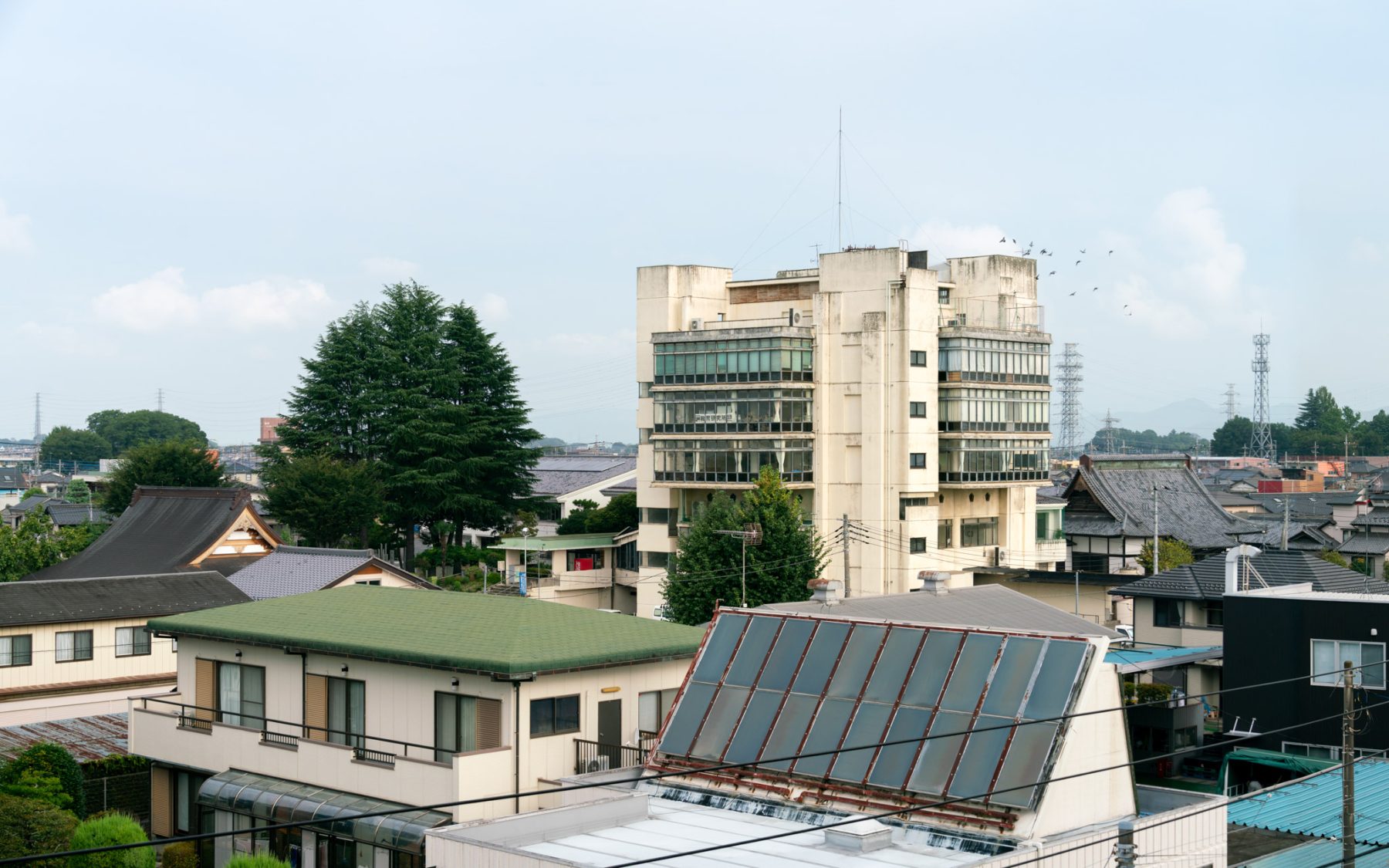
The former Tatebayashi City Hall is a ten-minute walk from Tatebayashi Station. If you cross the station plaza, turn left, and continue down the street, you should spot the building’s distinctive geometric form and large glazed surfaces across Nakamachi Park on your right-hand side. Its architect was Kiyonori Kikutake.
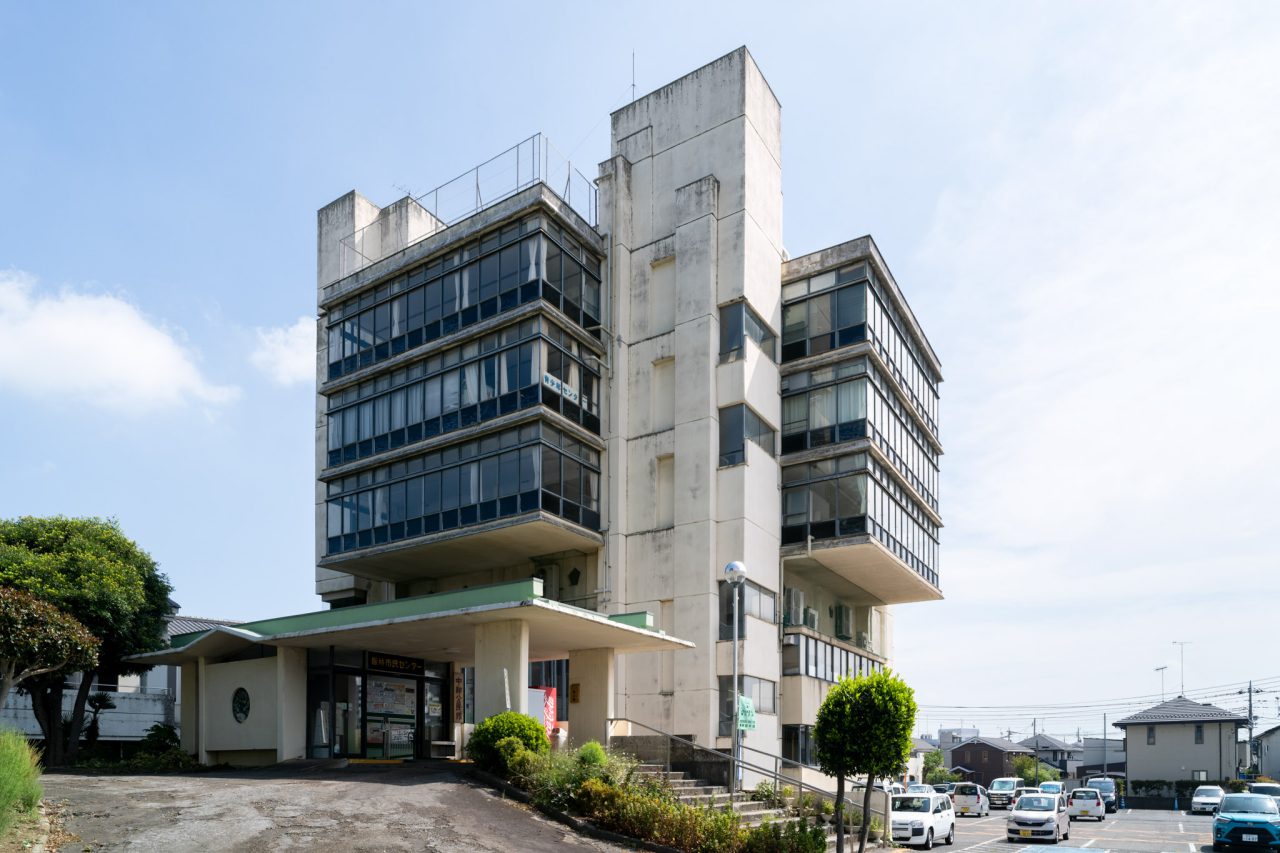
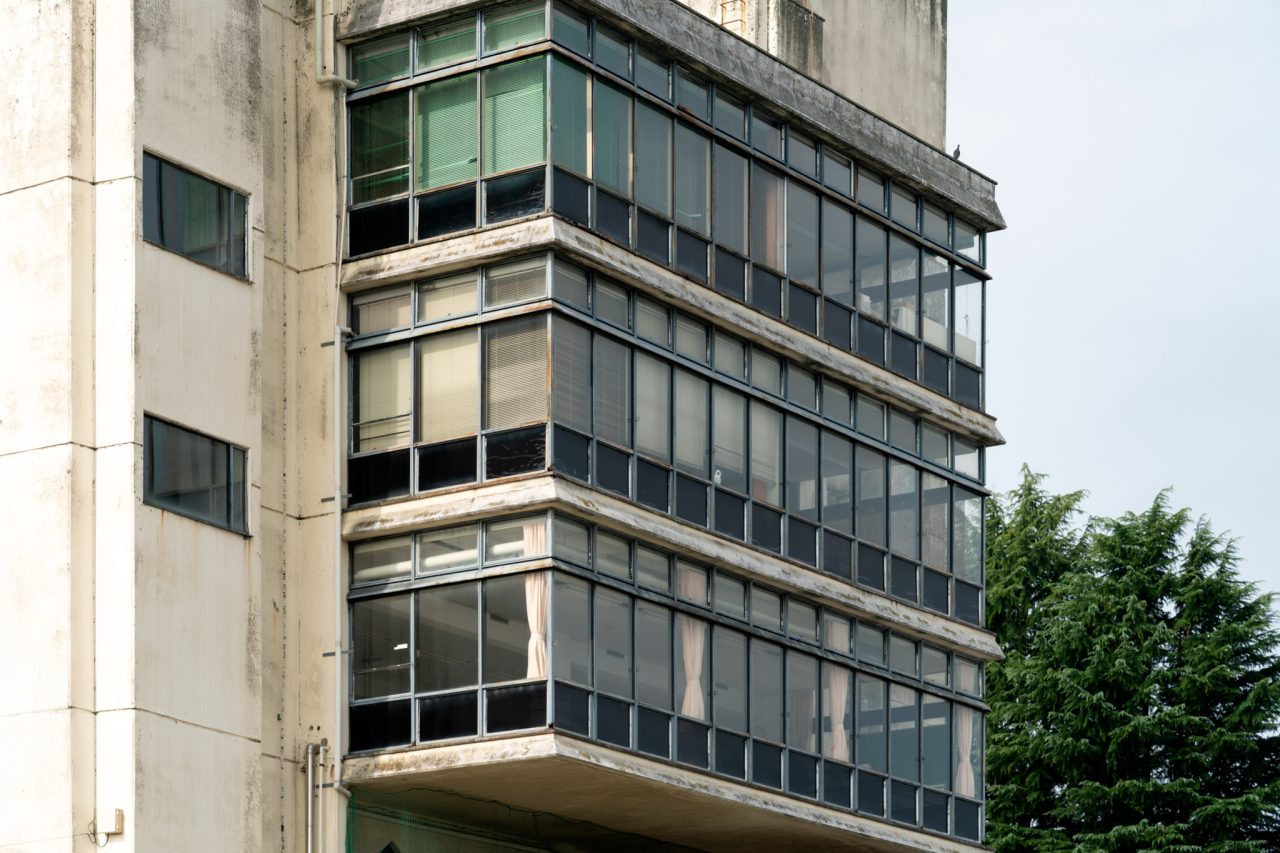
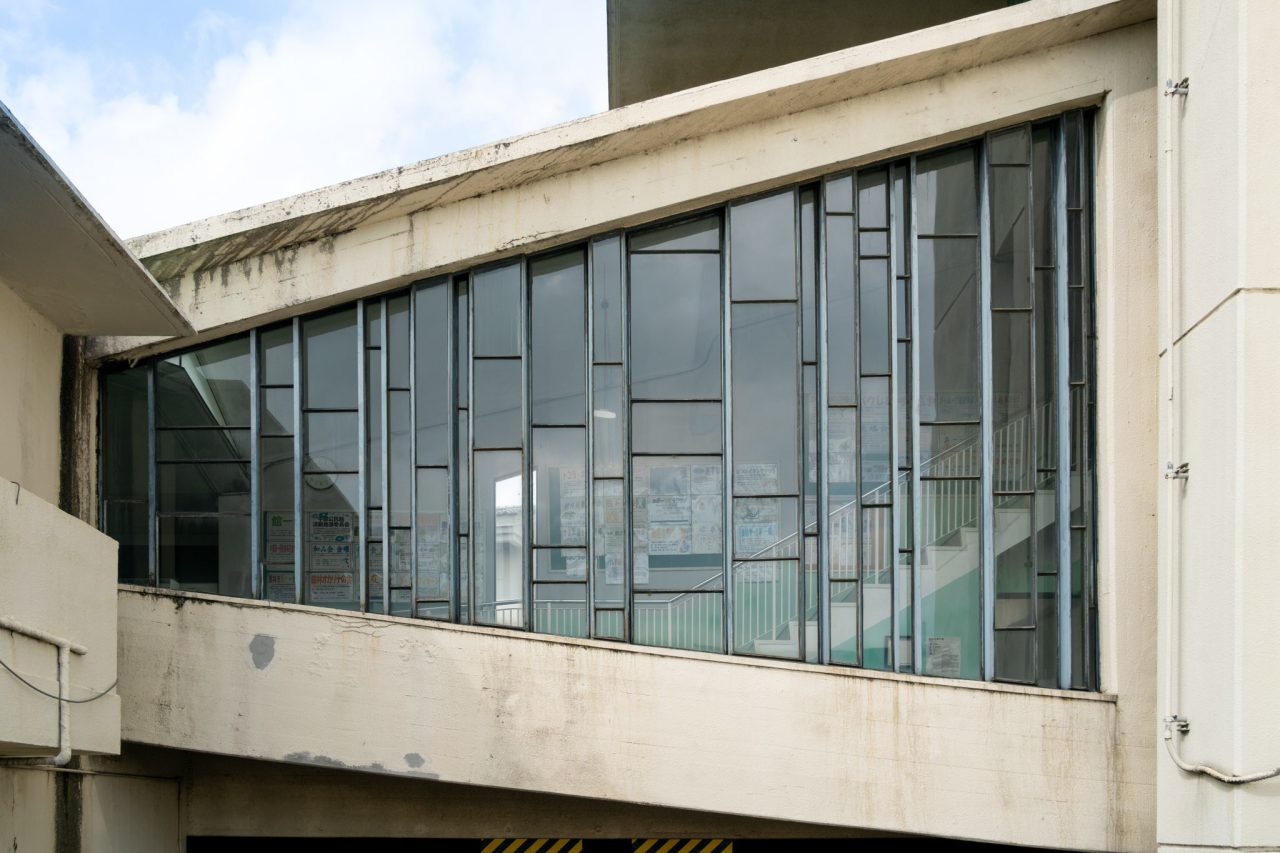
What immediately strikes you about this building, which rises between the temples of Senganji and Jokoji to its south and north, respectively, are its three stories of continuous windows suspended in mid-air. The transparency of the glazed façades intuitively expresses the stance of the local government. Meanwhile, the massive piers at the four corners of these windows, as explained by Kikutake himself, “were intended to embody the strength required to create a place within the vast space of a city”, “had to be expressed as simultaneously supporting the city hall and being supported by the city”, and “took on a unique strength as pillars of Tatebayashi”.
The building stands on a site historically occupied by the town hall, located almost at the very center of the city. Tatebayashi became a city through the consolidation of one town and seven villages in 1954, and the Tatebayashi City Hall—a work of Metabolist architecture—was constructed as a new center for municipal governance approximately a decade later, in 1963.
2. The Era of the Project and the Development of Kikutake’s Architecture
The 1960s marked a period of significant development for the Metabolism movement and coincided with a nationwide construction boom of public facilities prompted by postwar municipal consolidation. Numerous prominent works of public architecture were realized during this time; those listed by DOCOMOMO Japan alone include the Hashima City Hall (1958) by Junzo Sakakura, the Kagawa Prefectural Government Hall (1958) by Kenzo Tange, the Asahikawa City Hall (1958) by Takeo Sato, the Shimane Prefectural Office and surrounding buildings (1958–1970) by Kikutake and Katashi Yasuda, the Ashiya Civic Hall (1963) by Sakakura, the Ueno Municipal Office (1963) by Sakakura, the Okayama Civic Hall (1963) by Sato, the Hiraoka Municipal Office (1964) by Sakakura, the All Japan Seamen’s Union Hall (1964) by Masato Otaka, the Tsuyama Bunka Center (1965) by Koji Kawashima, the Nara Prefectural Government Building (1965) by the Ministry of Construction’s Kinki Regional Construction Bureau and Teruo Katayama, the Oita Prefectural Library (1966) by Arata Isozaki, the Yamanashi Culture Hall (1966) by Tange, and the Miyakonojo Civic Center (1966) by Kikutake.
-
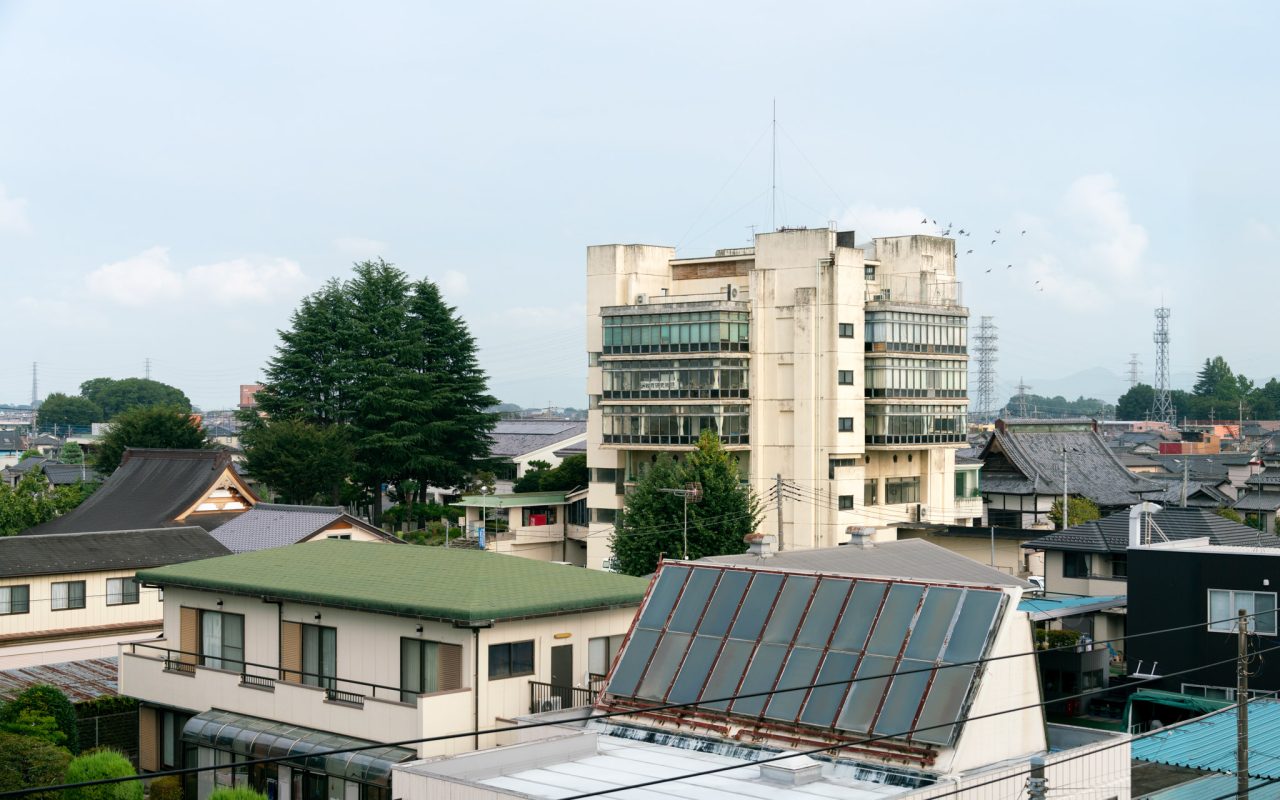
Overall view from the southeast. The two temples, Senganji (left) and Jokoji (back right), are pictured to its south and north, respectively.
It was during this period that Kikutake implemented his design theory of ka, kata, katachi [these terms may respectively be interpreted as “essence”, as in the vision, principles, and concepts that guide a design; “substance”, as in the organized configuration of technologies, systems, and components that define a design; and “phenomenon”, as in the functioning design as it is actually built and experienced], which he later compiled in the book Taisha kenchikuron [Theory of metabolic architecture] (1969). This led Kikutake and his team to develop a formal typology in which spaces are lifted into the air by structural systems, as exemplified by the Sky House (1958), Tatebayashi City Hall, and Tokoen (1964). As explained by Shozo Uchii, one of Kikutake’s employees at the time, they posited that “the essence of the city lies in communication” and considered it crucial in urban design projects to ask, “What kind of place must we provide in order to forge connections between the people it will serve?” Recognizing that there was a growing need in cities for mutually trusting human relationships as opposed to the “top-down, antagonistic citizen-bureaucracy relationship”, they were mindful of both the citizen-to-citizen interactions as well as citizen-to-public-servant interactions when articulating the kata. They then determined that they could organically join three supporting/supported components—the council chamber, administrative department, and flat slabs extending in all four directions—with a system of connective elements to achieve a form that expresses a sense of both freeness and order while accommodating functionally fluid spaces. It was precisely this spatial system that they adopted as the kata for the Tatebayashi City Hall. The building was also envisioned with the potential for future expansion, though this was never realized.
3. A Modern Castle
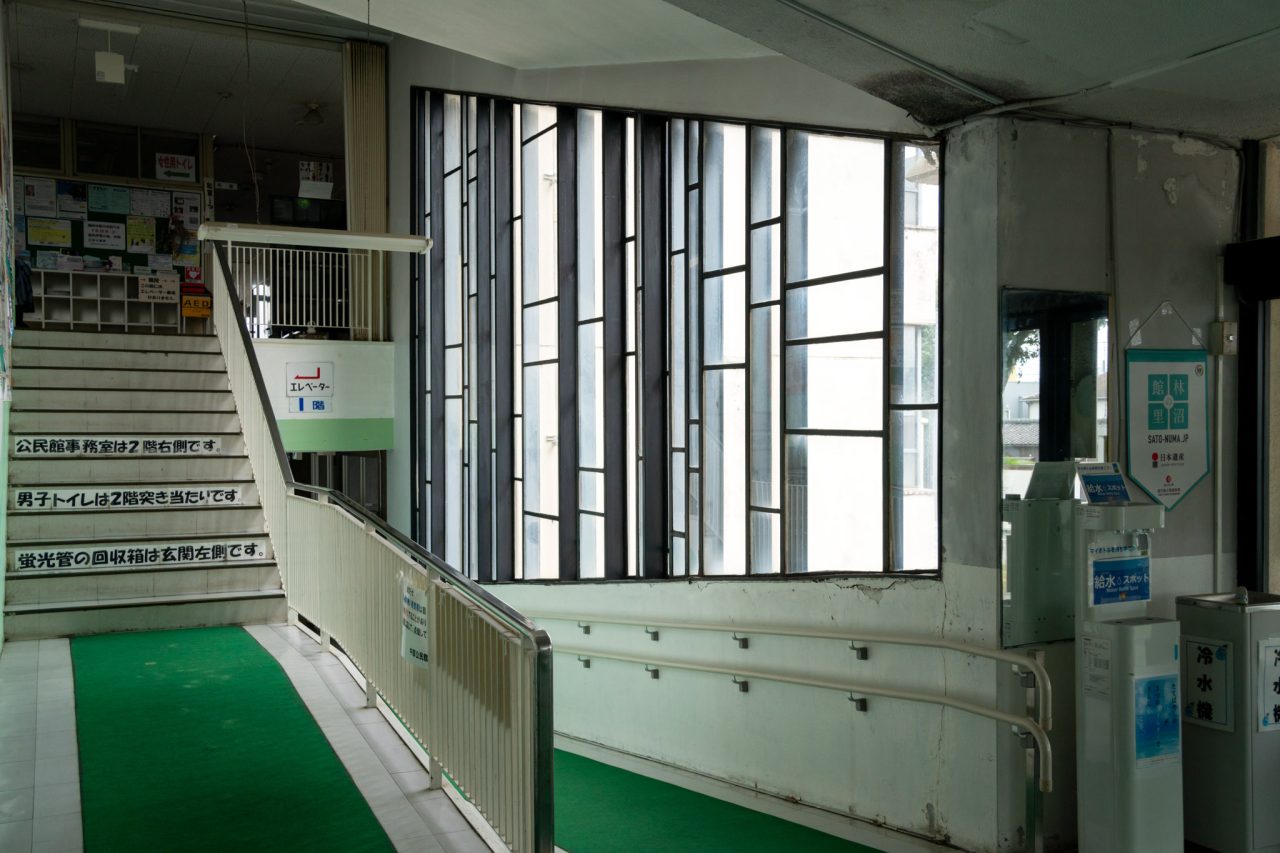
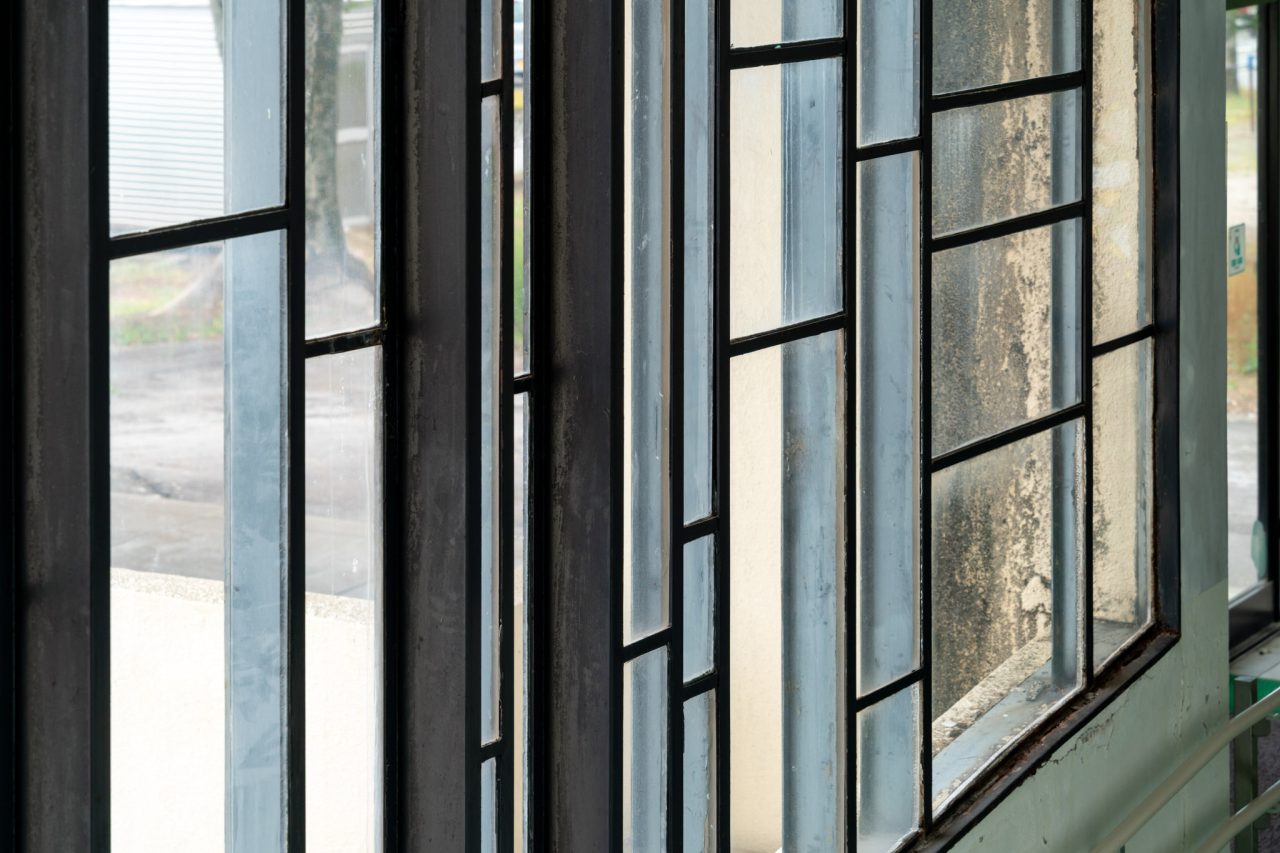
At the time of completion, the area around the main building now occupied by the parking lot and internal access road was landscaped with a pond and berm. After arriving at the entry structure on the south side, visitors would have followed the walkway across the pond into either the first or second floor of the main building. There were public service counters on both floors. The design intent for the entrance walkway was to create “a ʻvisually transparent’ space that is engaged with civic life, welcoming, and enriching”. The large vertical lattice window on its south side recalls both the formal vocabulary of Le Corbusier and the traditional Japanese renjimado [slatted window].
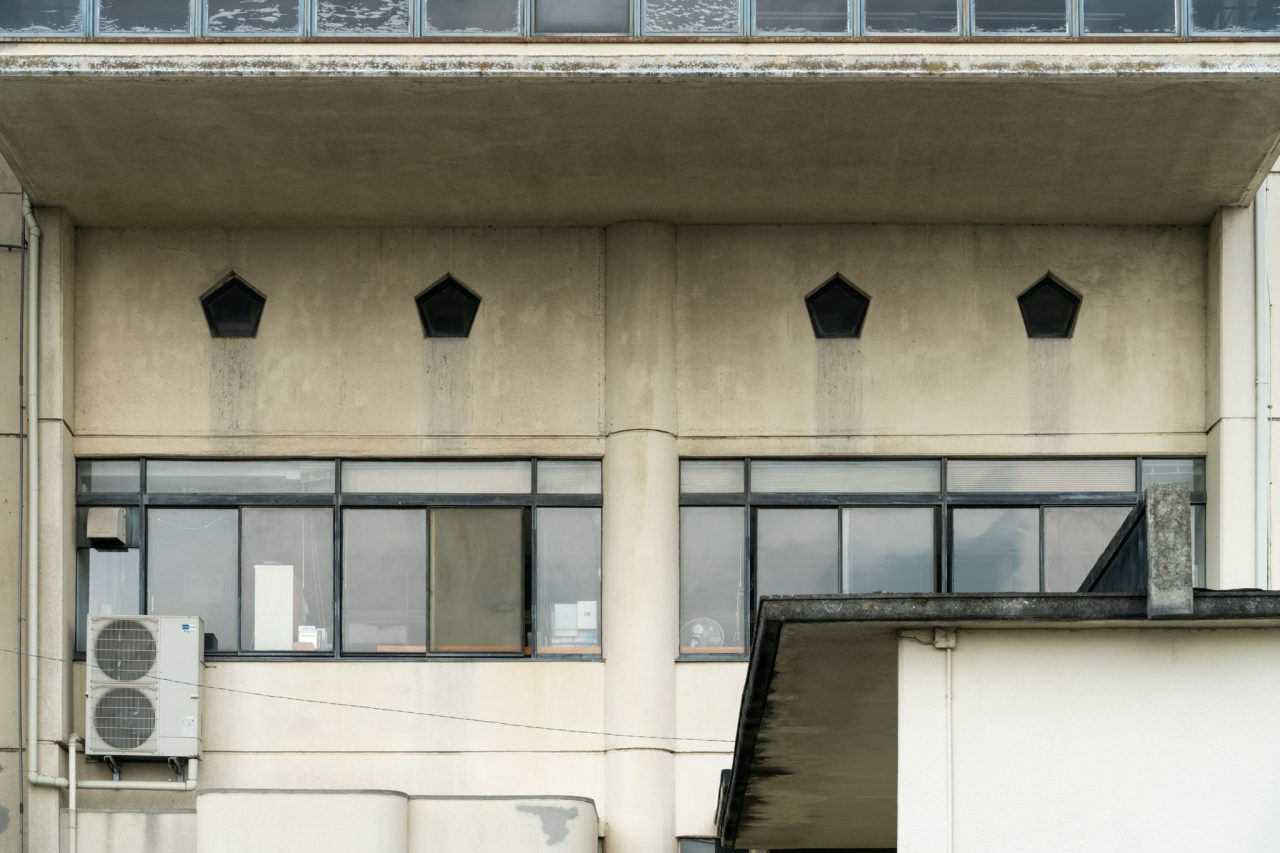
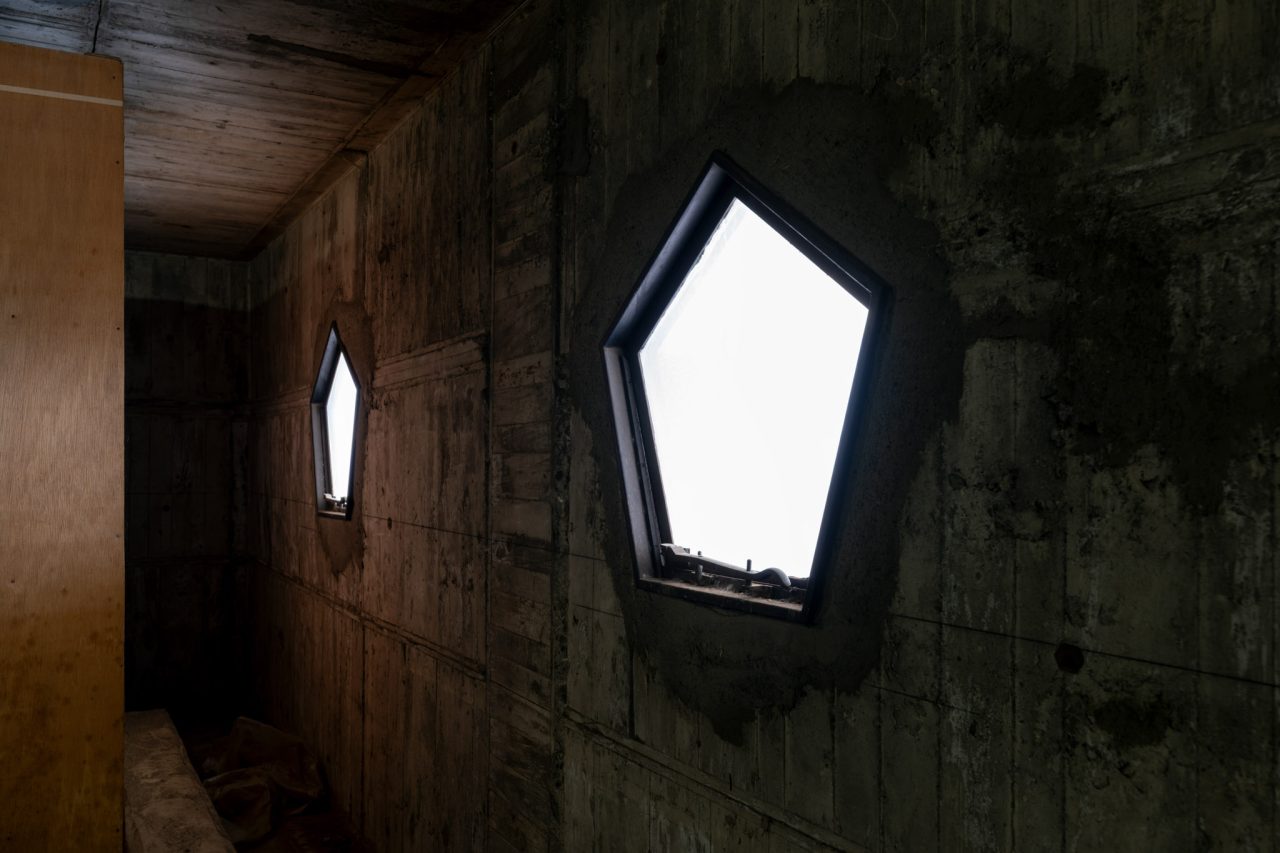
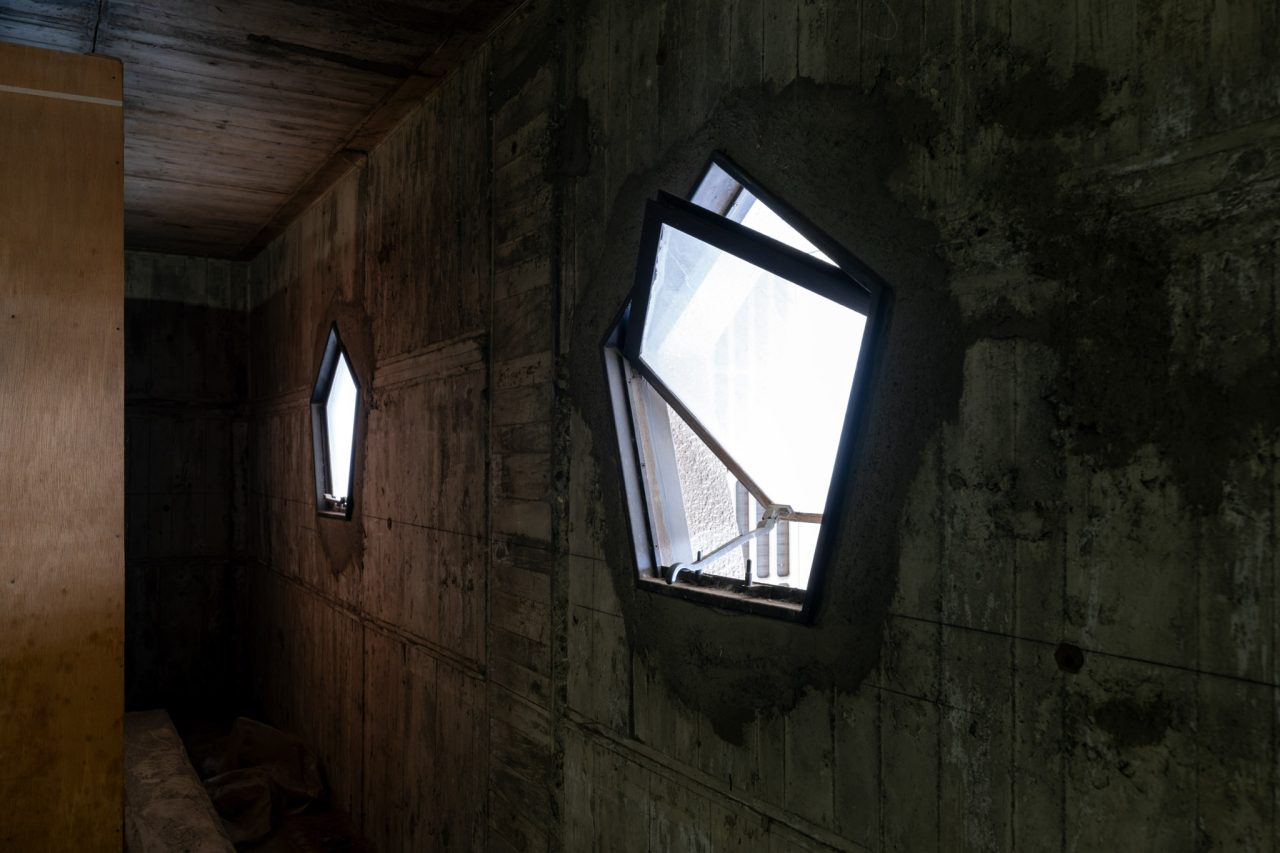
The second floor features an orderly arrangement of pentagonal windows designed by Ikko Tanaka. Serving the document storage spaces, these windows evoke the loopholes of castle fortifications. Historically, Tatebayashi was a castle town centered on Tatebayashi Castle (the present city hall now stands in its place). Given that the castle stood on an alluvial terrace surrounded by the Jonuma Marsh, it is plausible that the former Tatebayashi City Hall was conceived as a modern interpretation of a castle.
4. Harmonizing with the Settings
As you ascend the stairwell, you will come across large windows at the landings. They offer oblique perspectives of the continuous windows and a closer look at the castle-like detailing. These elements are framed together with the traditional architecture of the neighboring Senganji, producing layered views that contrast the modern with the early modern across the foreground and background. The stairwell doors are painted according to a color scheme developed by Tanaka, adding visual variation to the space.
-
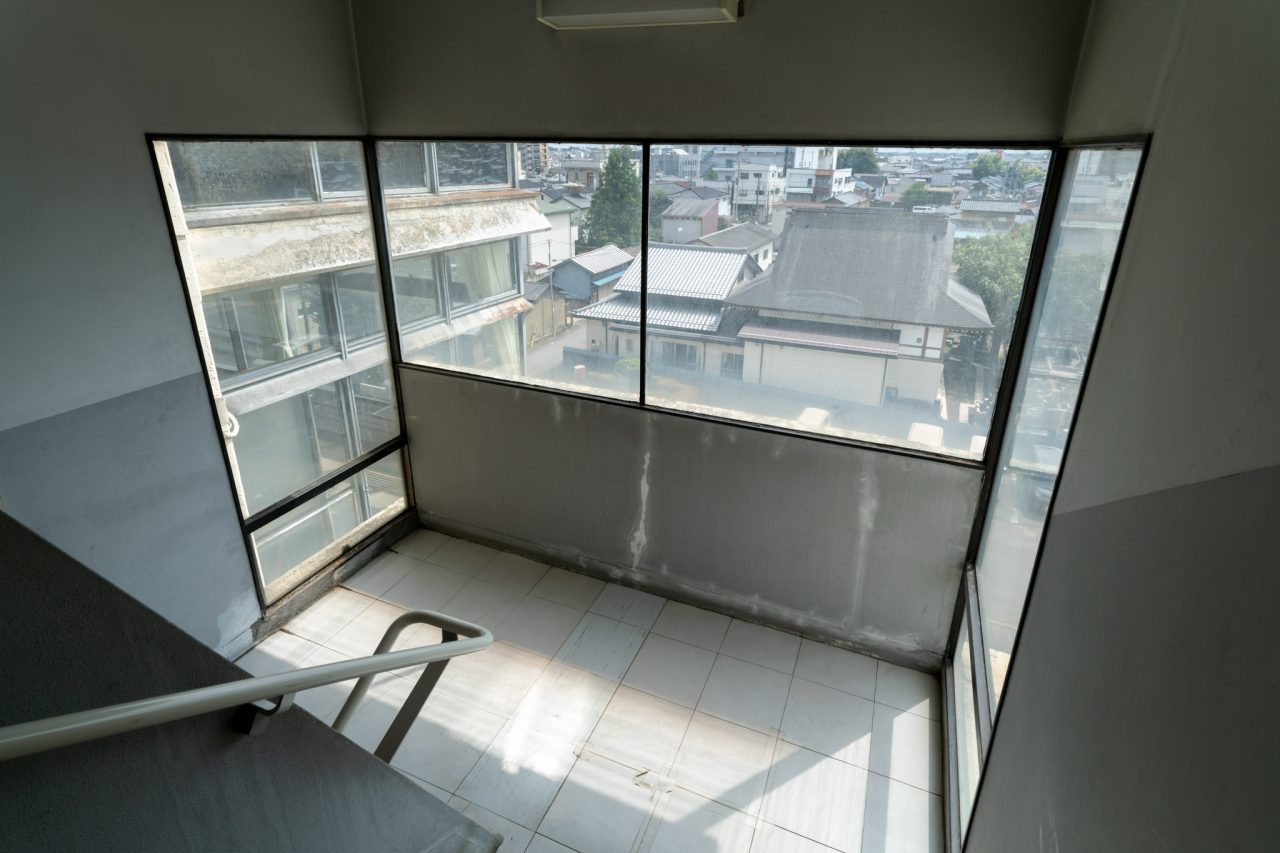
View of the continuous windows (left) and Senganji (back) from a stairwell landing.
5. Projecting the Government’s Image
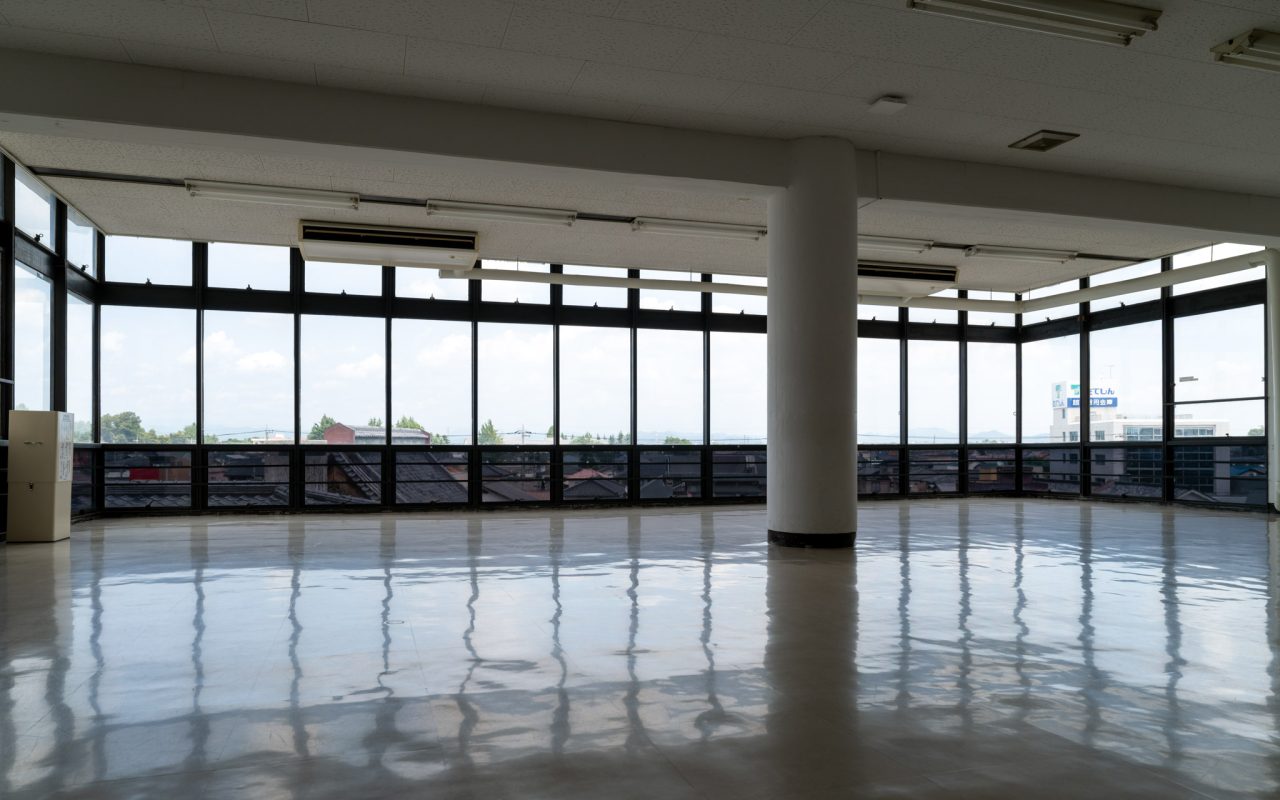
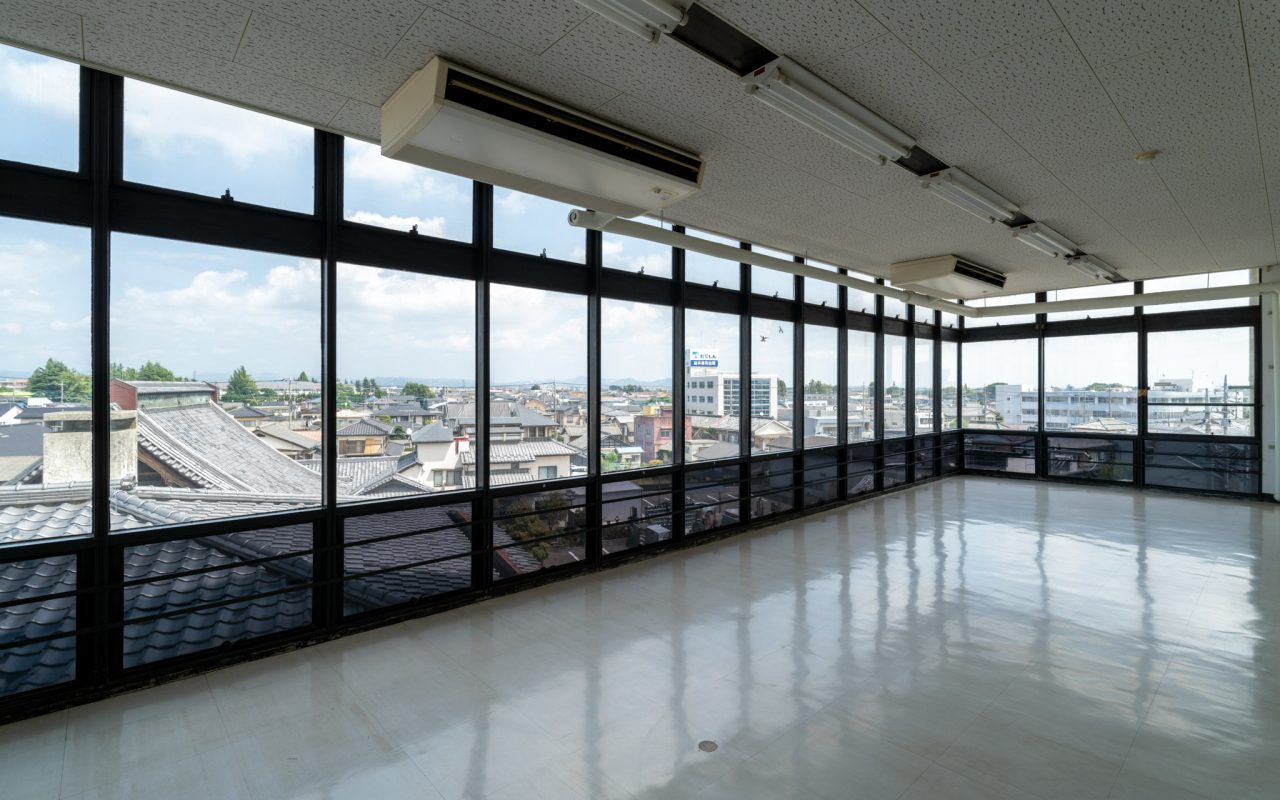
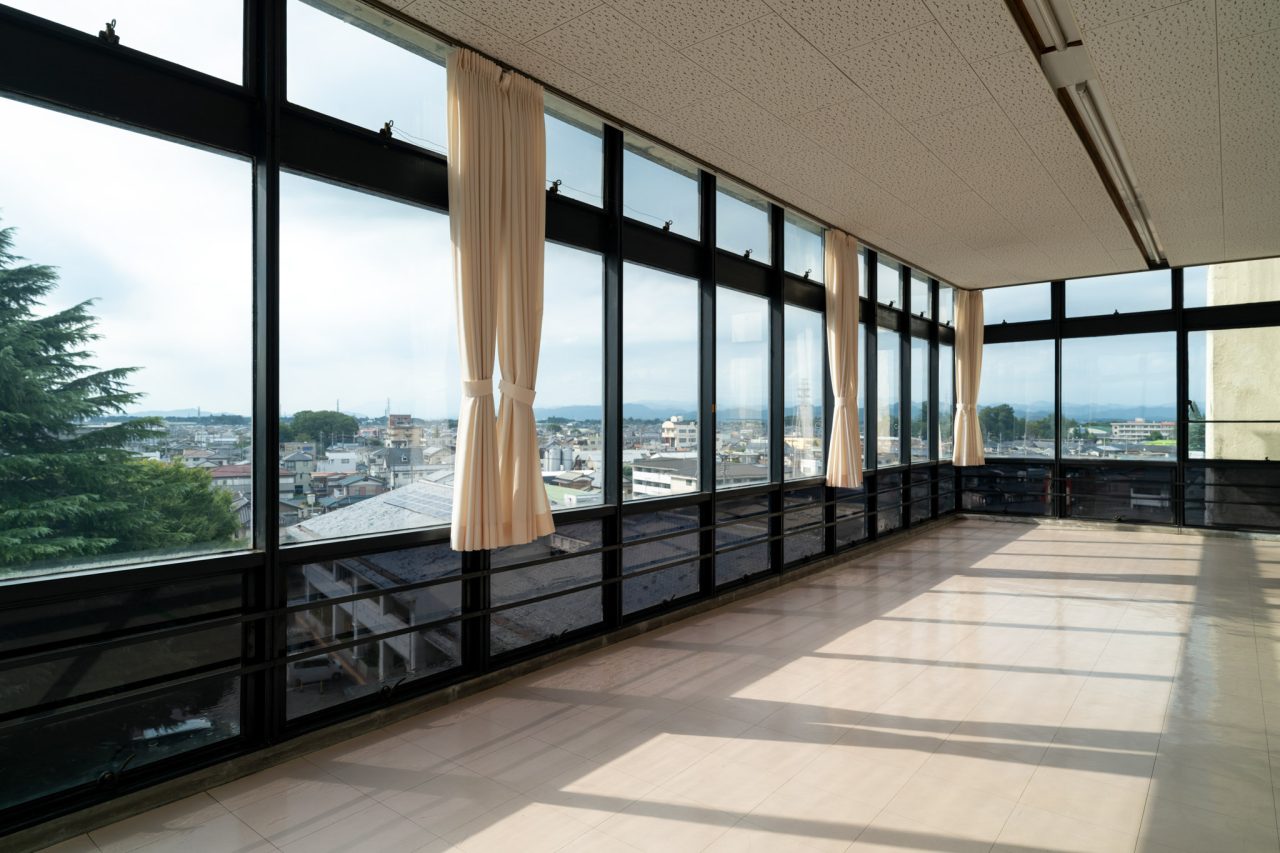
The continuous windows running along all four elevations offer panoramic views across Tatebayashi. Much of the original glazing remains intact and continues to be used with care. Back in the day, municipal workers would have surveyed the city from these windows while debating civic issues. The urban panorama functioned as a full-scale, real-world diorama, similar to the physical models around which architects gather to discuss ideas. These windows also express a sense of political transparency and clearly reflect how the municipal government sought to communicate with its citizens.
6. A Forum for Orienting the City’s Future
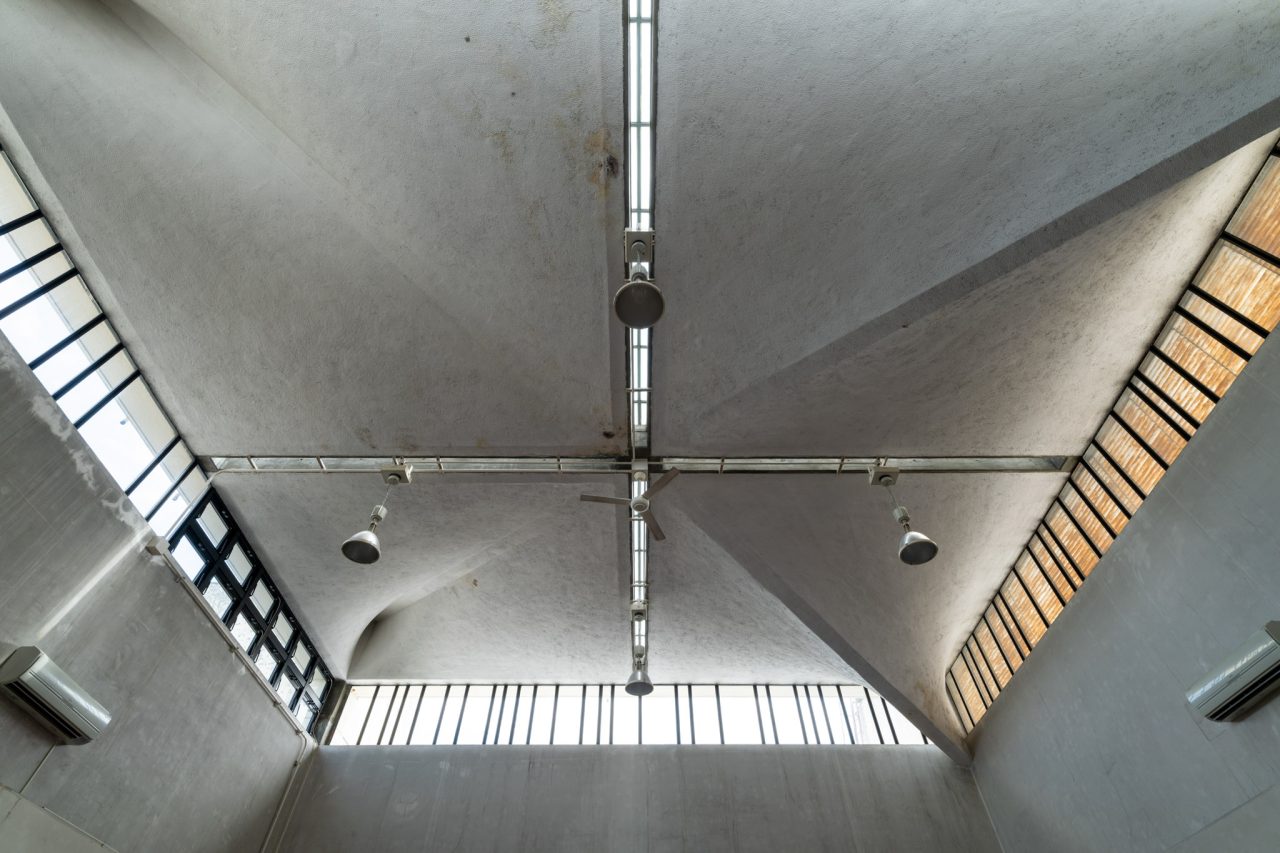
One of the building’s interior highlights is the council chamber, located on the uppermost level. A cruciform skylight and irregularly articulated clerestory windows admit light from above, creating a serious atmosphere that could symbolize the city’s readiness to take on diverse urban challenges.
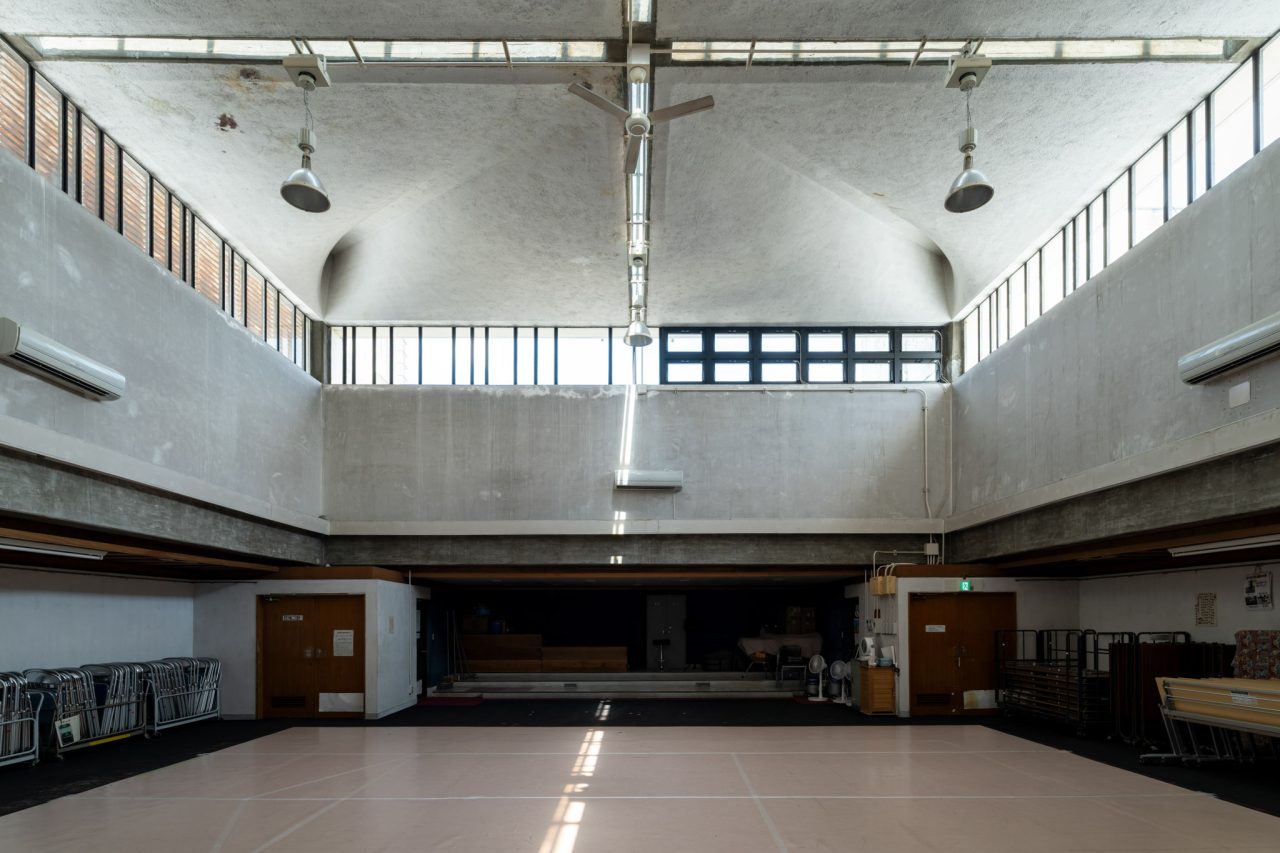
According to Uchii, the design team deemed that the council chamber “required a sense of centeredness rather than directionality”, and by elevating it with the four service shafts, they “positioned it on the top floor to evoke the sense that it is being supported by all the citizens”, while inserting the administrative spaces below to anchor it to everyday civic life. Kikutake believed that “a space suitable for full-participation deliberation must be heightened with sufficient volumetric capacity to encompass its potential”, noting that “its height can be emphasized or diminished depending on how the light is brought inside”.

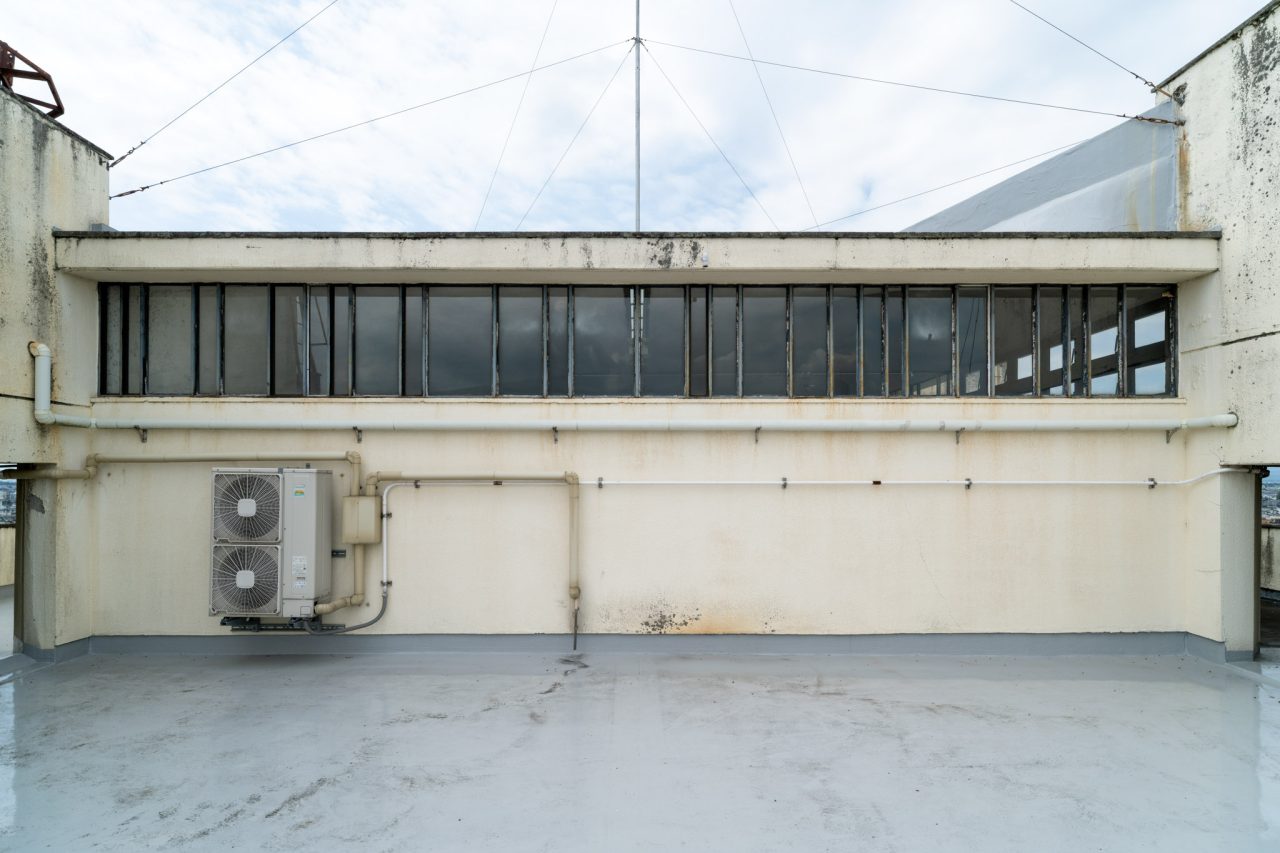
Furthermore, he defined the problem of the council chamber space as one of resolving “the superimposition of two spatial conditions: one focused on exchange with others and another oriented inward toward the individual”, as dictated by “the principles of collective deliberation and individual decision”. However, he also added that “determining what truly is the ideal format for a council chamber remains an ongoing task for us, and we must continue to work on improving it”. Thus, the council chamber was conceived as a place for “deliberating on municipal governance for tomorrow and setting the course for the city’s future”, and its overhead daylighting can be interpreted as symbolizing collective deliberation.
7. Conclusion
The architecture of the Tatebayashi City Hall gave expression to an approach to municipal communication for a new era. It was manifested as a modern castle, informed by Kikutake’s architectural philosophy, and connected to the city through its visual transparency and panoramic views. Of particular note is the manner in which it spatializes the relationship between government and citizens through its windows, underpinned by a gaze engaged with Tatebayashi’s environmental and historical context.
Today, the building is looking to transfer its role to the citizens themselves. The evolving forms of communication taking place in the city will likely inscribe new values onto its spaces. How should we adjust our interpretations of the intentions underlying this work characterized by the distinctive designs and transparency of its windows? This is a question that the people of Tatebayashi must continue to explore as the stewards of this building, and ideally, the very act of doing so will become a new kind of stronghold for shaping the city’s future.
Yuta Genda
Researcher of modern urban history and architectural history. Assistant Professor at Tamagawa University (Apr 2026-). PhD (Engineering). Engages in regional studies and community development by drawing on global perspectives, such as garden cities and New Education, motivated by a commitment to see that our delightful neighborhoods and our bonds with architecture and community are carried forward into the future. Specially Appointed Associate Professor at Jiyu Gakuen College and Visiting Researcher at the Urban Design Lab of The University of Tokyo (Apr 2026-). Secretary General of DOCOMOMO Japan. Papers include “Study of Conservation and Succession Process in Modern Architecture as Unrecognized Cultural Property: For the Former Tetsuma Akaboshi House Designed by Antonin Raymond”, Journal of Architecture and Planning (Transactions of AIJ) 87, no. 793 (2022): 668–679.
MORE FROM THE SERIES
-
Windows of Japanese Modernist Architecture
Hoshun Yamaguchi and Nobuko Yoshiya’s Forever Homes: Appreciating the Breadth of Isoya Yoshida’s Designs
09 Jun 2026

Windows of Japanese Modernist Architecture
The Windows of Tomoya Masuda’s Naruto Cultural Center: A Faintly Bright Louvered Space
17 Jun 2025
Windows of Japanese Modernist Architecture
The Windows of Hiroshi Hara’s Awazu House: Spaces of Light Illuminating the Darkness
26 Apr 2024

Windows of Japanese Modernist Architecture
Windows of the Aichi University of the Arts
by Junzo Yoshimura and Akio Okumura:
The Concrete Science of Living with Nature19 Jan 2024
RELATED ARTICLES
-
Windows of Japanese Modernist Architecture
A Culmination of Sutemi Horiguchi’s Aperture Designs:
The Tokoname City Municipal Ceramics Research Institute (Tokoname Tounomori Research Institute)15 May 2025
Windows of Japanese Modernist Architecture
The Diversity of Windows in Kiyonori Kikutake’s Serizawa Literary Center (Serizawa Kojiro Memorial Museum)
25 Dec 2024
Vague Focal Space at the Window
Junzo Yoshimura, Sonoda House:
Sliding Glass Door Leading to the Garden and Waist-high Window Making a Space Somewhat Core to the Design30 Mar 2022
Window Behaviorology on Nordic Architecture
Alvar Aalto
House of Culture13 Oct 2026
NEW ARTICLES
-
Window Behaviorology on Nordic Architecture
Alvar Aalto
Entrance of the Jyväskylä Workers’ Club24 Sep 2026
Terunobu Fujimori’s One Hundred Windows
Terunobu Fujimori│009:
The Amado of the Kikugetsutei:
The Astonishing Tomawashi Technique27 Aug 2026
Window Behaviorology on Nordic Architecture
Alvar Aalto
Bedroom of Muuratsalo Experimental House20 Aug 2026
Window Behaviorology on Nordic Architecture
Alvar Aalto
Atrium of Academic Bookstore14 Jul 2026