Series Windows of Japanese Modernist Architecture
Hoshun Yamaguchi and Nobuko Yoshiya’s Forever Homes: Appreciating the Breadth of Isoya Yoshida’s Designs
09 Jun 2026
- Keywords
- Architecture
- Columns
- Essays
- Japan
Isoya Yoshida is known for establishing a modernized version of traditional Japanese sukiya architecture—”new sukiya“—through his exploration of rational design with extremely pared-down materials and details, such as open transoms and fully retractable doors and windows. Architectural historian Akihito Aoi offers a fresh perspective on Yoshida’s work based on visits to two of his contrasting postwar works: the homes of Hoshun Yamaguchi (Yamaguchi Hoshun Memorial Museum) and Nobuko Yoshiya (Yoshiya Nobuko Memorial Museum).
The Hoshun Yamaguchi Residence and Nobuko Yoshiya Residence: Two Postwar Forever Homes
In January 2025, I visited two post-WWII works by Isoya Yoshida.
One is the Hoshun Yamaguchi Residence in Hayama, Kanagawa. The nihonga painter Hoshun Yamaguchi resettled in Hayama after evacuating his Soshigaya home in Setagaya, Tokyo, to weather the war in Yamagata. He moved into his Hayama home in 1948 and lived there until his death in 1971. His famous painting studio (the Hoshun Atelier) was built in 1953. In 1990, the Yamaguchi family donated the artist’s property and collection to the JR Central Lifelong Learning Foundation (now the Central Japan Railway Culture Foundation), which opened the site to the public as the Yamaguchi Hoshun Memorial Museum in 1991. Its restoration and renovation were carried out by Tadasu Oe (the house was listed as a Tangible Cultural Property of Japan in 2023).
-
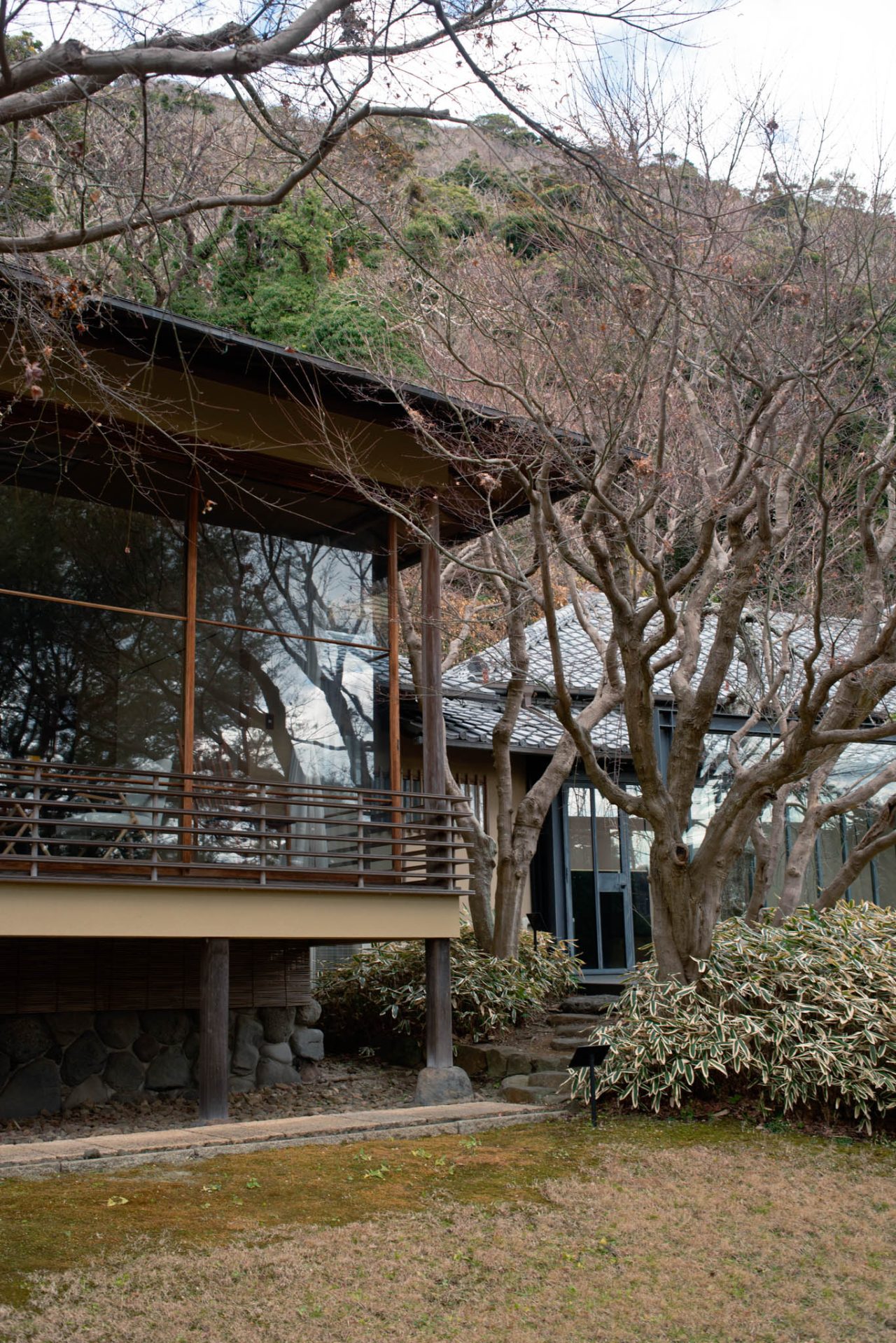
South exterior, Yamaguchi Residence. The steel frame in the terrace (back right) is an addition by Tadasu Oe.
The other is the Nobuko Yoshiya Residence in Hase in Kamakura, Kanagawa. The novelist Nobuko Yoshiya became a bestselling author in the 1920s, when her work struck immense popularity among female students. She continued to write female-themed popular literature, including girl fiction, domestic novels, and historical fiction, while keeping her trademark bob hairstyle throughout her life. A resident of Ushigome, Tokyo, since before the war, she moved to the nearby Kojimachi in the 1950s and then to Kamakura in 1962. She lived in her Kamakura home until her death in 1973. The property was donated to the city of Kamakura in 1974 and has been maintained as the Yoshiya Nobuko Memorial Museum since.
Yoshida designed houses for many artists and cultural figures, but Yamaguchi and Yoshiya were particularly special clients for him. He designed both of Yamaguchi’s houses and all three of Yoshiya’s houses. Yamaguchi, born in 1893, was classmates with Yoshida at the Tokyo Fine Arts School, while Yoshiya, born in 1896, gave Yoshida free rein in designing her Ushigome home, which garnered media attention and launched the architect to fame. The two houses I visited on this occasion became the final abodes and late-career creative dens where Yamaguchi and Yoshiya lived out their lives from the age of 54 and 66, respectively. Both homeowners chose to settle down in scenic natural areas in Kanagawa rather than in central Tokyo or its suburbs. For Yoshiya, Kamakura had been her go-to summer retreat as well as her wartime refuge, as she had owned a villa there from 1939 and sheltered there during the war. Understandably, Tokyo, amid its rapid transformation from a war-ravaged ruin to a hectic economic hub, must have been a place that offered little repose.
In this way, the two residences share many commonalities. Upon visiting them in person, however, I was struck by how utterly different they are in atmosphere.
The Hoshun Atelier
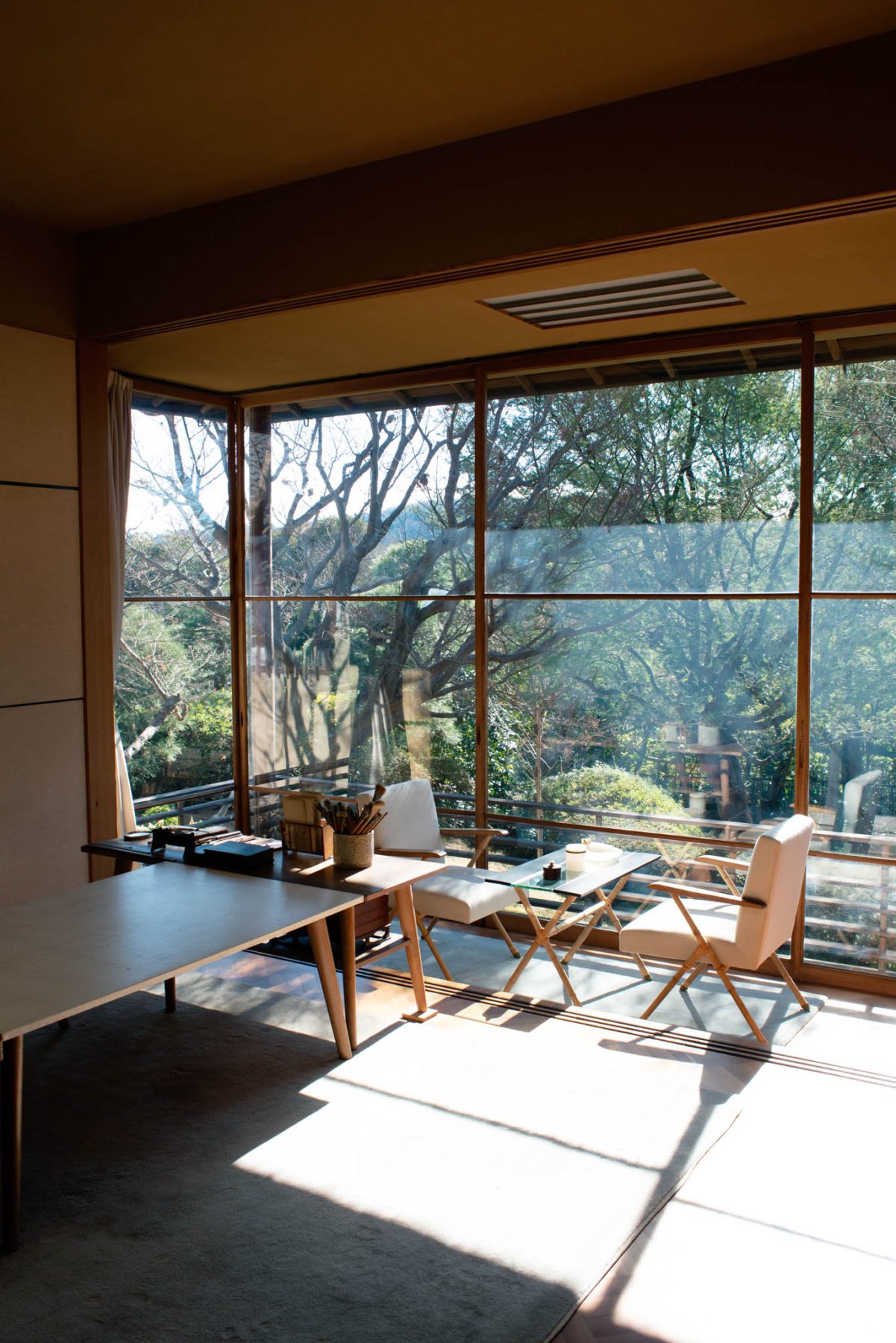
The greatest highlight of the Yamaguchi Residence is the atelier. Yamaguchi’s prewar home had an atelier, too, of course; it measured 15 shaku (4.5 meters) in the east-west direction and 18 shaku (5.4 meters) in the north-south direction, making for an area of roughly 15 jō [fifteen chūkyōma tatami (woven rush mats with a compressed rice straw core), or approximately 25 square meters]. His second atelier is slightly smaller, measuring 15 shaku in the east-west direction and 16 shaku in the north-south direction, but compensates with a 4-shaku-deep enclosed veranda appended to its south end [total combined area: approximately 17 jō, or 28 square meters]. When entering from the hallway, for a moment, you might feel as if you are stepping into a cube, as the squarish room has a ceiling height of nearly 10 shaku [approximately 3 meters; for comparison, the enclosed veranda has a more typical ceiling height of 2.4 meters]. Although a large plane of shōji [translucent paper-covered lattice screens] extends across its south end, the ambience it creates is not that of a typical Japanese-style room.
-
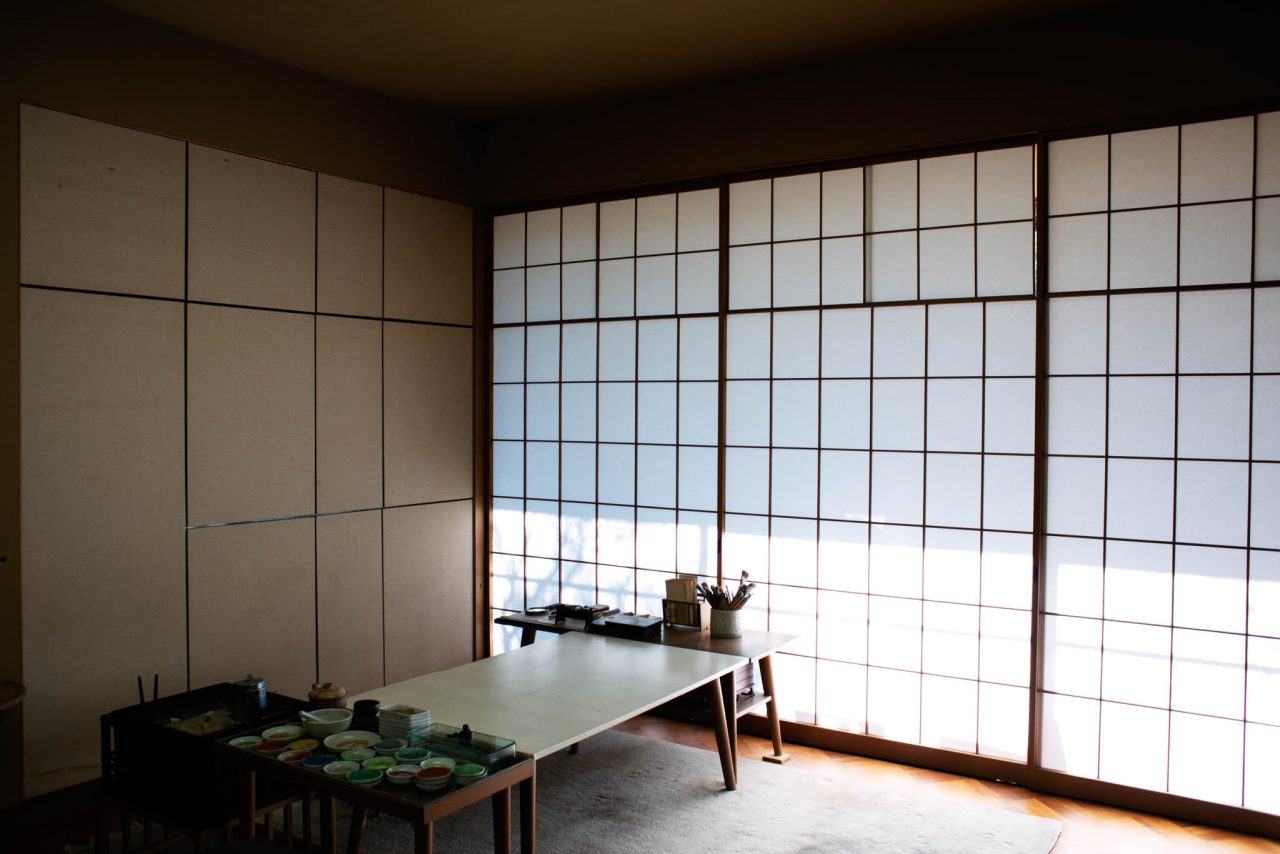
Interior view, Hoshun Atelier, Yamaguchi Residence. Soft light filters in through the shōji doors.
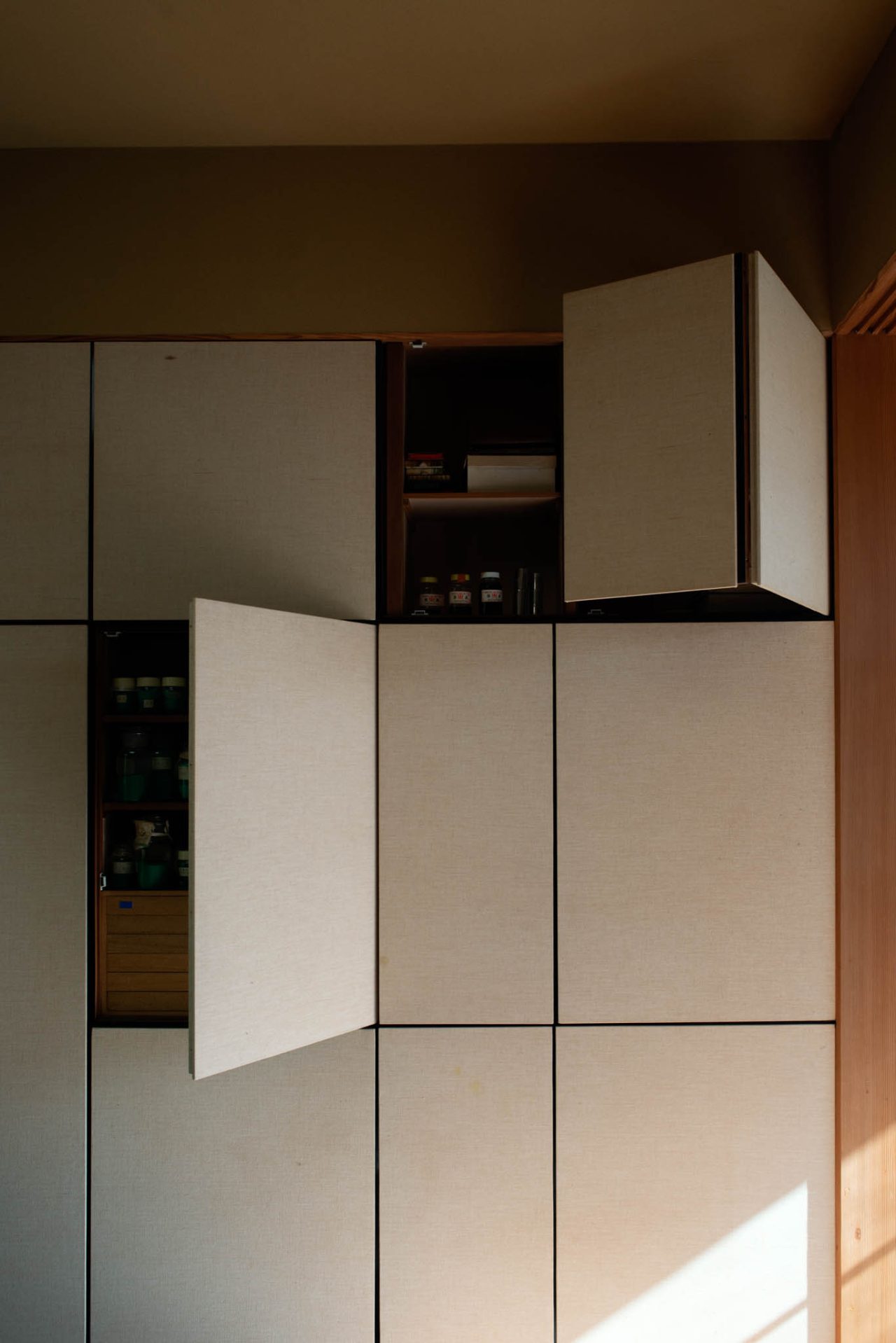
Let’s run through some of its other features. Traditionally, nihonga artists worked on tatami floors, but there are no tatami here. This is because the edge lines of tatami can be visually distracting, and their bumpy surfaces can be an annoyance when laying down paper [the typical substrate for nihonga]. The floor is instead parqueted and laid with area rugs. The walls are designed as continuous planes that fully conceal the wood framing and have a light brown dash finish. The built-in art supply cabinet also becomes a single flush plane when its flat panel doors are shut.
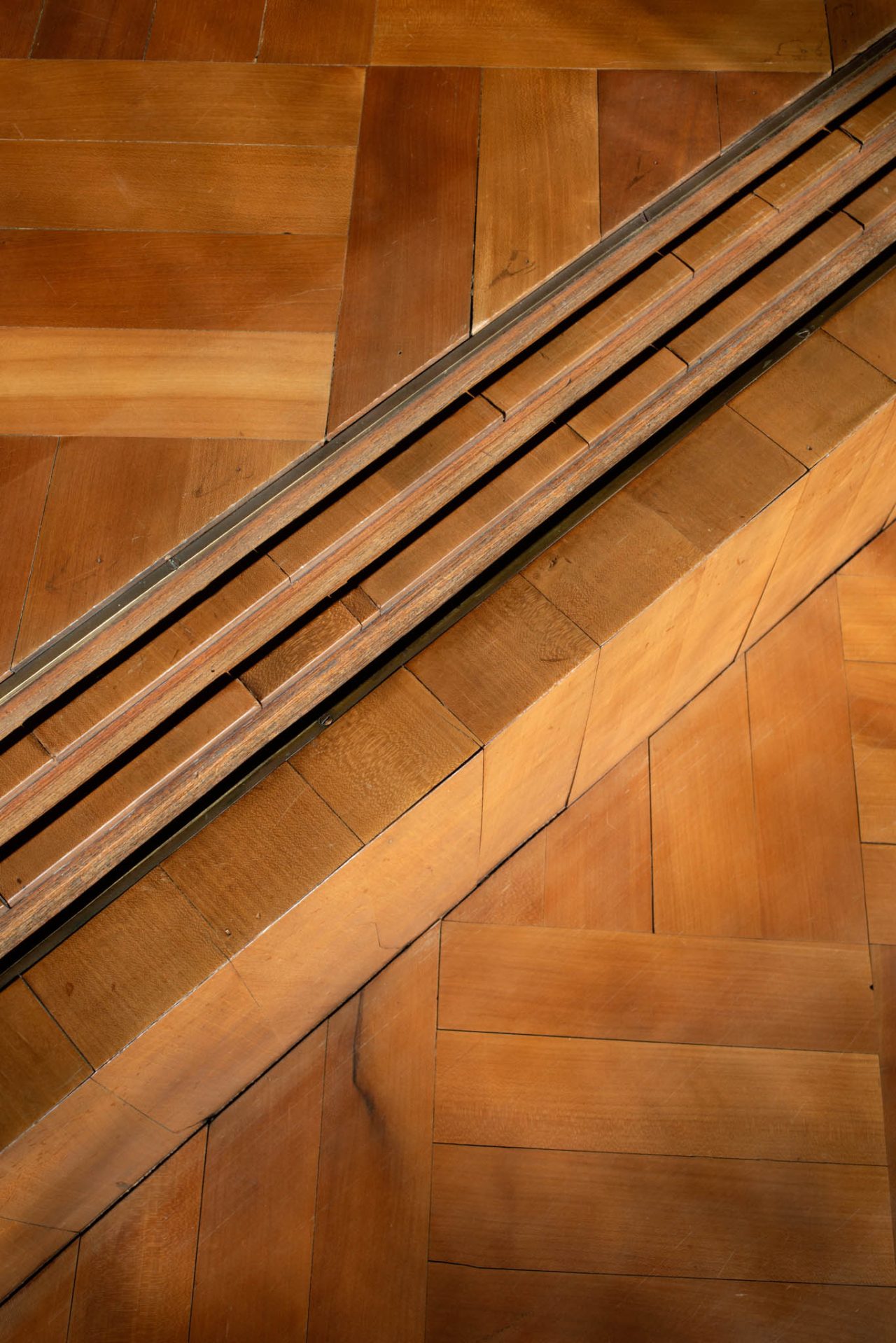
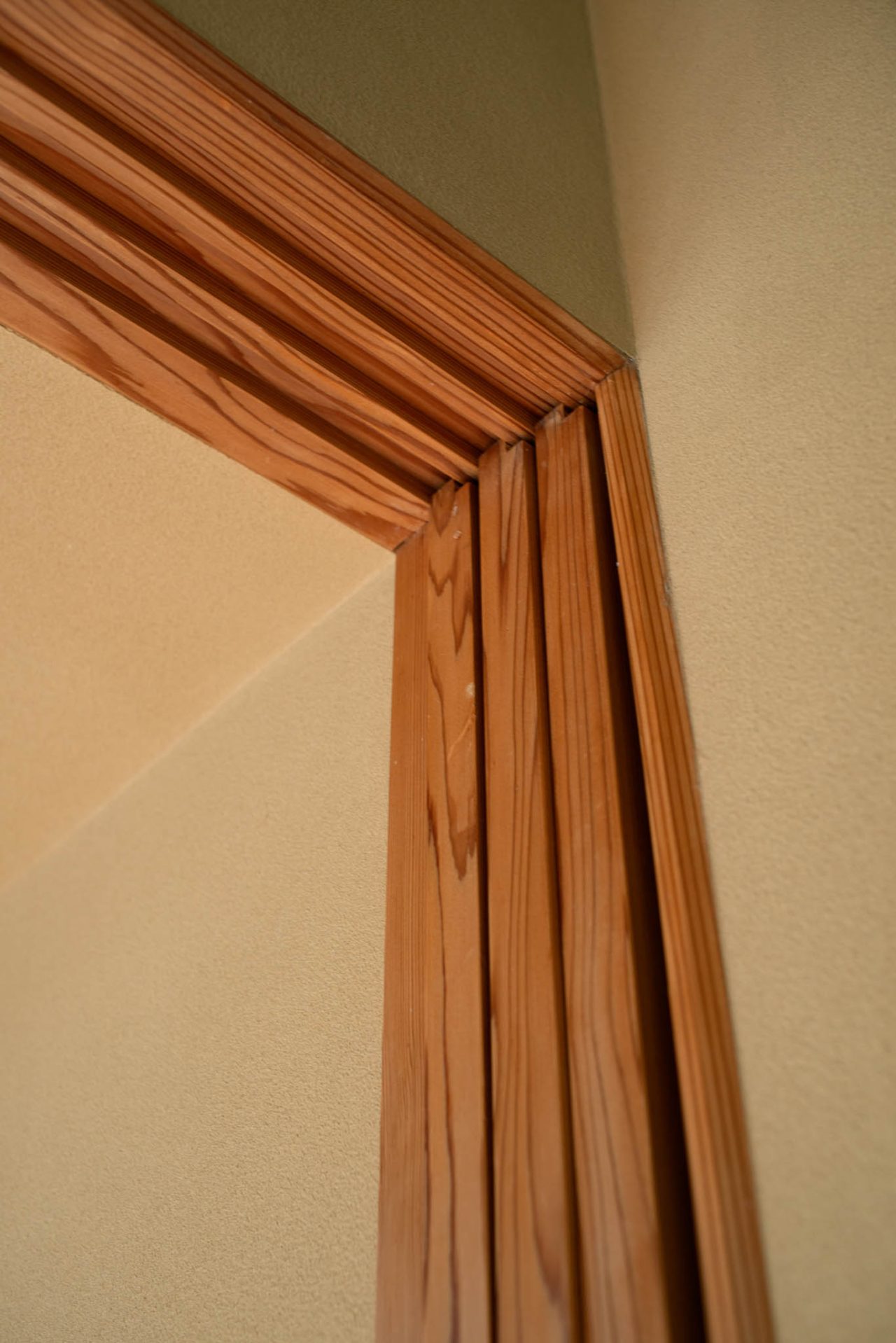
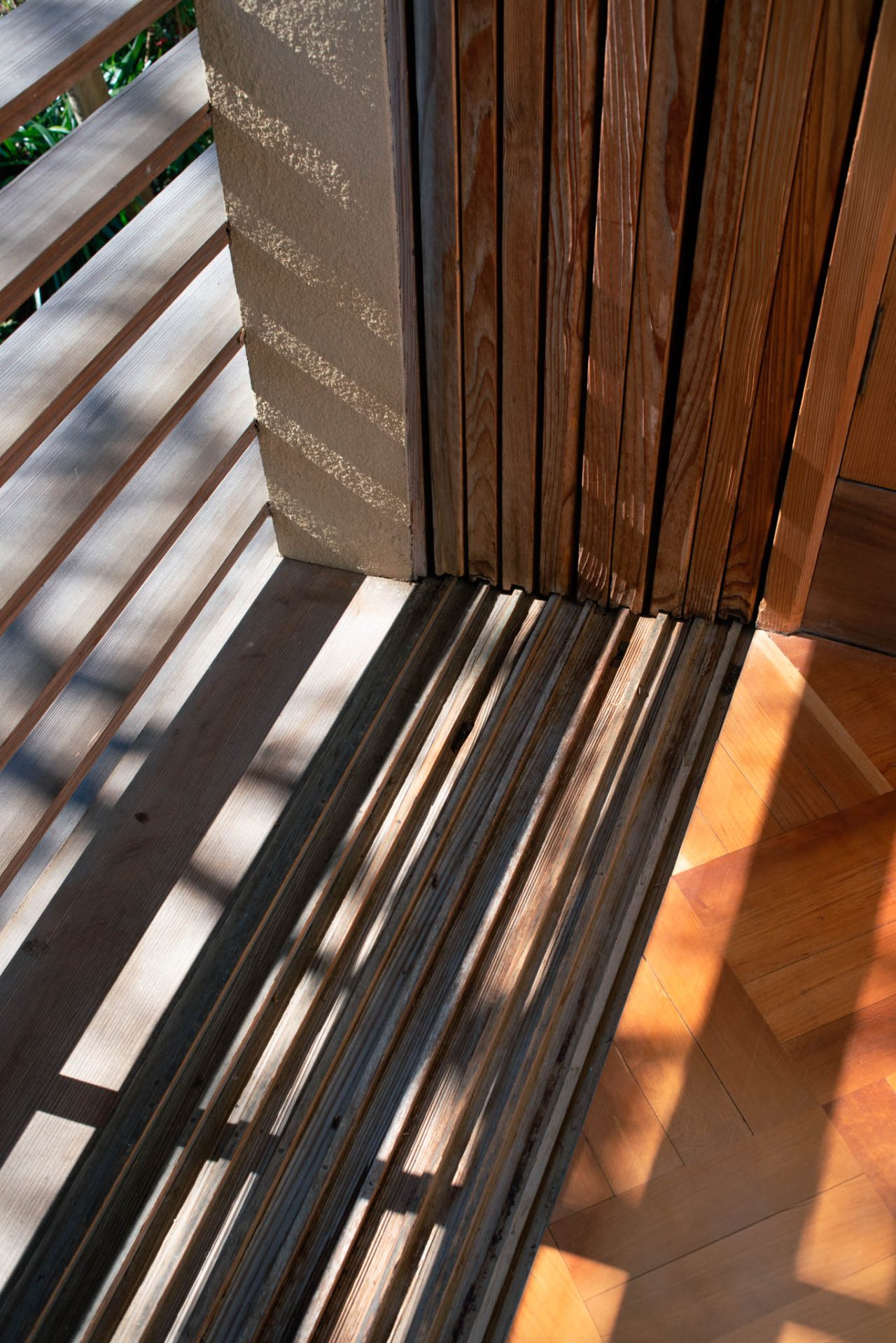
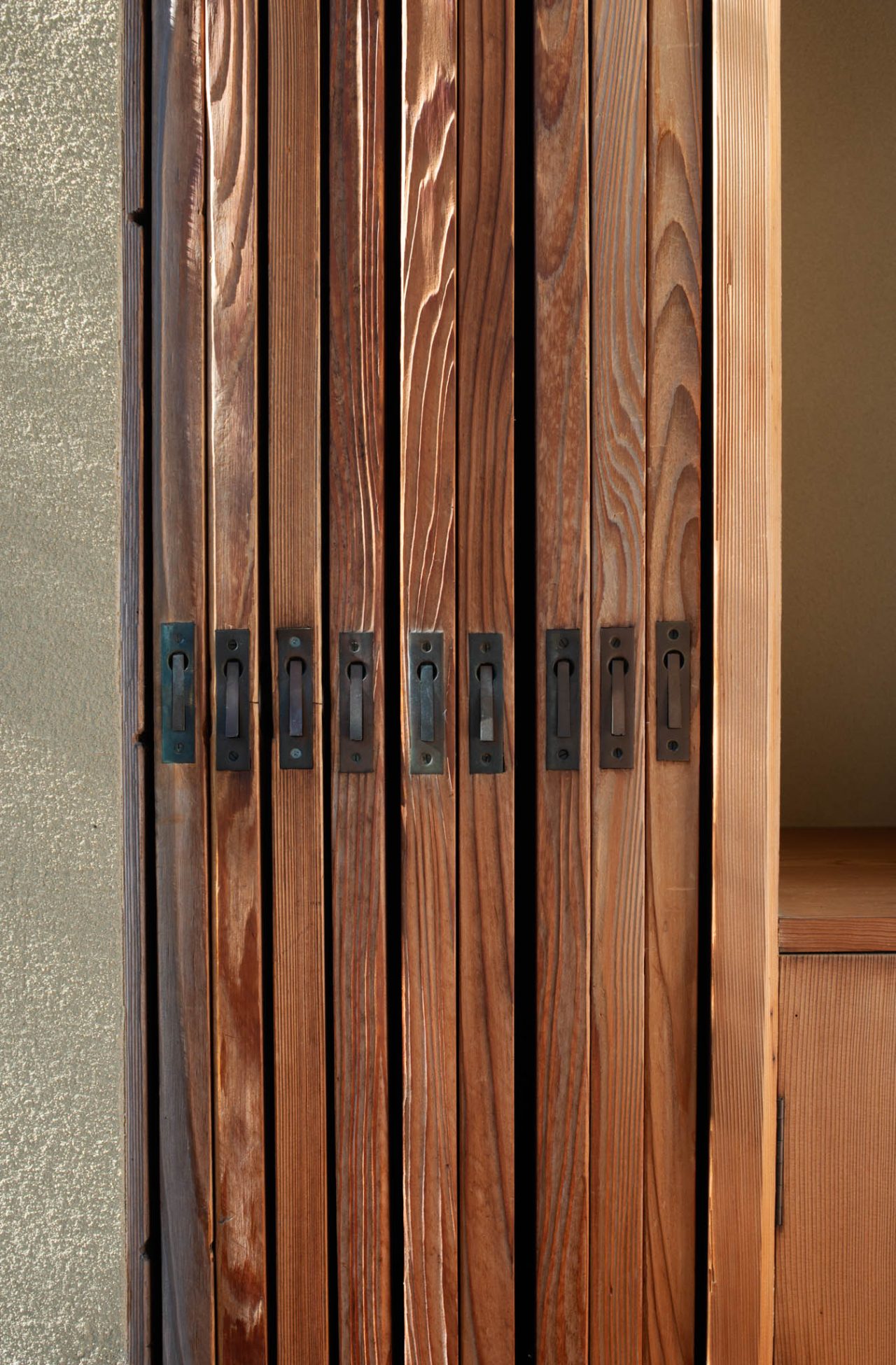
While the frames of the openings cannot be eliminated altogether, their visual presence is diminished by the thorough application of a detailing technique known as hakkake [beveling]. Overhead, a translucent acrylic panel set flush with the ceiling plane uniformly diffuses the white glow of a fluorescent light. The aforementioned shōji doors are designed with oversized grids, again to reduce the number of lines, and their lattice slats are also visually thinned. They have built-in ranma [transom lights], which eliminate the need for a nageshi [non-penetrating tie beams, traditionally articulated as a horizontal line encircling rooms at doorway height], and when taken together, they read as a single enormous movable partition aligned with the ceiling plane of the veranda, forming a taut white plane stretched from floor to ceiling. These sliding shōji doors—as with the garasudo [sliding glass doors], amido [sliding insect screens], and amado [sliding storm shutters] of the veranda window—can all be pushed into a pocket integrated with the wall. Thus, when fully opened, the doorway becomes entirely free of obstructions, and the room gapes open toward the veranda. Moreover, because the veranda floor steps down by about 180 millimeters, the lower rails of the window’s garasudo fall out of view, and the atelier feels as if it opens directly to the outside—and to the south-sloping garden, the horizon on the sea, and the sky beyond.
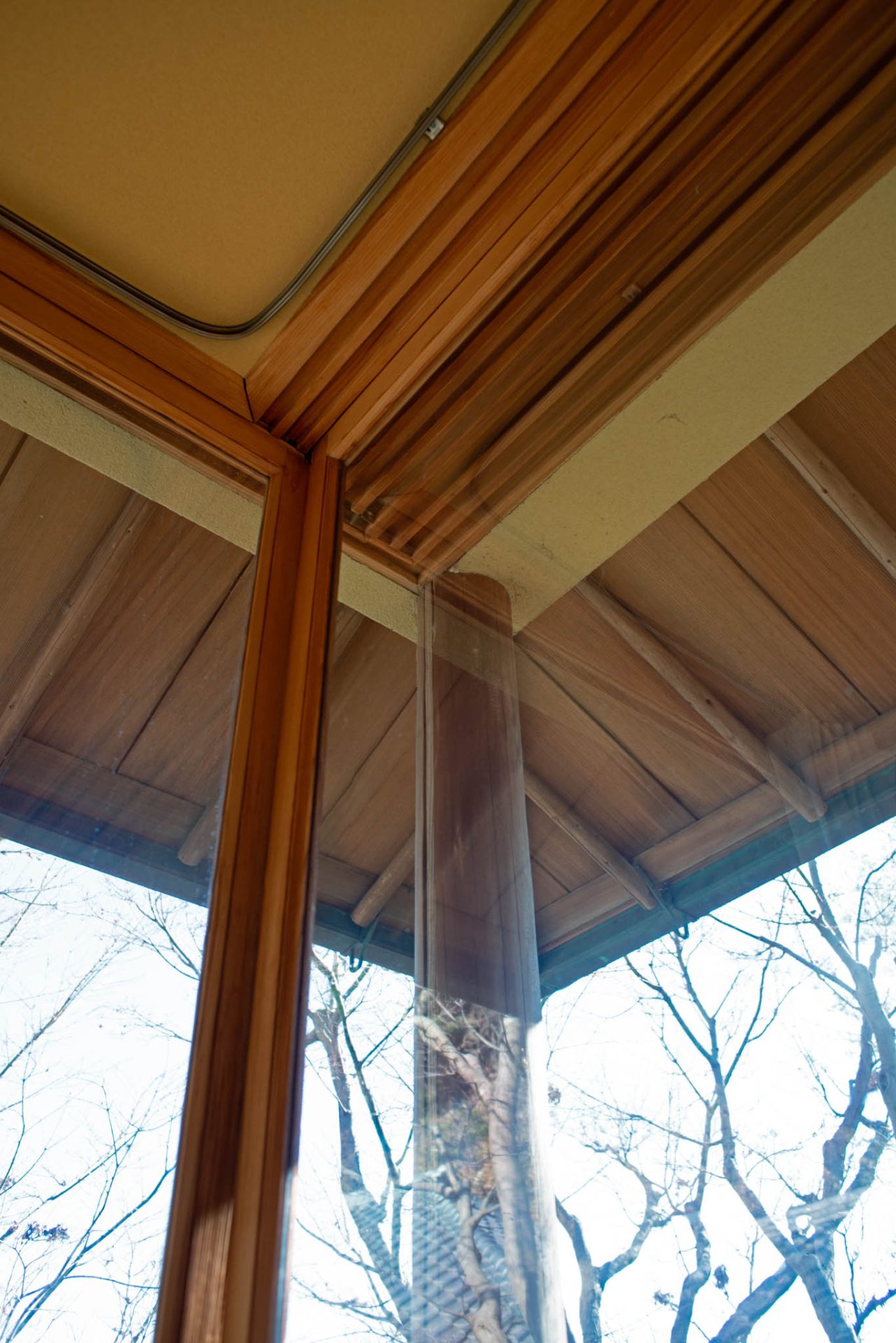
Departing from Tradition
Isoya Yoshida is recognized as the progenitor of “new sukiya” [shinkō sukiya; also known as “sukiya modern”, where sukiya is an architectural style emphasizing refined, unpretentious elegance, with roots in sixteenth-century rustic ceremonial tearooms]. Despite coming up during the time when modern architecture began to take hold in Europe, he did not choose the path of simply importing modernism to Japan. Instead, he trained his sights on modernizing the traditional Japanese style of sukiya. As a product of Gofukucho in Nihonbashi, Tokyo [formerly known as Edo], Yoshida would have certainly grown up deeply immersed in the understated chic Edo-fū [Edo style] aesthetic, and as noted by Teiji Ito, he would also have been exposed to the modernity wrought from the world of suki and its associated artistic practices [the ways of tea, flower arrangement, incense, etc.] (ref. 3). While Yoshida turned to carpenters and joiners—inheritors of premodern technical disciplines—to become versed in their traditions, he simultaneously pulled away from them, as he sought to achieve a new design style reflective of modern sensibilities (ref. 7). He might be considered a strategist in a sense. Remarkably, it only took a couple of years for him to bring his endeavor to fruition. This was around 1935 to 1936. One would not be wrong to say that Yoshida’s formal language and techniques largely remained the same thereafter, only becoming more refined. All who have offered critical commentary about Yoshida during his later years or after his death have consistently noted how there may very well not be any work of contemporary Japanese-style architecture that has not been influenced by Yoshidian sukiya. That’s how extraordinarily broad a reservoir of imitable ideas Yoshida produced.
The new sukiya that Yoshida sought and attained can be characterized as being molded from traditional Japanese architecture but formed of more legible spatial volumes defined by planes. He regarded the lines created by the columns, nageshi, frames, lattices, and other staples of traditional sukiya as visually “noisy”, and by reducing them, he attempted to achieve a modern simplicity and clarity—or, using his words, “lucidity”.
-
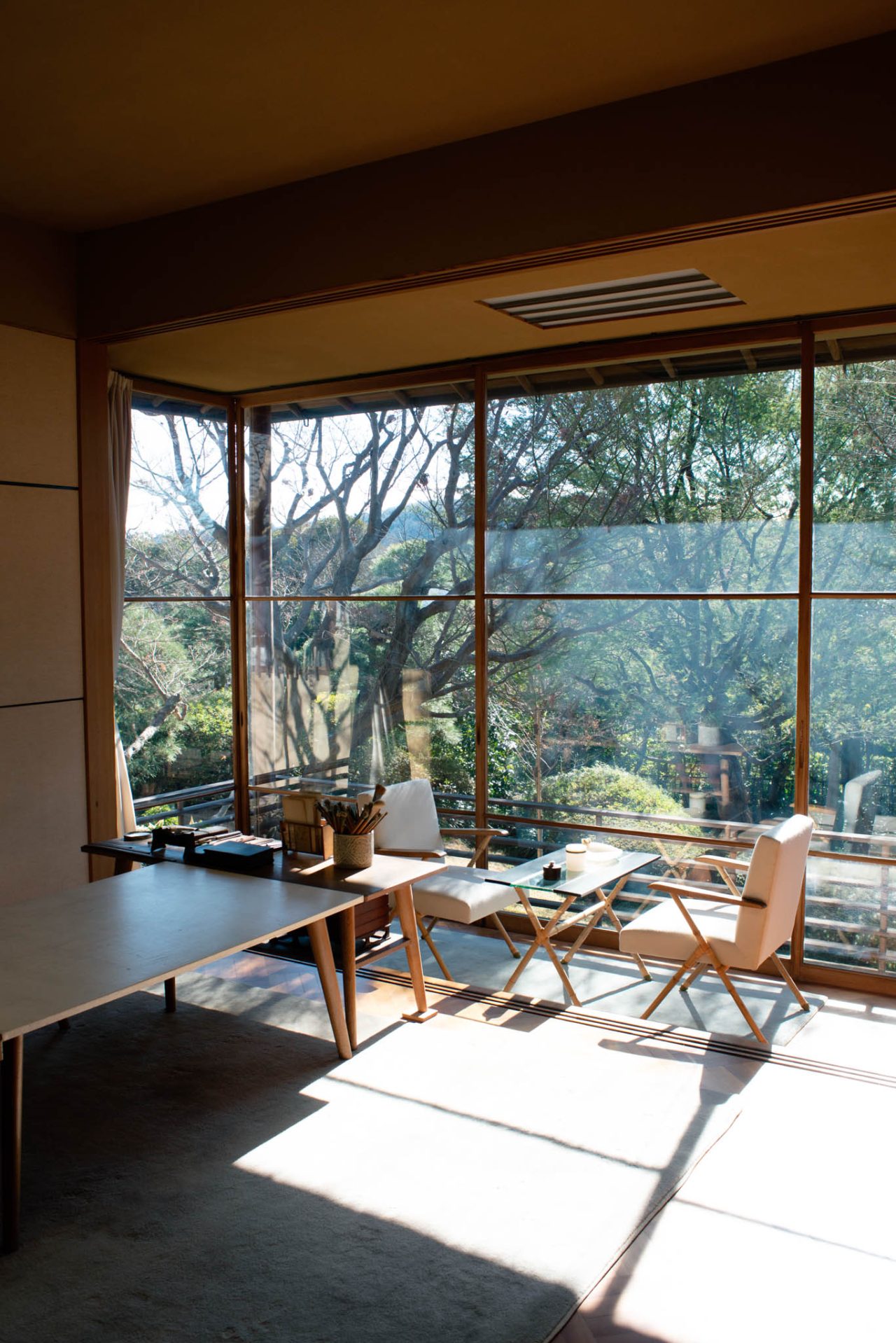
Atelier with the shōji doors open. The window of the enclosed veranda wraps around the corner, forming an L-shape in plan.
Togo Murano gave the following assessment of Yoshida: “Through his own interpretation and approach, he ruthlessly pared down history and reassembled it in a modern manner.” (ref. 3). For Murano to say that Yoshida not only “pared down” history but did so “ruthlessly”, despite also having described his peer as possessing a proper eye for history, suggests that this statement was intended both as an expression of criticism and respect.
The Hoshun Atelier offers a clear example of a space where Yoshida “pared down history”. It is almost devoid of things from the world of tradition. The rooms and en [enclosed or exposed veranda-like room extensions that form a transitional space between the inside and outside, traditionally also functioning as a perimeter corridor] unfolding in zigzag fashion. The outstretched eaves complementing them from above. The resulting shadows seeping deep into the interior. The rhythmic vertical lines and surfaces of the many columns, frames, and sliding fixtures. The delightful details born from an allusive, unrestrained creativity predicated on precedent. None of these things are to be found here. The experience it shapes might be more akin to looking outside from the back of a box truck.
Strikingly Disparate Rooms
At the Yamaguchi Residence, a unified bright, pure atmosphere permeates every corner of the atelier, main house, and garden. The light color of the unfinished wood, the white paper of the shōji, and the neutral dash finish of the walls, all contribute to shaping spaces marked by generosity and clarity. The naturalistic garden, rich with shadow and depth, meshes with both the mountains and sea, never disrupting the coherence of the total environment.
-
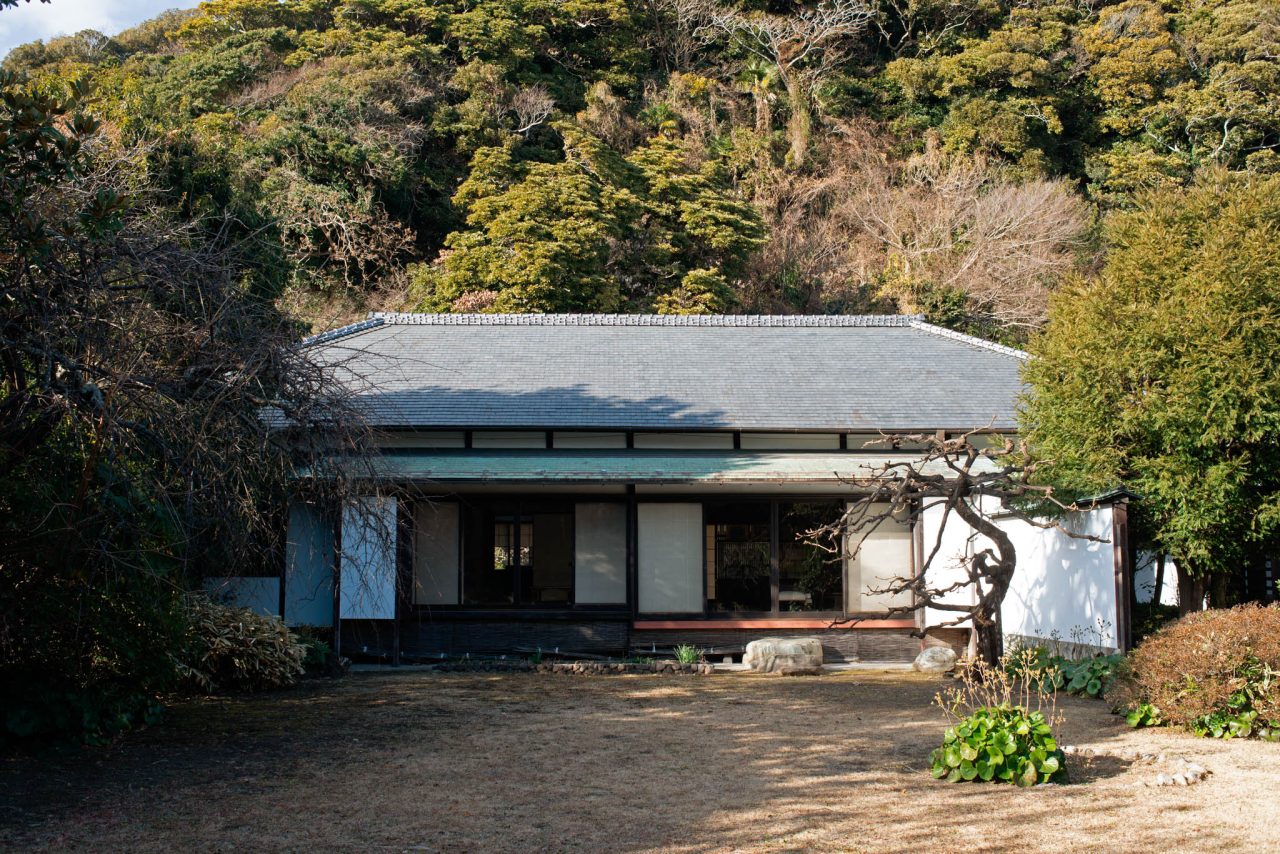
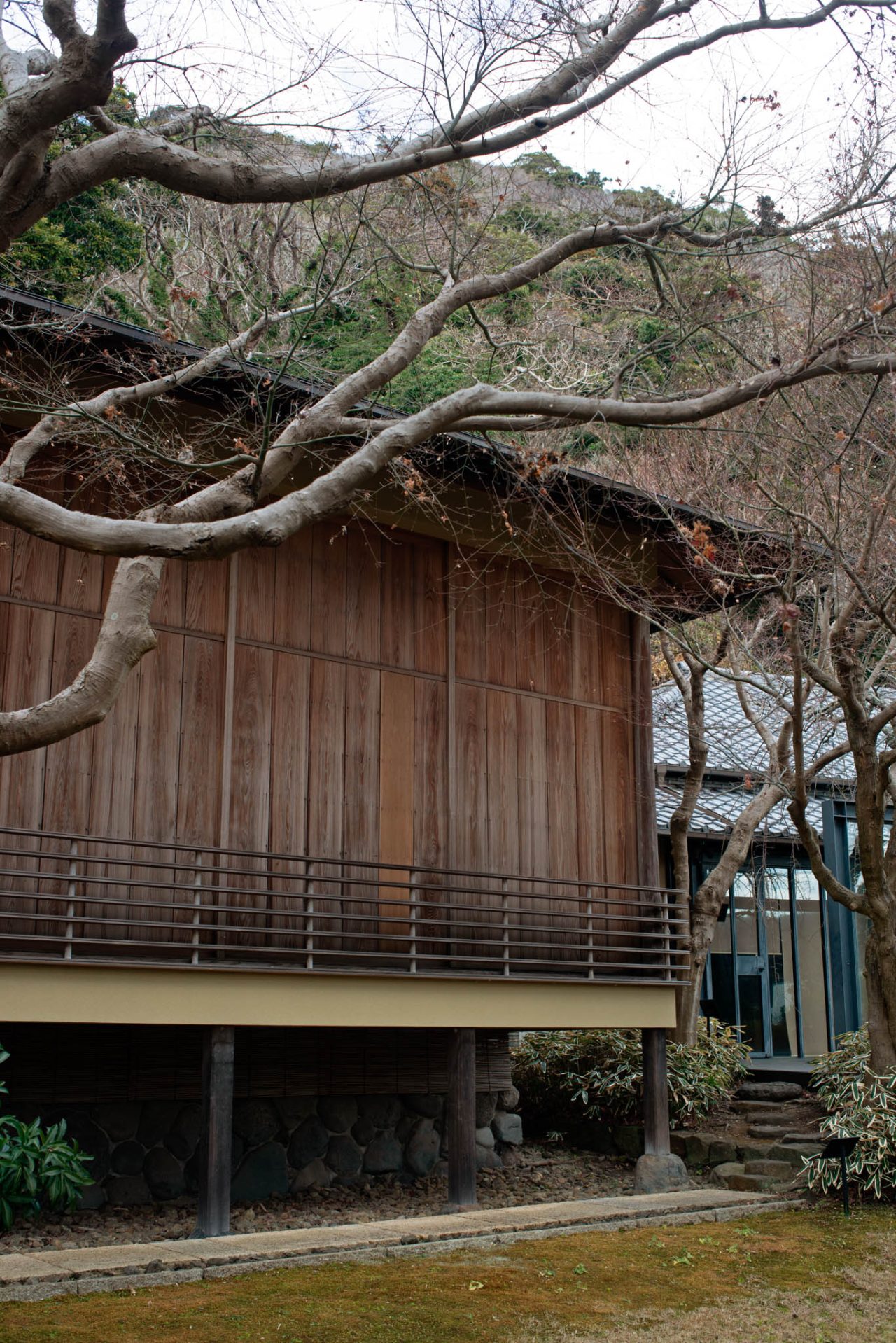
South exterior, Yoshiya Residence (House in Hase; now the Yoshiya Nobuko Memorial Museum).
-
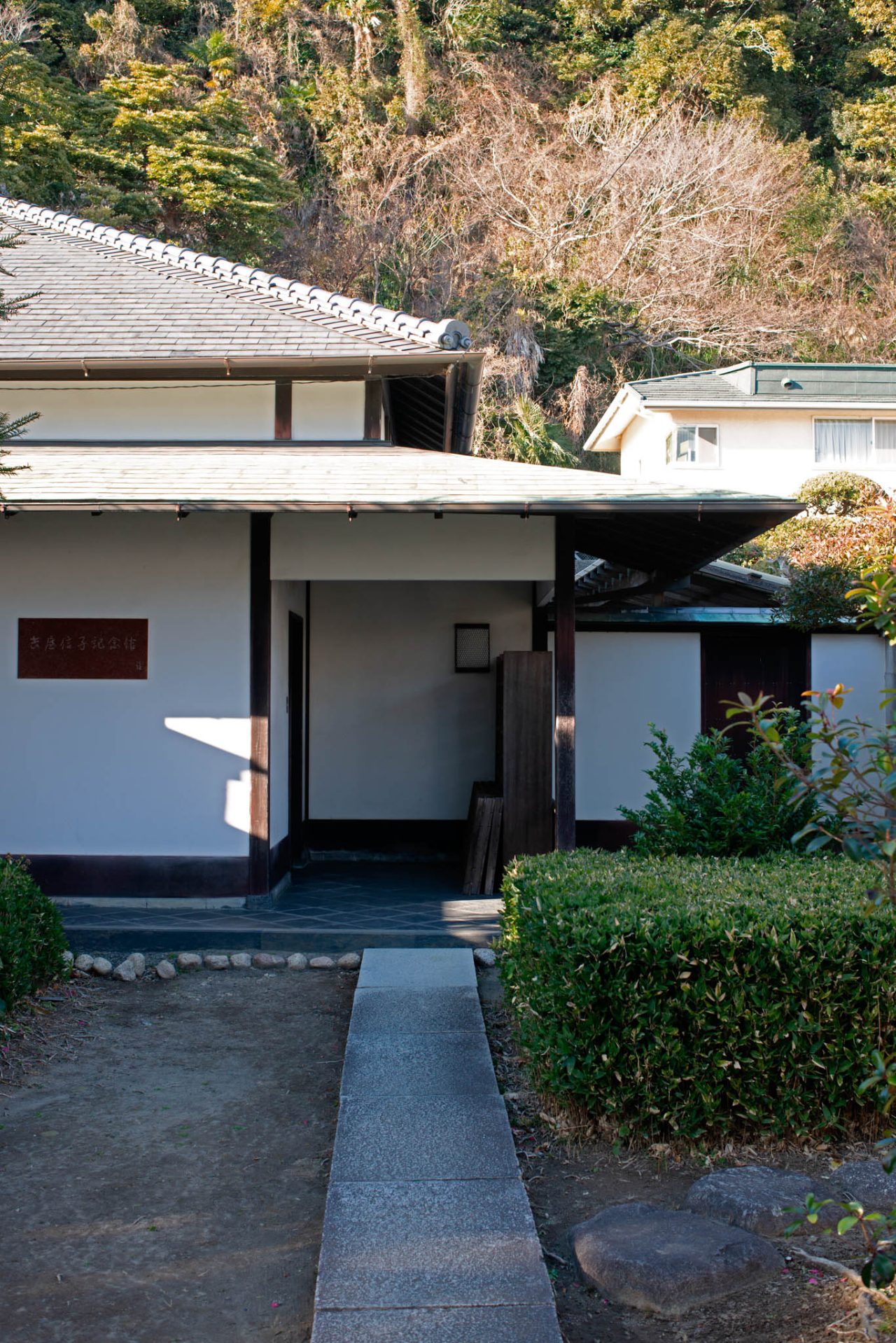
Approach and entrance. -
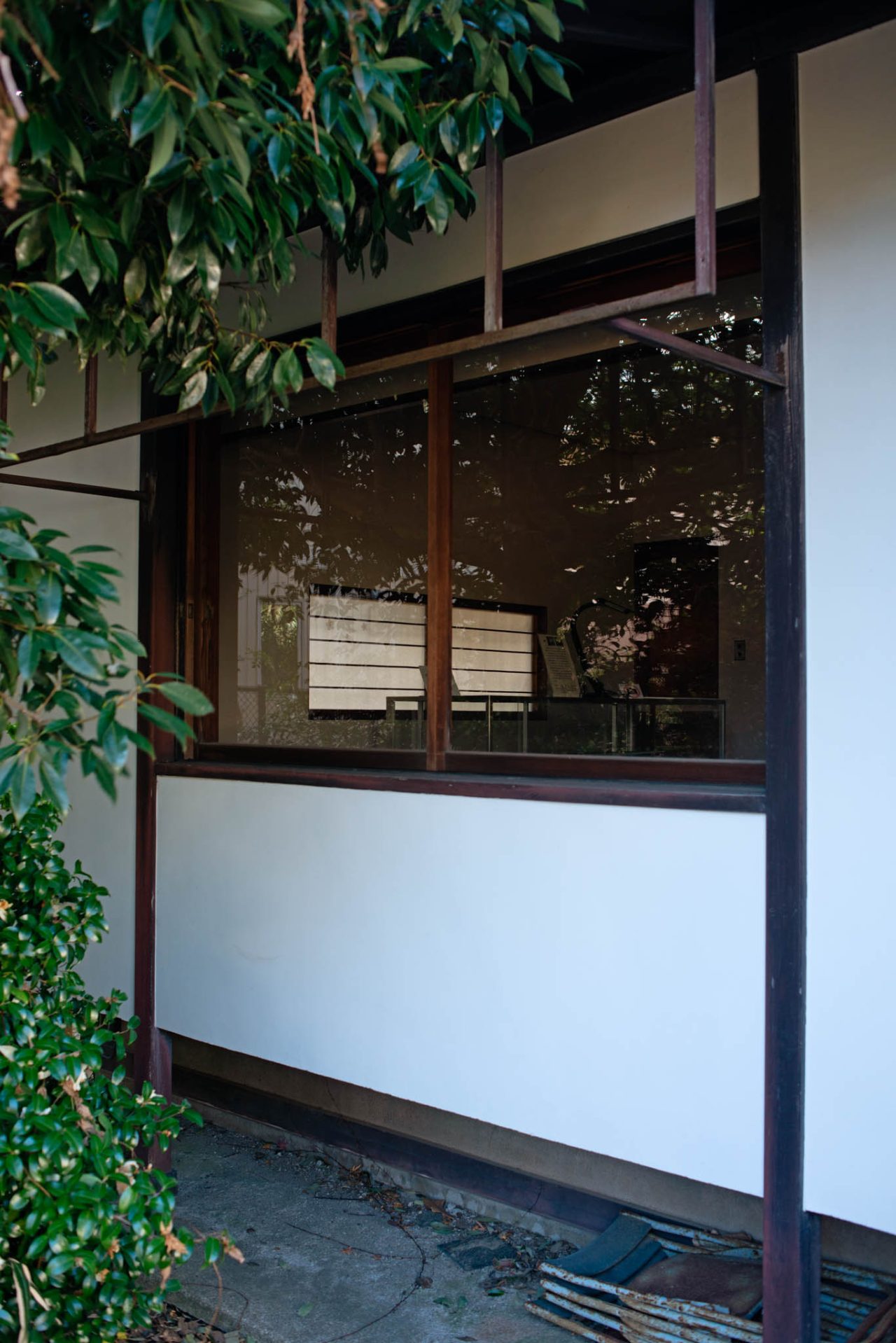
South window of the bedroom.
The Yoshiya Residence is entirely different. It makes no use of gankō [lit. “geese formation”; a traditional compositional technique where buildings are massed in a staggered configuration]. The building and garden are weakly related. Thick, blackened columns and beams are articulated on all the walls of the entrance and chair-furnished formal living room and dining room, but the beams are discernably faux. Minka [lit. “folk house”; traditional vernacular house] motifs are not uncommon in Yoshida’s work; there are several examples one could point to, from his early Kineya Rokusaemon Villa (1936) to the reinforced-concrete-structured Gyokudo Art Museum (1961). Here, however, the minka-style dark framing comes across as rather kitsch, especially in the formal living room, where it is paired with a ceiling made of thin boards faced with white paper and laid in a wickerwork stitch pattern with silvery joints. But then, if you look to the room beside it, you will find a proper, sleek sukiya-style zashiki [lit. “spread with sitting mats”; traditionally, a tatami-floored formal reception room, or more generically, any tatami-floored space; in modern Japanese houses that often only have one tatami-floored room, as is the case with the Yoshiya Residence, such rooms are used flexibly as a family room, drawing room, guest bedroom, etc.].
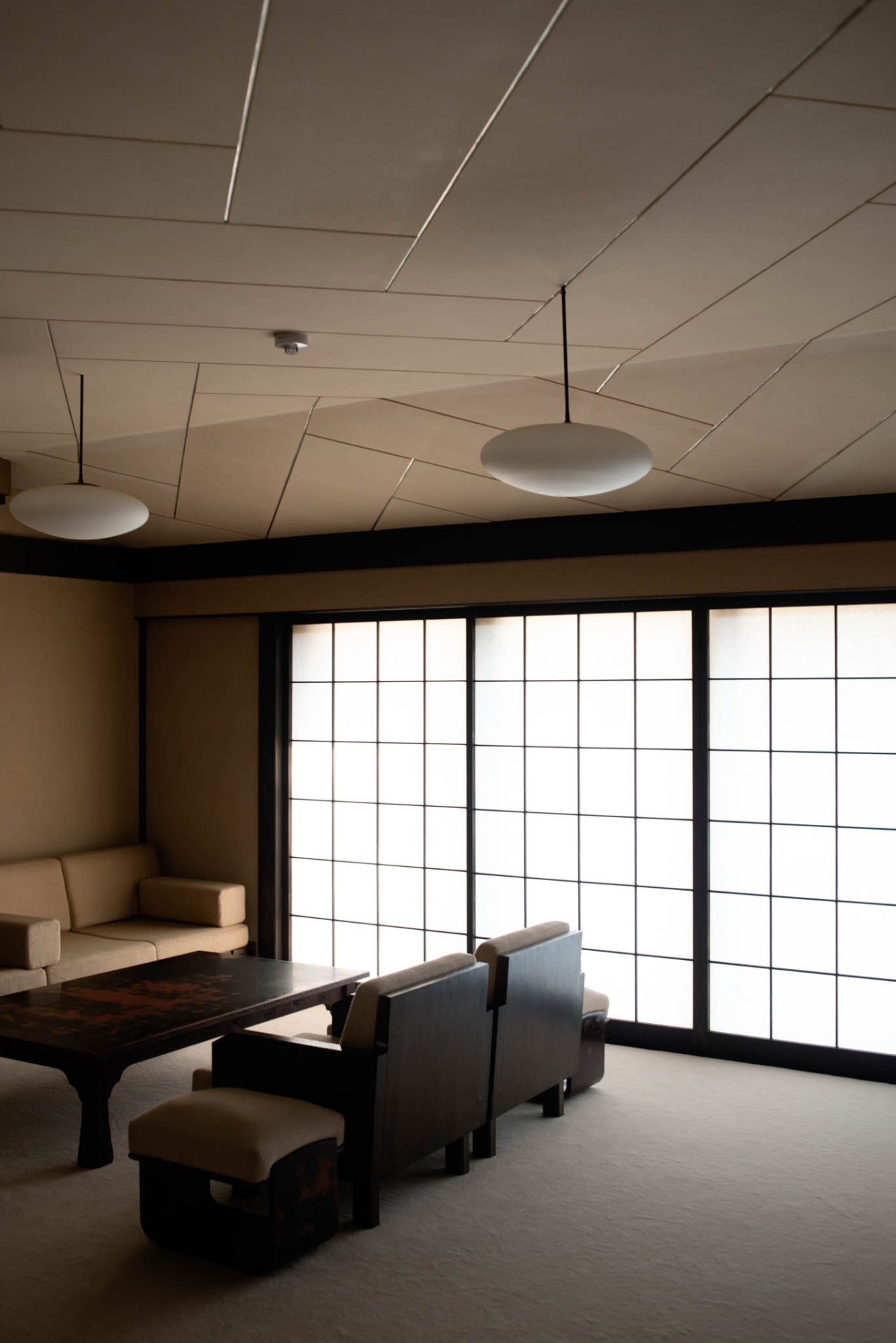
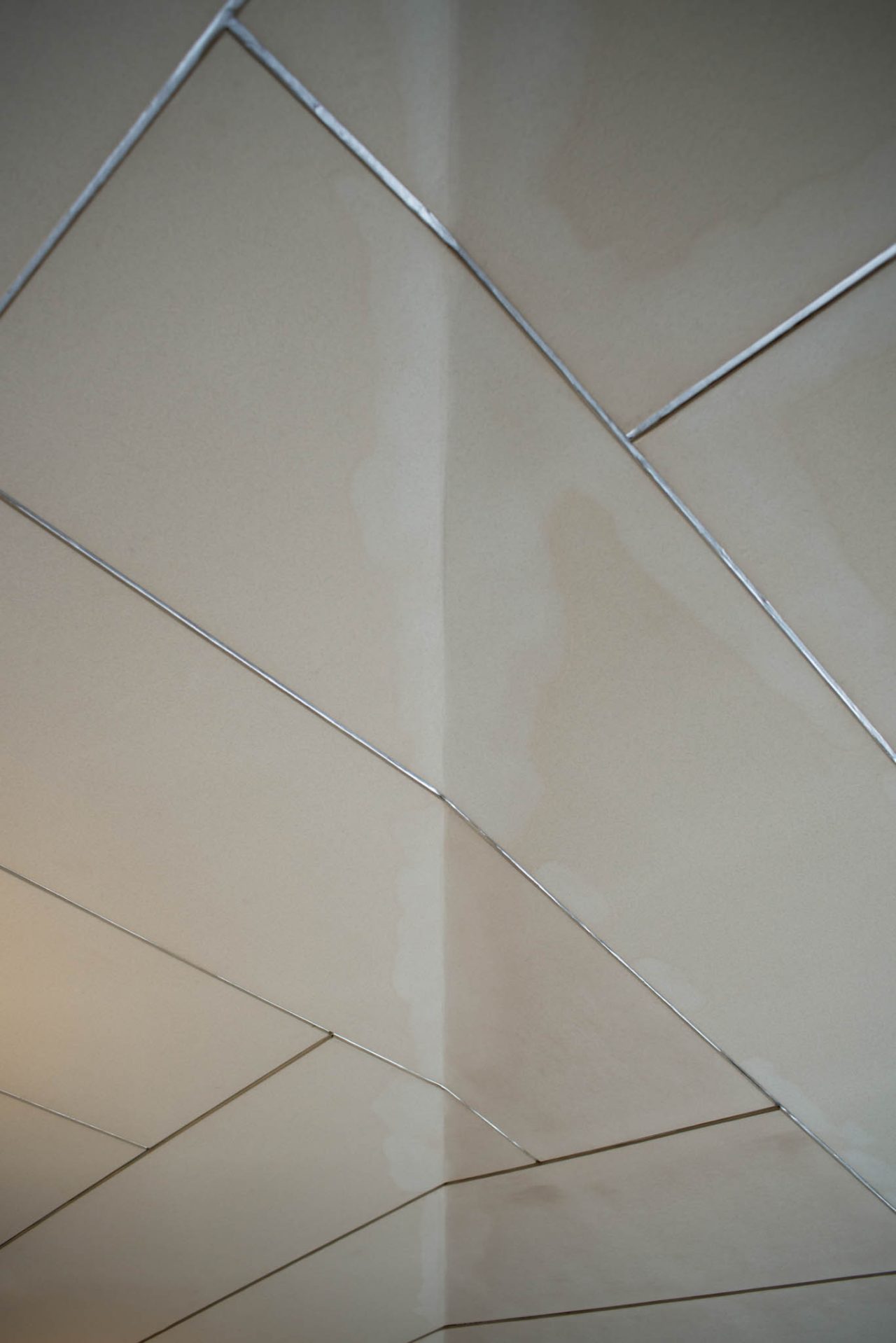
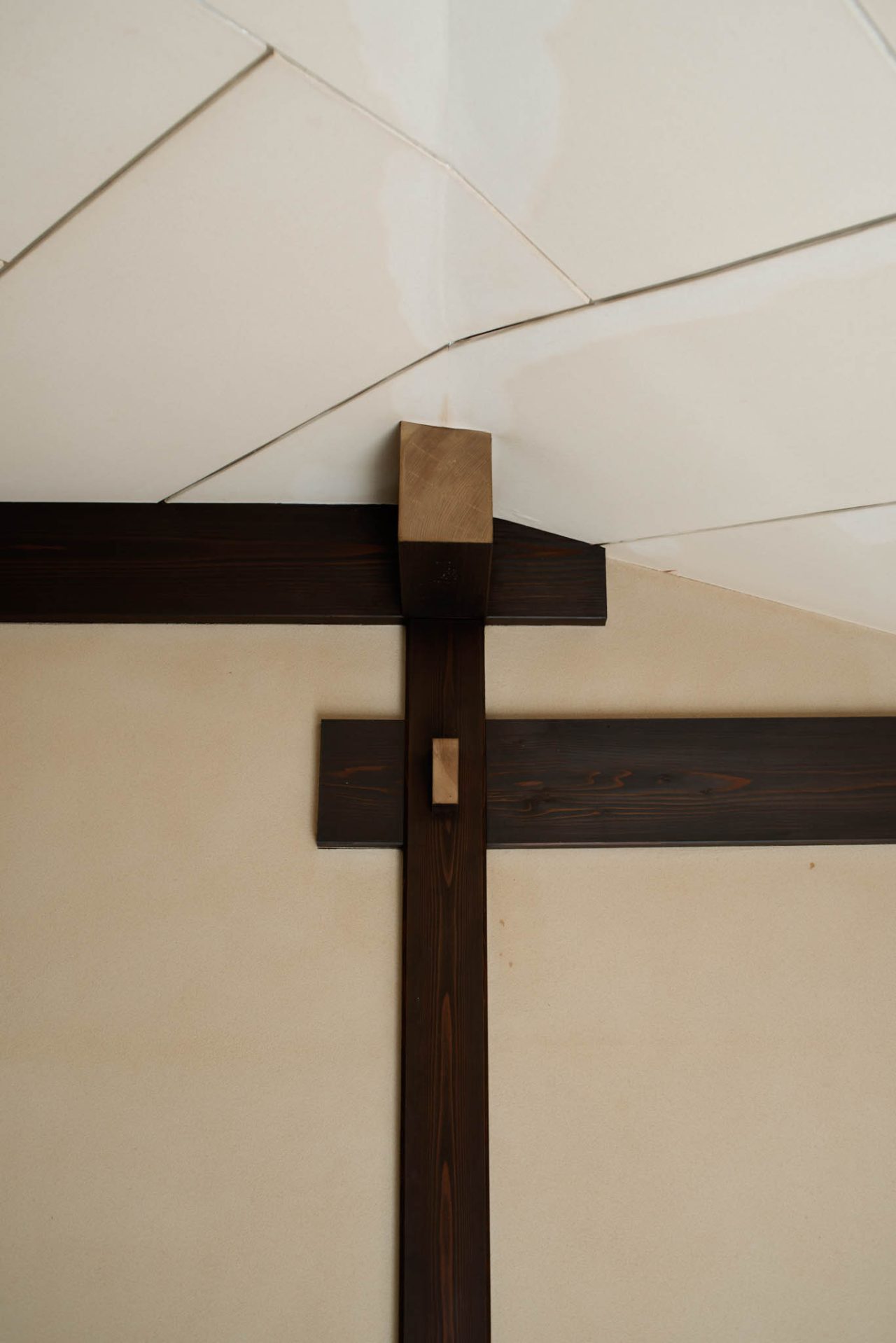
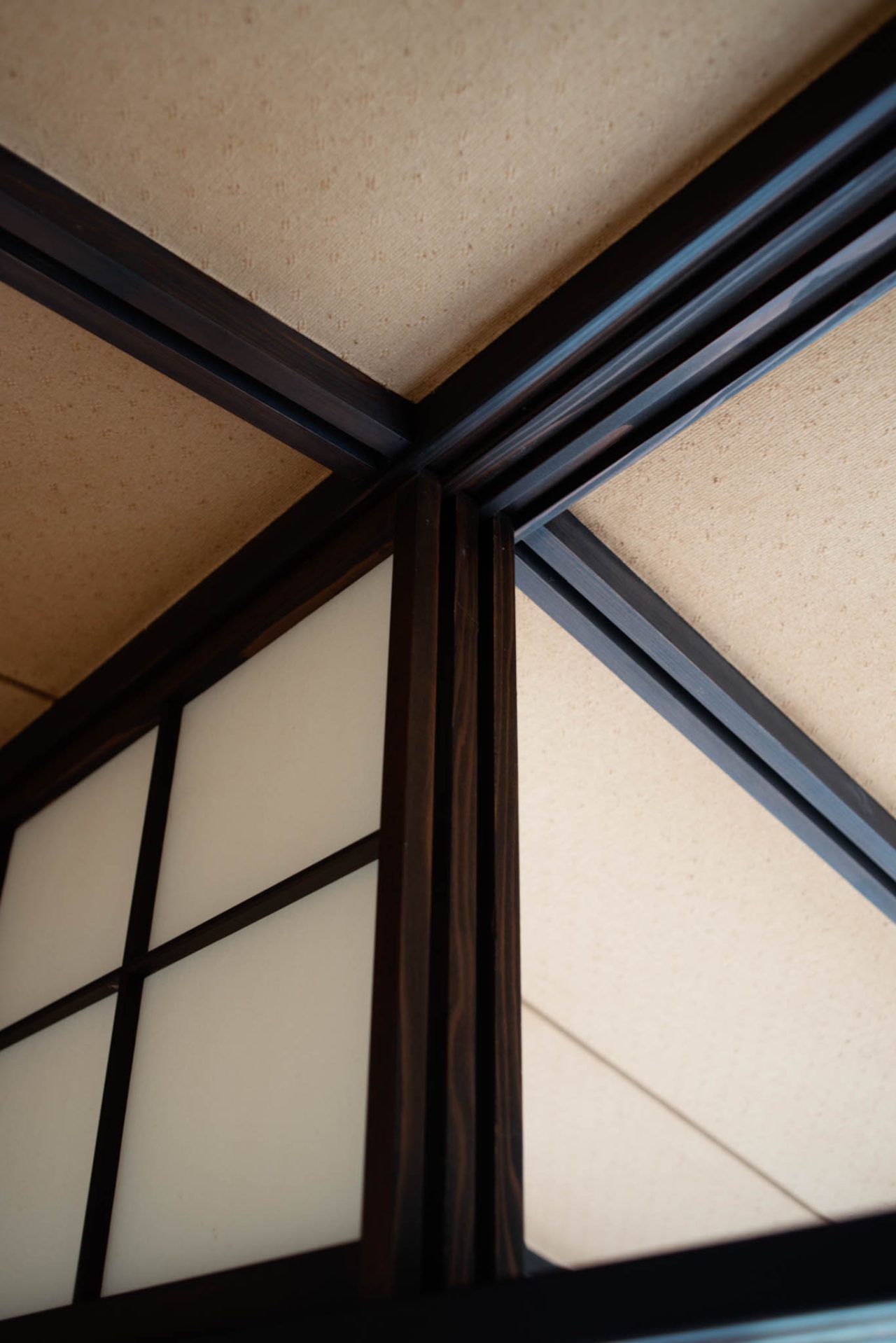
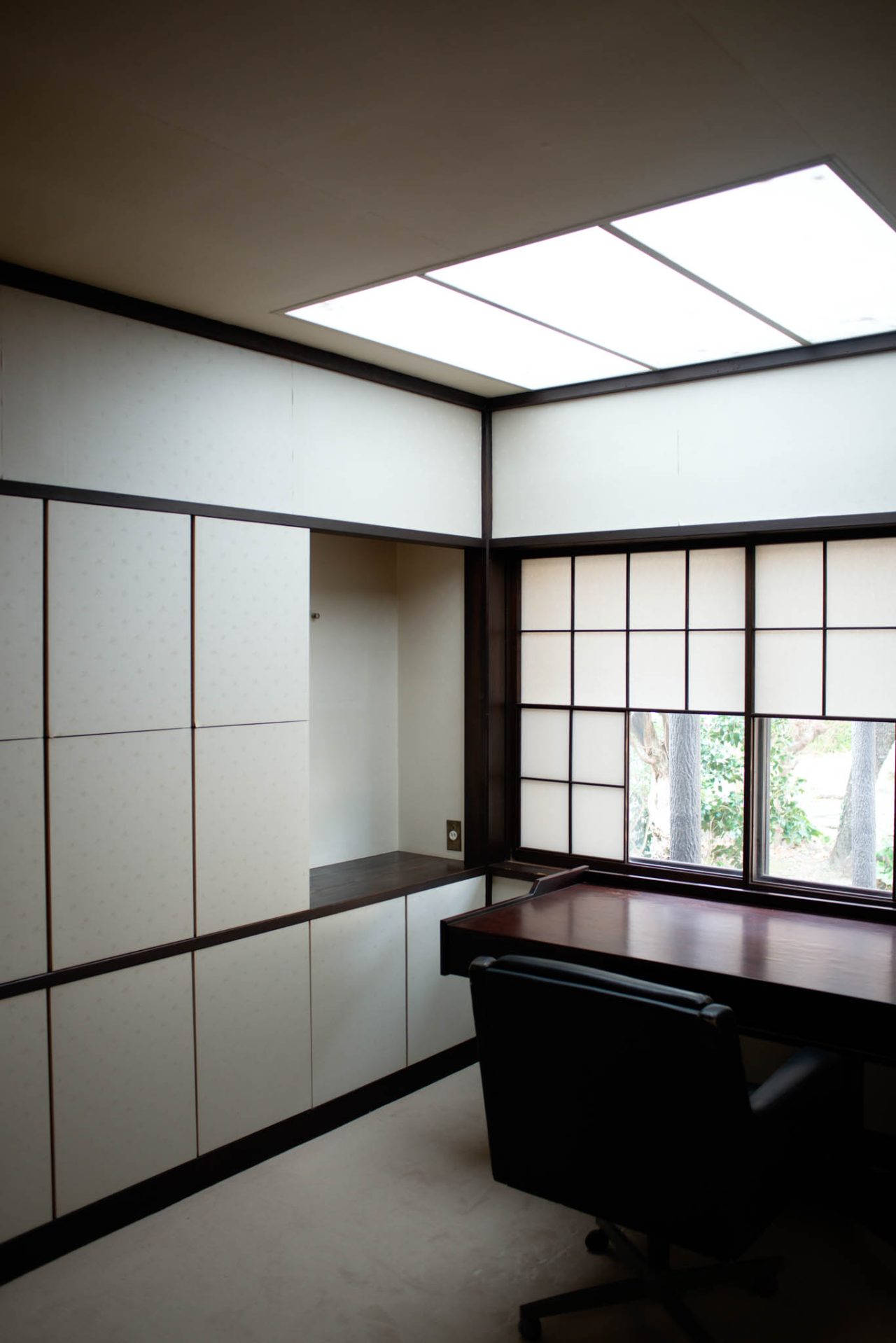
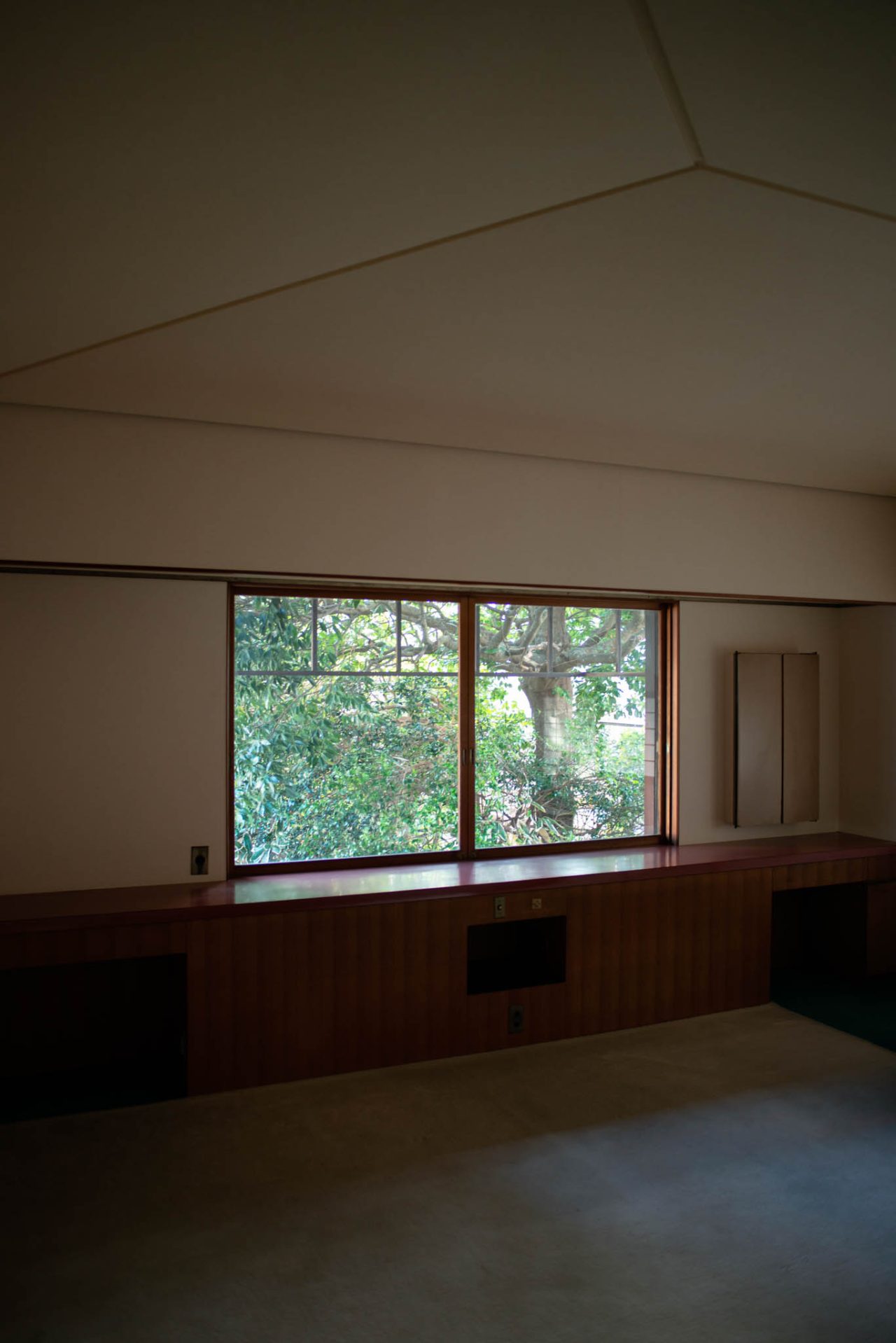
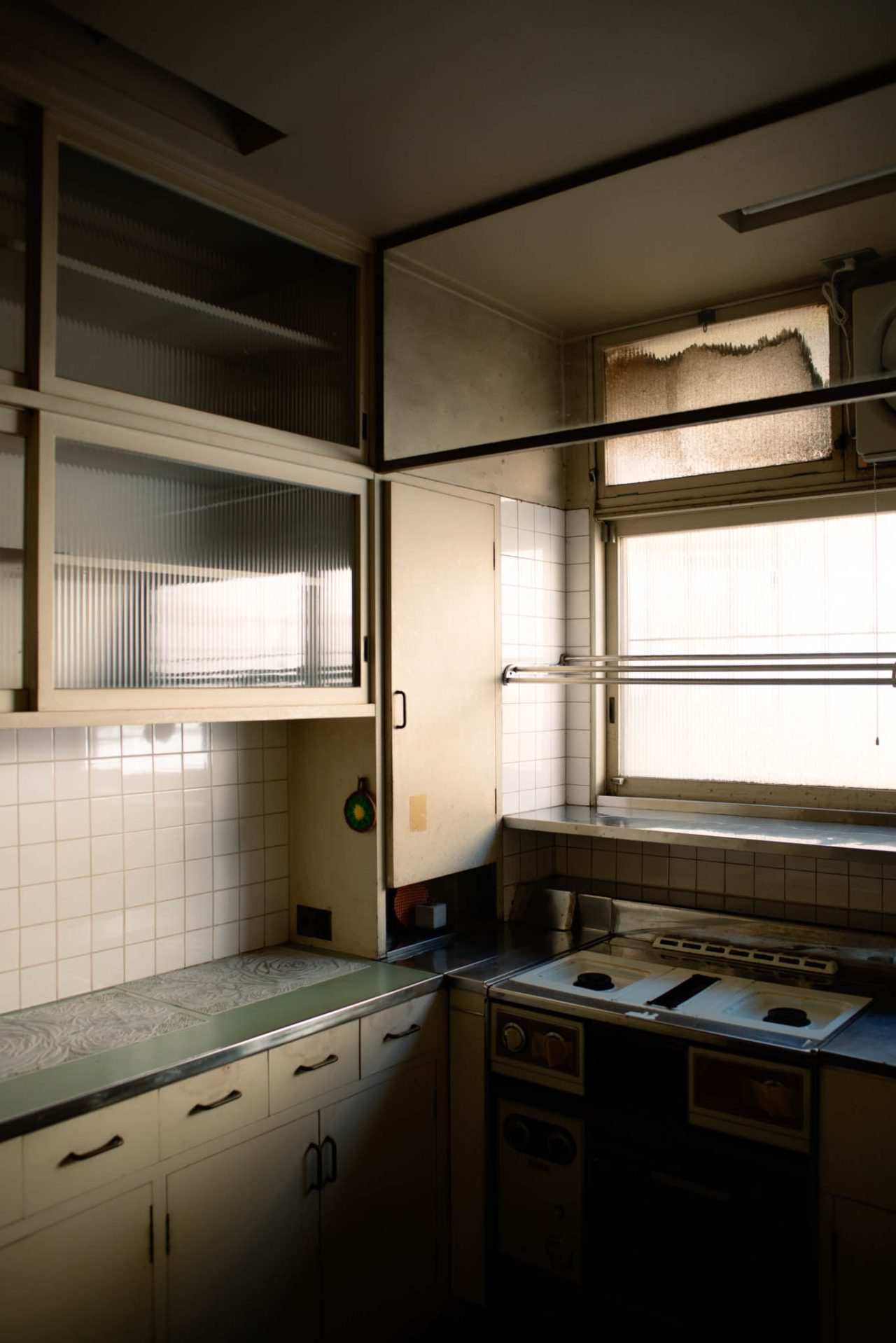
The study is a white-walled space featuring a grid of built-in cabinets that, together with the glazing bars of the skylight and lattice of the shōji window, gives the room a Bauhausian look. The bedroom is designed as a wallpapered Western-style room. The kitchen, with its white-painted woodwork and glass cupboards, has an orderly feel reminiscent of an old hospital. In short, the house is composed of a hodgepodge of rooms. Nothing about it speaks of integration, refinement, or unity.
The Hiroma Set
My bewildering experience at the Yoshiya Residence opened an opportunity for me to reconsider the Yamaguchi Residence. I realized in retrospect that the differences between the rooms of the Yamaguchi Residence are simply less conspicuous because of the sense of crystalline unity that permeates the building. Also, the chanoma [lit. “room for tea”; tatami-floored family room] in the main house of the Yamaguchi Residence and the zashiki of the Yoshiya Residence are actually very similar when you look beyond the difference of their wooden parts being unfinished or blackened. It seems then that to understand Yoshida’s works, we must read them as consisting of combinations of several typological sets—that is, he had a specific design vocabulary for zashiki, a specific design vocabulary for bedrooms, and so on, which he applied across his projects.
For example, the Hoshun Atelier forms a set of serial works together with not only the atelier in Hoshun’s prewar home but also the ateliers Yoshida designed for other painters. While painting studios are generally preferred to have north-facing windows that bring in stable light, Yoshida’s ateliers consistently have south-facing windows. They are designed to have a right-handed painter work facing westward, with the light coming in from the left side of their body, and are equipped with shōji that can be closed when the light is too strong. These shōji—being almost floor-to-ceiling height, nageshi-less, virtually frameless, and sparsely gridded—form a large white plane that uniformly diffuses a slightly warm light. The lines of not only the shōji but all interior elements are erased far more thoroughly than in any other room, as they can be distracting when painting.
-
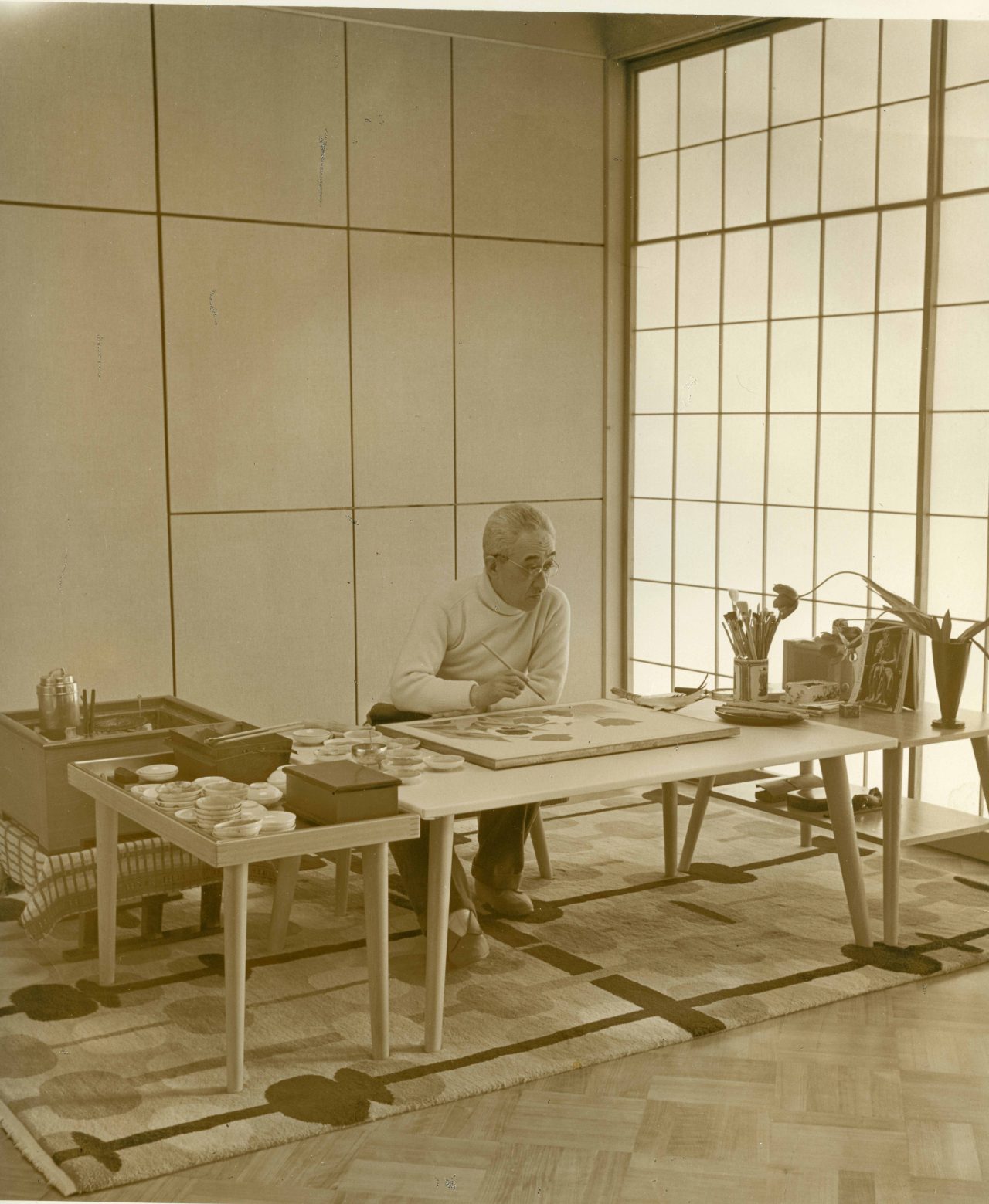
Hoshun at work in his atelier. Circa 1954. Courtesy of the Yamaguchi Hoshun Memorial Museum.
-
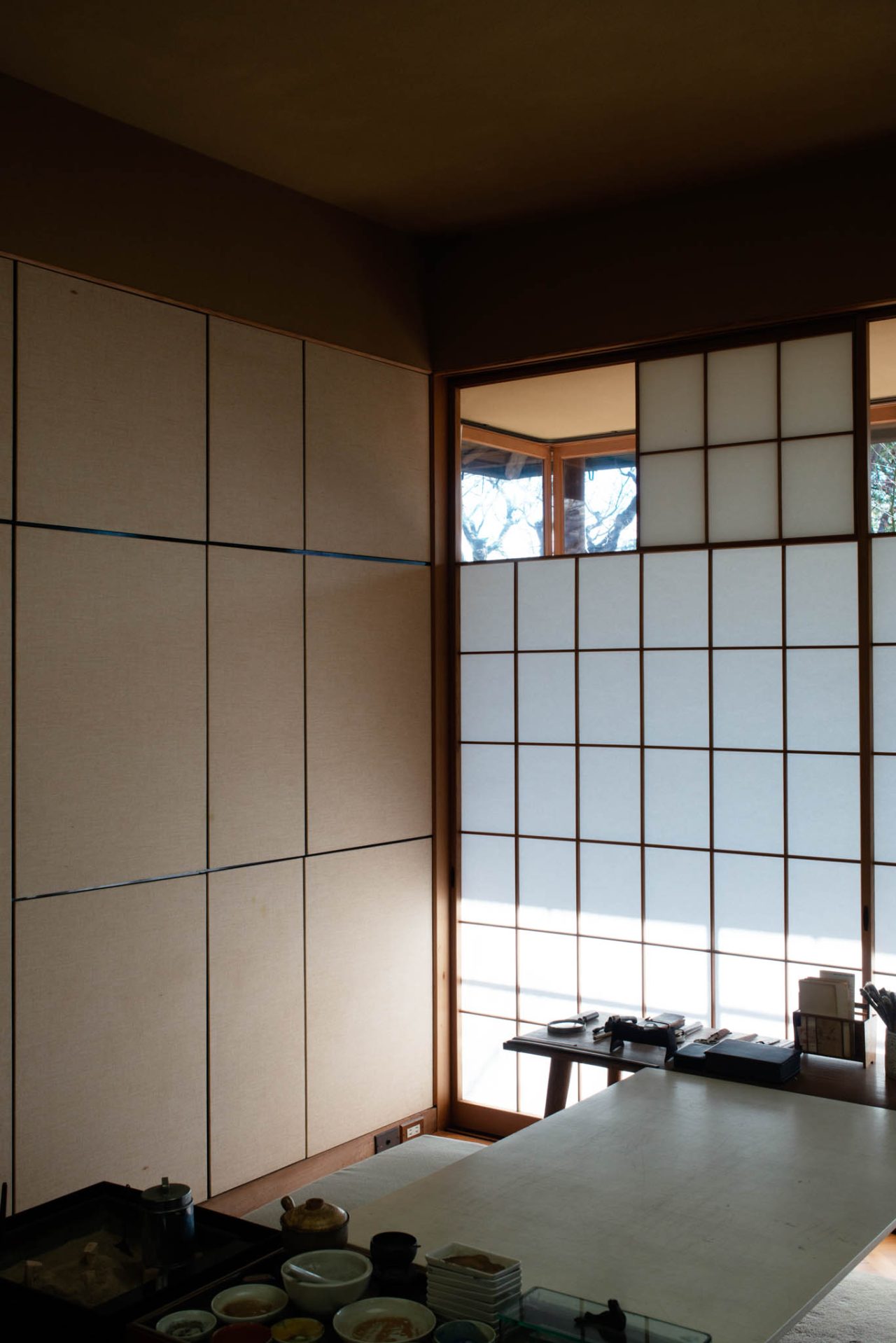
Atelier shōji doors with the ranma shōji open, Yamaguchi Residence. -
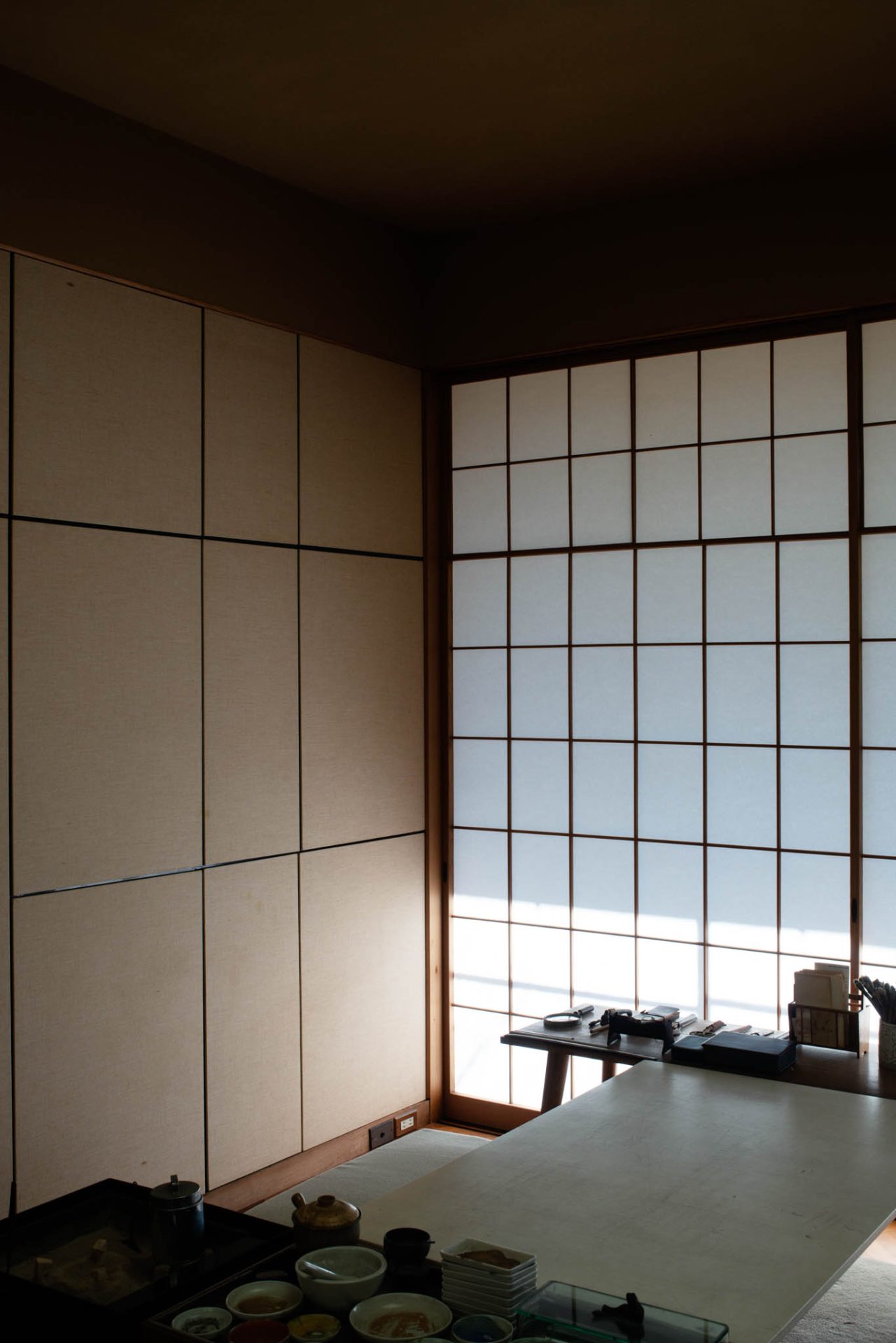
Atelier shōji doors with the ranma shōji closed.
Spaces like the Hoshun Atelier—high-ceilinged, box-like hiroma [lit. “spacious room”; a generic term for describing large rooms] of about 15 to 18 jō [roughly 24 to 30 square meters]—recur in Yoshida’s work, taking the form of family rooms and formal living rooms. The formal living room of the Yoshiya Residence (1936) in Ushigome, Tokyo—the project that earned Yoshida widespread acclaim—is one example. The family room of the Iwanami Villa (1940) in Atami, Kanagawa—a project which Yoshida was personally proud of, and one which I visited on two occasions—also shares many similarities with the Hoshun Atelier.
In these boxy spaces, the window spans across the south face and also often extends slightly onto the east face in an L-shape. The sliding window fixtures open in two directions from the southeast corner and retract into pockets, fully opening up the corner like a gaping mouth. Many of Yoshida’s houses have a corridor that zigzags southwestward in gankō fashion, servicing the principal rooms along the south side and the secondary rooms along the north side. Consequently, all of the former rooms naturally have projecting southeast corners, apt for creating openings. The room furthest southwest is articulated particularly generously as a cube-like room, and this is where you will find the family room, formal living room, or atelier. Here I will refer to these spaces as the Hiroma Set.
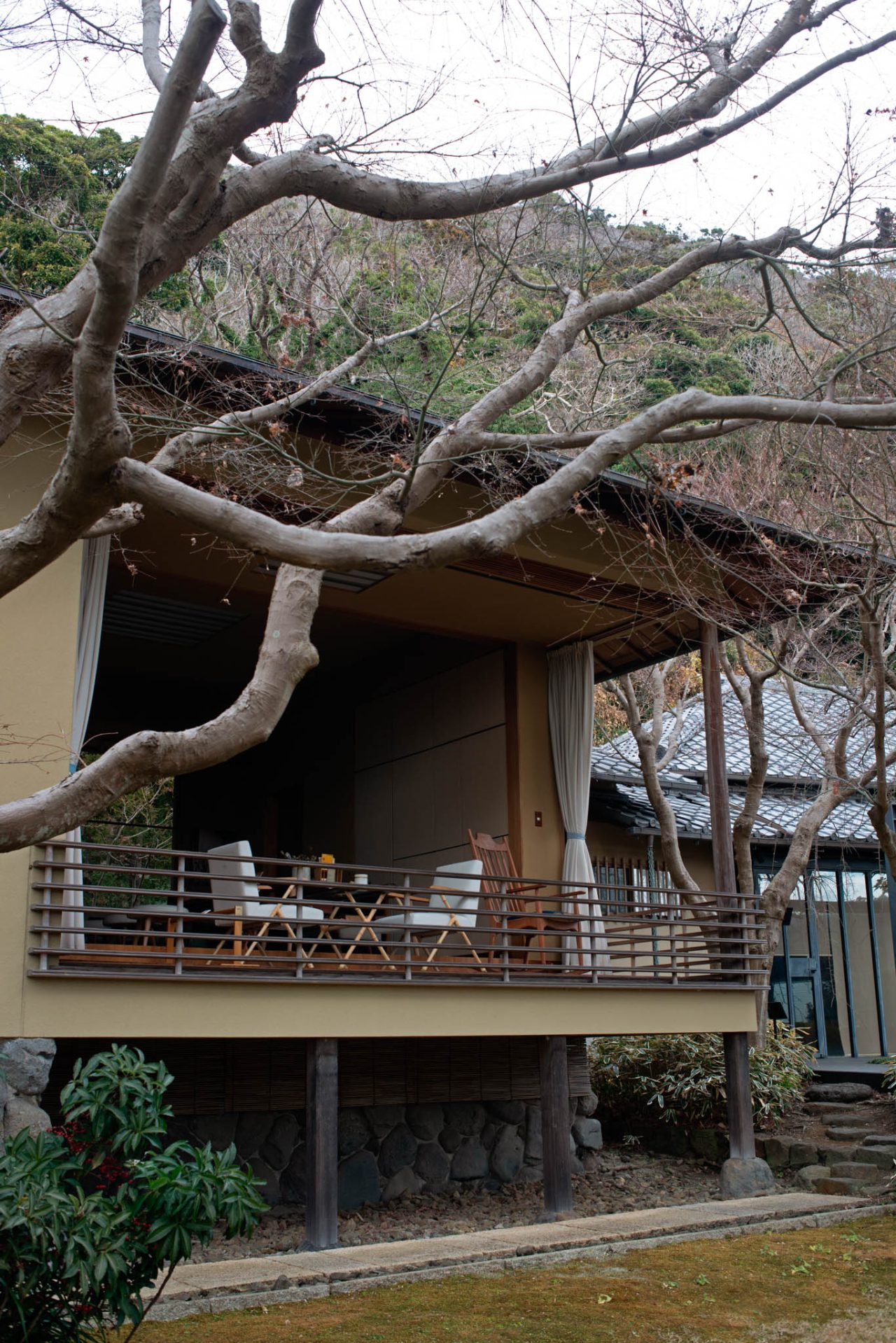
The Zashiki Set
Let’s now consider the zashiki. The zashiki of the Yoshiya Residence and the chanoma of the Yamaguchi Residence are very similar. Namely, they both feature a folded ceiling and a weightless suspended kamoi [head track for sliding shōji doors].
While a ceiling folded along the middle is called a funazoko tenjō [lit. “hull ceiling”; a shallow vaulted ceiling], the Yoshiya Residence’s zashiki has a flat ceiling that is adjoined by the inclined ceiling of a lean-to structure [forming an en], creating the appearance of a single continuous ceiling that folds down at one end. I will refer to the inclined ceiling as a “lean-to ceiling” here. While it is normal for ceiling boards to be held in place by slender battens known as saobuchi, Yoshida’s zashiki features extra-thin saobuchi that are only about 9 to 10 millimeters wide. Moreover, they are chamfered along both their bottom edges, such that they have sarubō [lit. “monkey face”] profiles, and the 2- to 3-millimeter-wide strip left in between is finished with lacquer. These treatments give them a sharp, lustrous look. Marked by these delicate lines, the horizontal plane glides over the zashiki and dips down seamlessly into the en, achieving a sense of spatial unity that would otherwise have been unattainable had the two ceiling planes been interrupted by a step.
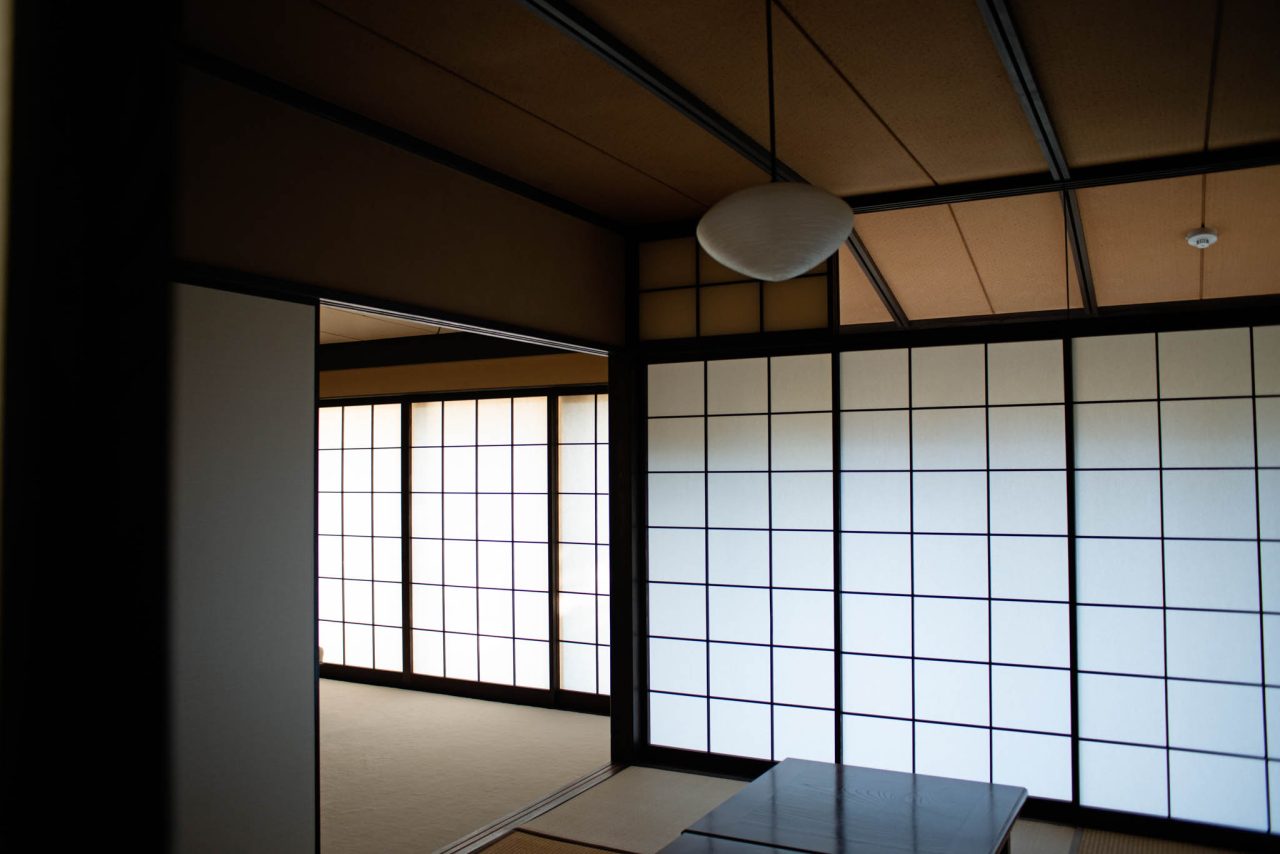
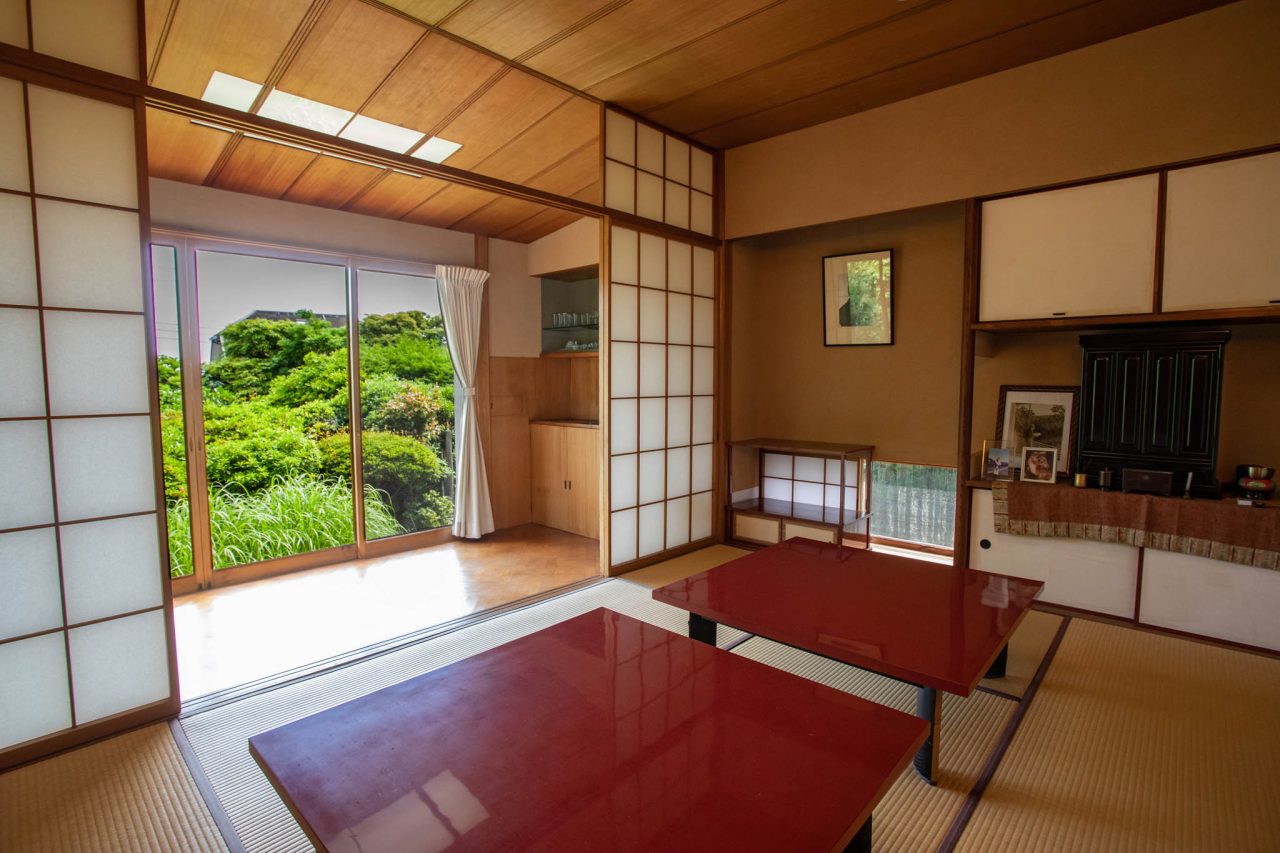
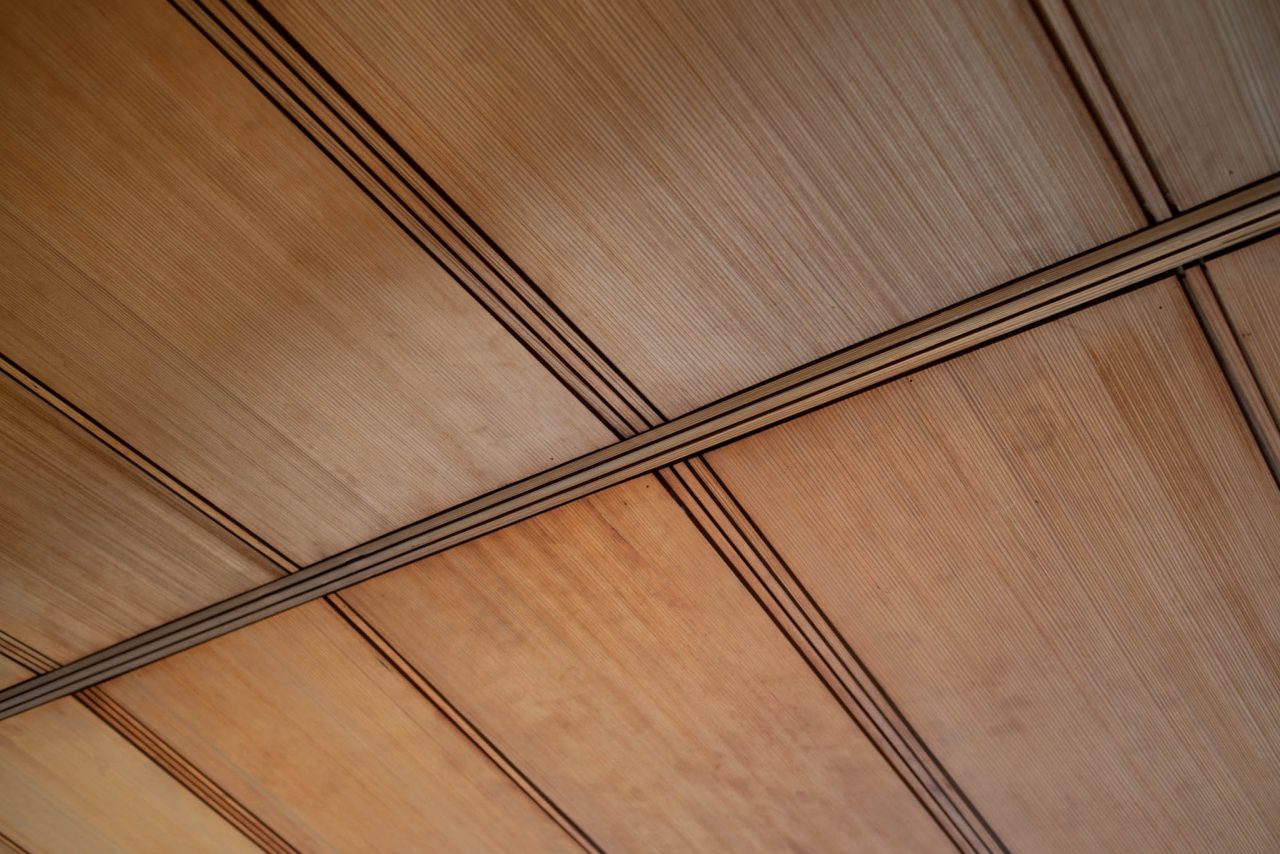
Furthermore, the kamoi for the ranma shōji [transom lights fitted with shōji] is recessed flush with the ceiling along the fold line, while the kamoi for the shōji doors is suspended in mid-air below it by a slender steel rod. These details ensure that the ceiling appears to fold but not break. Supporting a kamoi spanning roughly two tatami lengths normally entails the use of a thick, column-like tsurizuka [short hanging column], traditionally accompanied by kokabe [spandrel walls] and itaranma [transom panels]. By eliminating all these elements, the ceiling literally reads as one, and the spaces are seamlessly consolidated. Yoshida also repeatedly employed the techniques described here in the zashiki he designed for high-end restaurants. I will group these spaces into the Zashiki Set.
Extended Windows
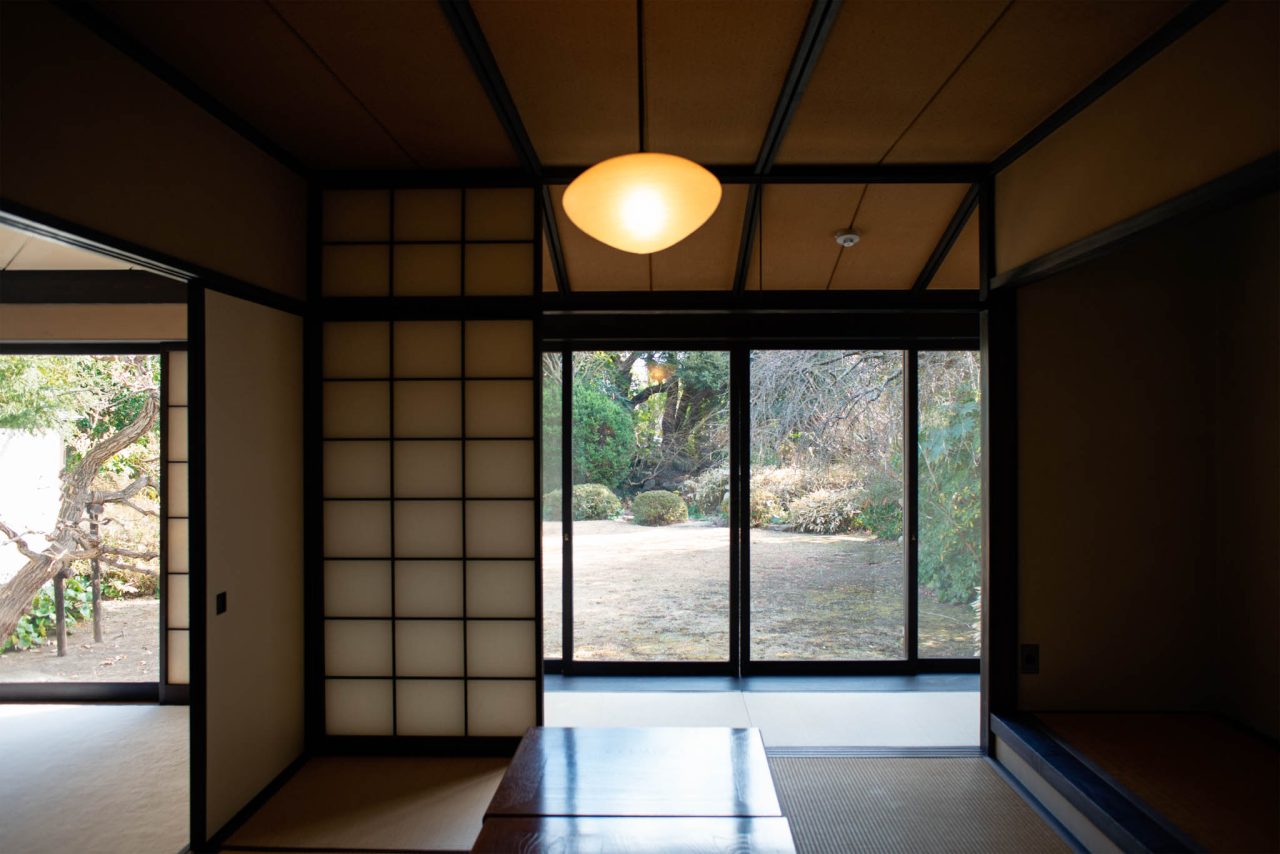
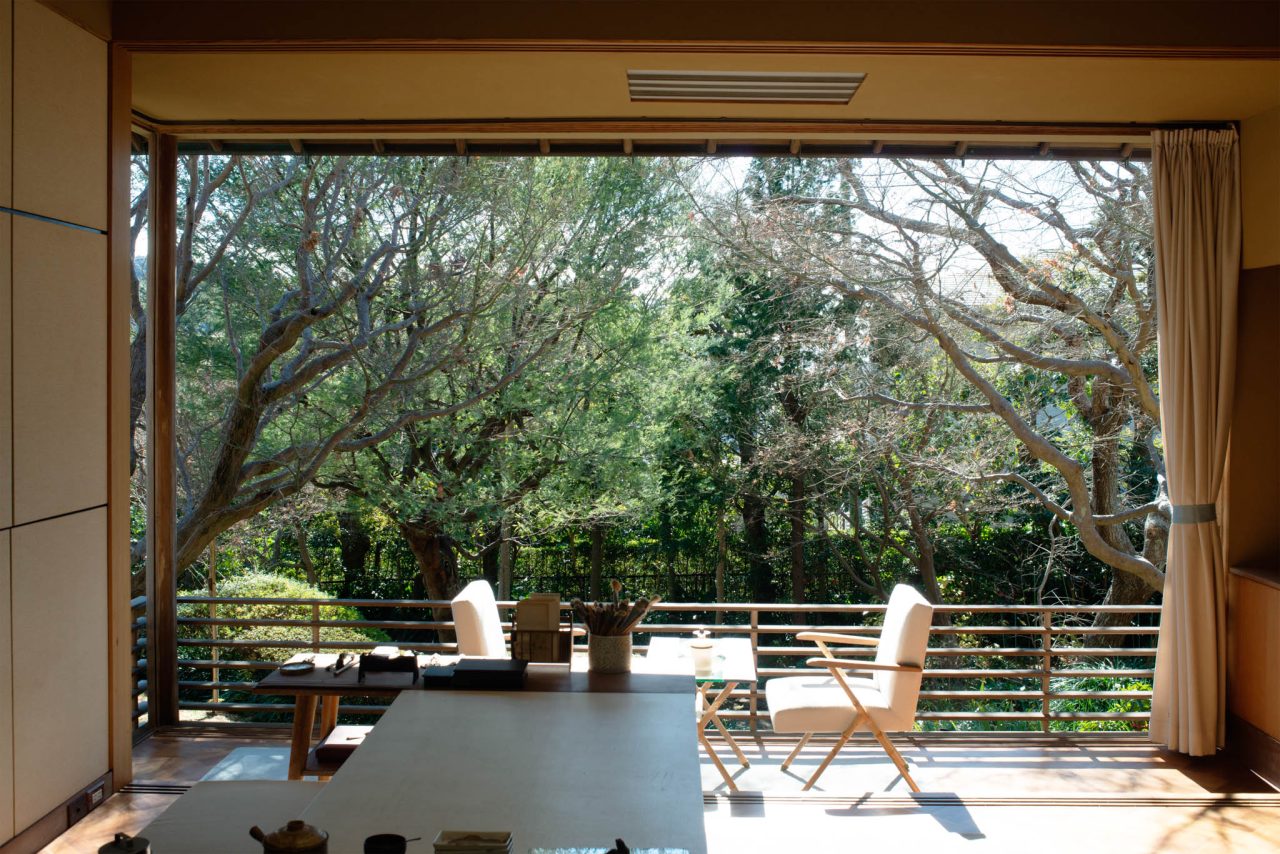
Now, let’s focus on the windows. In Japan, windows are traditionally composed of multiple layers of movable fixtures: they are, from the inside out, shōji, garasudo, amido, and amado. These elements are deployed in various combinations to regulate environmental factors such as light, wind, heat, insects, and storms. In the Hoshun Atelier, the shōji are pulled slightly apart from this four-layered configuration by the insertion of the enclosed veranda. The same condition is created by the engawa [an enclosed en] of the zashiki in both residences and, if you think about it, also in most traditional vernacular farmhouses and townhouses that have a jōya [main structure supporting the primary roof] and geya [peripheral structure supporting a secondary roof] (also known as the omoya and hisashi, respectively). It is in this sense that an engawa is nothing other than an extension of a window. However, there are distinct tendencies between the design features surrounding the windows in the spaces of the Hiroma Set and Zashiki Set.
The Hiroma Set spaces are high-ceilinged, and the nageshi are eliminated. The movable door and window fixtures are enlarged to cover the full width and height of the opening that spans the south face and, in some cases, continues onto the east face. And should one wish to fully open the window, these fixtures themselves disappear entirely.
By contrast, the Zashiki Set spaces have a standard ceiling height, preserving the horizontality of the space. The engawa is given a lean-to ceiling, tying the space back into the zashiki. The kamoi of the shōji doors between them is intentionally retained without an accompanying tsurizuka, kokabe, or itaranma. This heightens the sensation that a continuous ceiling plane is piercing through the jōya-geya boundary, with sleek saobuchi running down its length.
In this way, the same idea of the extended window is manifested in clearly different ways in the two sets.
Forging New Culture Through Mutual Criticism
Yoshida’s clients comprised a circle of new Japanese culturemakers working in various genres including not only nihonga—such as painters Kokei, Hoshu, Gyokudo, and Shuho—but also calligraphy, literature, publishing, and politics. These individuals undoubtedly would have shared a sense of critically supportive camaraderie, whether expressed explicitly or tacitly. Could they perhaps have developed through their mutual criticism a shared ideal for a space that is generous, bright, and connected with the outside world, promising a naturalist sense of comfort and creative originality befitting the modern human? I want to think that Yoshida’s Hiroma Set represent manifestations of this idealized space.
This brings to mind the way the atelier that Le Corbusier designed for his close friend and painter Ozenfant (1922)—the bright cuboid space that opens up to the outside through a large gridded glazed opening—possesses a spatiality shared across his projects from the living spaces of the Maison Citrohan to the Unités.
Isoya Yoshida as Renovation Architect
Something occurred to me as I was reflecting on the Zashiki Set: the entirety of the Yoshiya Residence, and the greater part of the Yamaguchi Residence’s main building, were products of renovations. The Yamaguchi Residence’s chanoma, however, was new, as it was built as an extension onto an existing building. And yet, Yoshida essentially replicated its design in the zashiki of the renovated Yoshiya Residence. How could I have overlooked this? Upon returning home, I scanned through Yukio Sunagawa’s biography of Yoshida while muttering to myself, “Renovation, renovation, renovation….” It was only then that I learned that Yoshida had in fact designed numerous renovation projects, and that many of them remain unpublished (ref. 5).
-
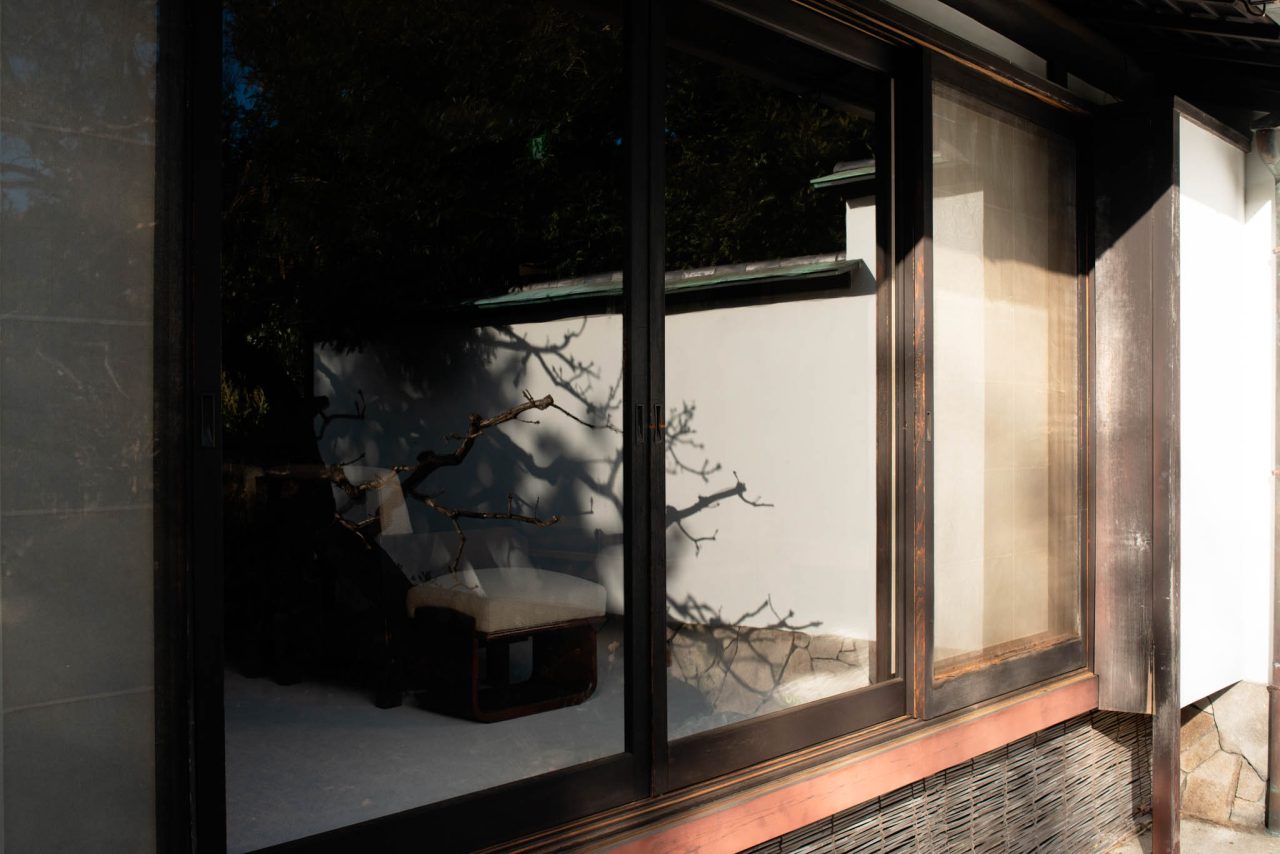
Formal living room window, Yoshiya Residence.
Houses used to be things that were passed from one owner to another, at least until the postwar period of rapid economic growth. Or I should say, it was standard practice for people to move from house to house, repairing and modifying them as needed. Yoshida assisted both Yamaguchi and Yoshiya in picking out properties as part of his work as an architect. He would have searched knowing that he could create a Zashiki Set space by reworking the relationship between the jōya and geya of the building his client acquired. Conversely, he would have been aware that it would be difficult to realize a generous, box-like Hiroma Set space without building from the ground up.
Despite the seemingly exhaustive discourse that already exists, it appears that there are still some more perspectives through which Isoya Yoshida’s residential designs can be explored. Perhaps the place to start is by reframing Yoshida as a renovation architect. While he certainly may have been building from tradition and paring it down, seen another way, he was renovating buildings as they actually stood before him.
References
1. Isoya Yoshida, Yoshida Isoya kenchiku sakuhinshū [Isoya Yoshida architectural works collection] (Meguro Shoten, 1949).
2. Isamu Awata and Kenchiku Shicho Kenkyusho, eds., Gendai Nihon kenchikuka zenshū 3: Yoshida Isoya [Complete works of contemporary Japanese architects 3: Isoya Yoshida] (Sanichi Shobo, 1974).
3. Yoshida Isoya Sakuhinshu Henshu Iinkai, ed., Yoshida Isoya sakuhinshū: Kaiteiban [Isoya Yoshida works collection: Revised edition] (Shinkenchiku-sha, 1980). Contents include Togo Murano, “Onkochishin” [Learning from the past], and Teiji Ito, “Yoshida Isoya”.
4. Kaneo Nomura and Kenchiku Shicho Kenkyusho, eds., Jūtaku kenchiku bessatsu 17: Sukiya zukuri no shōsai: Yoshida Isoya kenkyū [Residential architecture special issue 17: Details of sukiya architecture: Isoya Yoshida research] (Kenchiku Shiryo Kenkyusha, 1985). Contents include Hiroyuki Suzuki, “Sōgyō no hito: Yoshida Isoya ron” [The founder: A thesis on Isoya Yoshida].
5. Yukio Sunagawa, Kenchikuka Yoshida Isoya [Architect Isoya Yoshida] (Shobunsha, 1991).
6. Tokyo Geijutsu Daigaku Geijutsu Shiryokan and Yoshida Isoya Kenchikuten Jikko Iinkai, eds., Yoshida Isoya kenchikuten [Isoya Yoshida architectural exhibition] (Geijutsu Kenkyu Shinko Zaidan, 1993).
7. Takeshi Nakagawa and Norihito Nakatani, eds., Sukiya no mori: Wafū kūkan no mikata/kangaekata [Forest of sukiya: Ways of seeing and thinking about Japanese-style space] (Maruzen, 1995).
8. Kenchiku Shicho Kenkyusho, ed., “Jidai wo koeta sumai: 1930–60 nendai: Dai 4 kai: Yoshida Isoya tei” [Houses that transcend time: 1930–60: Vol. 4: Isoya Yoshida House], Jūtaku kenchiku [Residential architecture], no. 256 (July 1996). Published by Kenchiku Shiryo Kenkyusha.
9. Yamaguchi Hoshun Kinenkan kenkyu kiyō [Yamaguchi Hoshun Memorial Museum research bulletin], no. 2 (Yamaguchi Hoshun Memorial Museum, 2004).
10. Norimasa Aoyanagi, Kenchikuka ni yoru “Nihon” no ditēru: Modanizumu ni yoru dentō kōhō no kaishaku to saigen [“Japanese” details by architects: Modernism’s interpretations and recreations of traditional building methods] (Shokokusha, 2023). Contents include detail drawings of the Hoshun Atelier in Hayama.
Yamaguchi Hoshun Memorial Museum
Address: 2320 Isshiki, Hayama, Miura, Kanagawa, Japan 240-0111
Phone: 046-875-6094/Fax: 046-875-6192/Web
Yoshiya Nobuko Memorial Museum
Address: 1-3-6 Hase, Kamakura, Kanagawa, Japan 248-0016/Web
Akihito Aoi
Studied architecture at Kyoto University (withdrew from the doctoral program in 1995). Held roles as an assistant at Kobe Design University and associate professor at the University of Human Environments before becoming an associate professor at Meiji University in 2008. Professor since 2017. Doctor of Engineering. Books include Yoko to tate no kenchikuron: Modan hyūman to shite no watashitachi to kenchiku wo meguru 10-kō [Architectural theory of the horizontal and vertical: Ten lectures about architecture and us as modern humans] (Keio University Press, 2023), Chang-hua 1906: I-tso ch’eng-shih pei lao-shang, erh-hou tzu-t’i tsai-sheng ti ku-shih [Changhua 1906: The story of a city branded and regenerated] (Common Master Press, 2013), Shōka 1906: Shiku kaisei ga toshi wo ugokasu [Changhua 1906: Propelling the city through urban reform] (Acetate, 2006), and Shokuminchi jinja to Teikoku Nihon [Colonial shrines and Imperial Japan] (Yoshikawa Kobunkan, 2005). Co-authored books include Sengo kūkanshi: Toshi, kenchiku, ningen [Postwar spatial history: The city, architecture, and humans] (Chikuma Sensho, 2023), Architecture of Okinawa and Ryukyu: Timeless Landscapes 3 (Millegraph, 2022), Chiiki bunmyaku dezain [Regional context design] (Kajima Institute Publishing, 2022), Global History of Architecture: 15 Lectures (Shokokusha, 2019), Tsunami no aida: Ikirareta mura [Between tsunamis: The village that lived] (Kajima Institute Publishing, 2019; awarded the AIJ Book Award 2021); Encyclopedia of Urban & Territorial and Architectural History of Japan (Maruzen Publishing, 2018), among many others.
MORE FROM THE SERIES
-
Windows of Japanese Modernist Architecture
The Tatebayashi City Hall: Windows as Instruments for Municipal Communication
23 Jun 2026
Windows of Japanese Modernist Architecture
The Windows of Hiroshi Hara’s Awazu House: Spaces of Light Illuminating the Darkness
26 Apr 2024

Windows of Japanese Modernist Architecture
Windows of the Aichi University of the Arts
by Junzo Yoshimura and Akio Okumura:
The Concrete Science of Living with Nature19 Jan 2024
Windows of Japanese Modernist Architecture
The Prince Karuizawa: The Materiality of Kiyoshi Seike’s Windows
12 Oct 2023
RELATED ARTICLES
-

Windows of Japanese Modernist Architecture
The Windows of Tomoya Masuda’s Naruto Cultural Center: A Faintly Bright Louvered Space
17 Jun 2025
Windows of Japanese Modernist Architecture
A Culmination of Sutemi Horiguchi’s Aperture Designs:
The Tokoname City Municipal Ceramics Research Institute (Tokoname Tounomori Research Institute)15 May 2025
Windows of Japanese Modernist Architecture
The Diversity of Windows in Kiyonori Kikutake’s Serizawa Literary Center (Serizawa Kojiro Memorial Museum)
25 Dec 2024
Window Behaviorology on Nordic Architecture
Alvar Aalto
Entrance of the Jyväskylä Workers’ Club24 Sep 2026
NEW ARTICLES
-
2027 CCA-WRI Research Fellowship Program: Vacancy
09 Oct 2026
Terunobu Fujimori’s One Hundred Windows
Terunobu Fujimori│009:
The Amado of the Kikugetsutei:
The Astonishing Tomawashi Technique27 Aug 2026
Window Behaviorology on Nordic Architecture
Alvar Aalto
Bedroom of Muuratsalo Experimental House20 Aug 2026
Window Behaviorology on Nordic Architecture
Alvar Aalto
Atrium of Academic Bookstore14 Jul 2026